
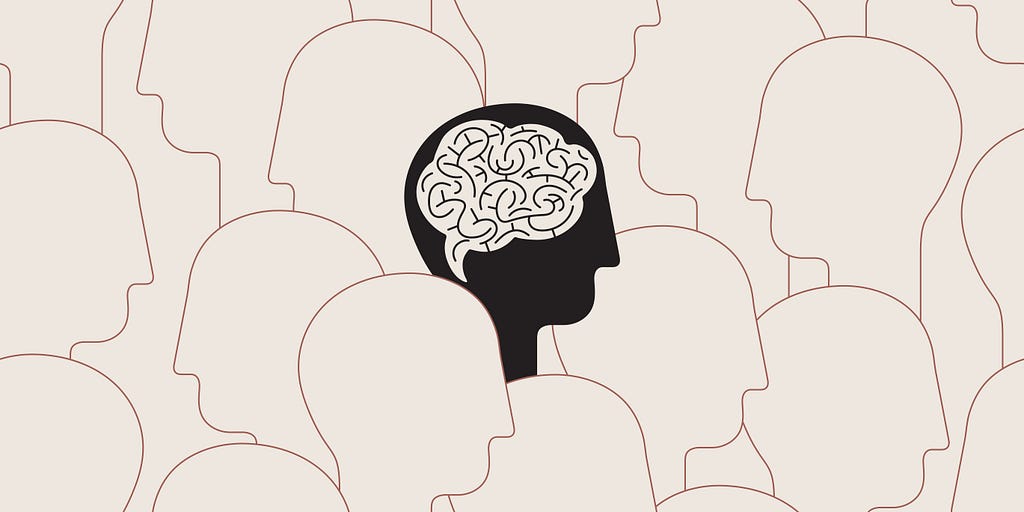
We are all more productive, but are we still thinking?
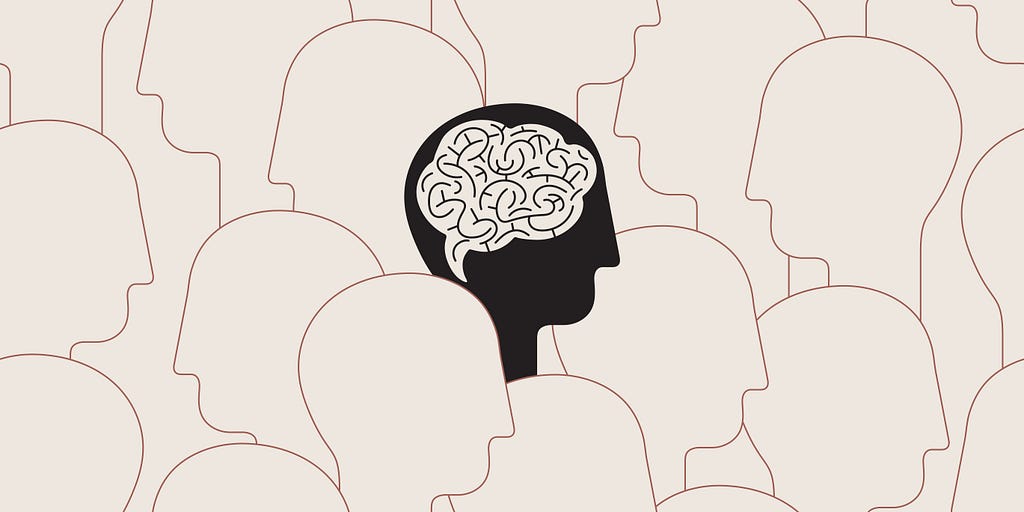
47%
This is the percentage drop in brain activity measured among participants in an MIT Media Lab study who used ChatGPT, compared to those who wrote without AI assistance. This is not a philosophical finding. It is a neurological one, recorded via EEG, from the actual brainwaves of real people while they worked.
There is more: 83% of participants who produced text with AI assistance were unable to recall the key points or quotes from what they had just “written”. The user becomes a spectator of their own output.
We are all more productive, but are we still thinking?
There is a paradox at the heart of everyday AI use, and it is worth naming clearly: the better you get at using AI, the easier it becomes to stop thinking.
This is not a flaw in the tools. It is a feature of the technology, and ignoring it would be dishonest.
AI produces fluent, structured, plausible text. It does so quickly and with no apparent effort. This creates a dangerous illusion: that the quality of the output reflects the quality of the thinking behind it. It does not. Weak reasoning, if well-prompted, still produces a convincing paragraph. A superficial analysis becomes a tidy bullet list. A flawed assumption becomes a section with a bold heading.
The problem is not that AI writes poorly. It is that it writes well even when it should not.
What we’re delegating without realizing it
Researchers speak of “Cognitive Debt”: the long-term neurological cost resulting from the repeated externalisation of mental effort. Think of someone who uses GPS for every single journey: they arrive at their destination, but never really learn to orient themselves. When the technology fails, the capacity for spatial reasoning is underdeveloped.
Cognitive delegation does not happen at a precise moment. It is not a conscious choice. It accumulates through habit, convenience, and it often disguises itself as efficiency.
Tolerance for uncertainty
Every complex problem has a phase in which you do not yet know what you think. It is an uncomfortable phase, but necessary and productive. It is where real thinking happens: among incomplete ideas and questions that have no answer yet.
AI eliminates this phase. Within seconds, you have a structure, a frame, a direction. The problem is that this direction is not yours: it is statistical. Accepting it without passing through the uncertainty phase means skipping the very moment in which you might have thought something original.
Those who use AI every day without awareness develop a low tolerance for “I don’t know yet.” And those who cannot sit with uncertainty do not produce new thinking, they produce variations on existing themes.
The capacity to reason through contradiction
Mature thinking does not seek confirmation: it seeks the strongest objection to its own thesis and confronts it. This is the core of critical thinking and it is precisely what AI does worst when not explicitly instructed to do otherwise.
If you do not ask AI to contradict you, it will not. It will give you a coherent, well-argued structure, devoid of internal tension. Readable, shareable and intellectually lazy.
Slow thinking
Some problems require time, not because they are complicated, but because they need to mature. An idea that does not come together today may come together tomorrow, after a night’s sleep, after a conversation. This is slow thinking, which the culture of productivity had already almost entirely eroded even before AI arrived.
AI accelerates this further because its immediate availability creates an expectation of immediate answers. Open a chat, type, receive. The cycle is so fast that waiting, leaving a problem open, sleeping on it, returning to it, becomes an option less and less exercised.
What is lost is not the answer. It is the journey. And often the journey is where the value lay.
Voice
Voice in the sense of style, perspective, and the way of constructing an argument. It is the sediment of years of reading, mistakes, rewrites, and difficult choices. It forms by writing badly, correcting, starting over. It forms in the discomfort of the blank page, not in the fluency of generated output.
Those who hand over writing to AI too early do not stop having a voice, they stop exercising it. What remains is something more generic, smoother, more similar to everything else. It works. It gets read. But it leaves no trace.

How to stay sharp
The data does not constitute an argument against AI. It is a critique of its passive-use philosophy. The problem is not the existence of AI, but the way we use it when we switch off our brains in the process. Some practical suggestions:
- Use AI after thinking, not instead of thinking. First write a rough draft of your own (even three lines, even disorganised) then bring that material into the workflow. This preserves the cognitive starting point and prevents AI from replacing your thinking rather than amplifying it.
- Question the output, not just correct it. Do not only ask “is this well-written?” but “is it true?”, “what is missing?”, “who is not represented here?”, “what assumptions did I bring to the brief?”. Human verification is not proofreading: it is interrogation.
- Keep a log of the decisions you made yourself. In an AI-assisted workflow it is easy to lose track of where your judgment ends and the model’s begins. Knowing precisely what you chose is what allows you to sign the result with full understanding.
AI is an extraordinary tool. In just a few years it has achieved what we could not manage in decades: it has made complex tasks accessible, broken down barriers, and accelerated processes. But accelerating does not mean understanding. And generating does not mean thinking.
The cognitive paradox of AI in education: between enhancement and erosion
As AI usage accelerates, companies need to avoid cognitive debt & decay among their talent
How Do In-Car Navigation Aids Impair Expert Navigators’ Spatial Learning Ability?
Cognitive Trade-Off: What We Gain and Lose with AI
Thanks for reading my thoughts. Follow me on Medium & LinkedIn to continue with me on my journey through UX/UI design more aware and accessible ❤
AI and cognitive delegation: the hidden cost of AI that works too well was originally published in UX Collective on Medium, where people are continuing the conversation by highlighting and responding to this story.