
As AI pulls product development closer to code, Config 2026 reveals Figma’s high-stakes gamble to survive an era of agentic workflows in a code-native environment
For more than a decade, Figma defined modern product design. It made collaboration effortless, turned design into a shared language, and became the default workspace for teams building software. But as AI reshapes how products are planned, prototyped, and shipped, the central question is the extent of Figma’s usefulness. Or rather, will the canvas remain at the centre of gravity, if at all?
Unlike the previous conference, Config 2026 makes that question more urgent. Figma no longer just defends a collaborative design canvas; it is actively expanding that canvas into code, motion, shaders, and agent-driven workflows. That shift reveals how much pressure the old model is under.
The Config Moment
Config 2026 arrives at a meaningful turning point. Figma is still the place where many product teams begin, refine, and communicate ideas, yet the broader workflow around it is changing fast. This is because AI is pulling more creative and production work into code editors, agentic environments, and structured workflows that remove the need for a designer to drag pixels around a canvas.
https://medium.com/media/6c49ac8604c075bf171f8c76b478ca25/href
What changed at Config 2026 is that Figma is now responding to that pressure directly. Code layers bring code onto the canvas, Figma Motion brings animation and timing into the file itself, shader tools add more expressive visual effects, and the agent becomes more useful across connected workflows. This brings us back to the canvas being more than a surface. It was Figma’s business model for its collaboration engine and its defensive moat against command-line interfaces through seats.
The Seat Model Gets Pressured
Figma’s enterprise strength has always depended on breadth. Designers used it first, then product managers, engineers, marketers, writers, and executives followed. The more people needed to review, comment, inspect, or reference design work, the more seats Figma could sell. The same applies for the product bench, with the rapid expansion of Slides, Buzz, Sites, and now Motion and Weave.
AI complicates that logic. If an engineer can generate or inspect UI directly inside a coding environment, or if a product team can translate structured design intent into working software without opening a shared canvas or applications, the need for passive, underutilised seats weakens. Config 2026 actually confirms this tension by bringing code layers and agent workflows closer to the main product, Figma Design. In other words, Figma is acknowledging that an increasing number of people want to participate in product and code creation without relying on traditional file-based design behaviour.
That does not kill Figma’s seat model overnight, but it does chip away at the assumption that every stakeholder must enter Figma to participate or experience design. Thus, the deeper issue goes beyond whether the team has seats at the table (canvas). The table of collaboration resides in a code-native environment and workflow, where the moment of truth shifts closer to implementation, and that reduces the number of times a team needs to return to a design file as the source of record.
Figma’s Fightback
Figma is not standing still. Even before Config 2026, the company pushed beyond static collaboration and into AI-connected workflows. Features like MCP, Code Connect, and Figma Make on local code point toward a future where design data can move more fluidly into development environments and AI tools.
Figma Make, Now on Your Local Code | Figma Blog
That is a smarter response than pretending the canvas can win by becoming a slightly better canvas. Figma’s best path is to become the system that preserves design intent, component logic, and implementation alignment across tools. In that model, Figma is becoming an operating layer.
This is also why the company’s product strategy feels more important than its individual features. A single new AI button will not change the story. What matters is whether Figma can make design data more portable, more structured, and more useful outside the file itself. Config 2026 suggests that Figma understands this, but it also shows how hard the transition is: the company still has to make the canvas relevant in a world where many teams want to begin and finish elsewhere.
Anthropic’s Advantage
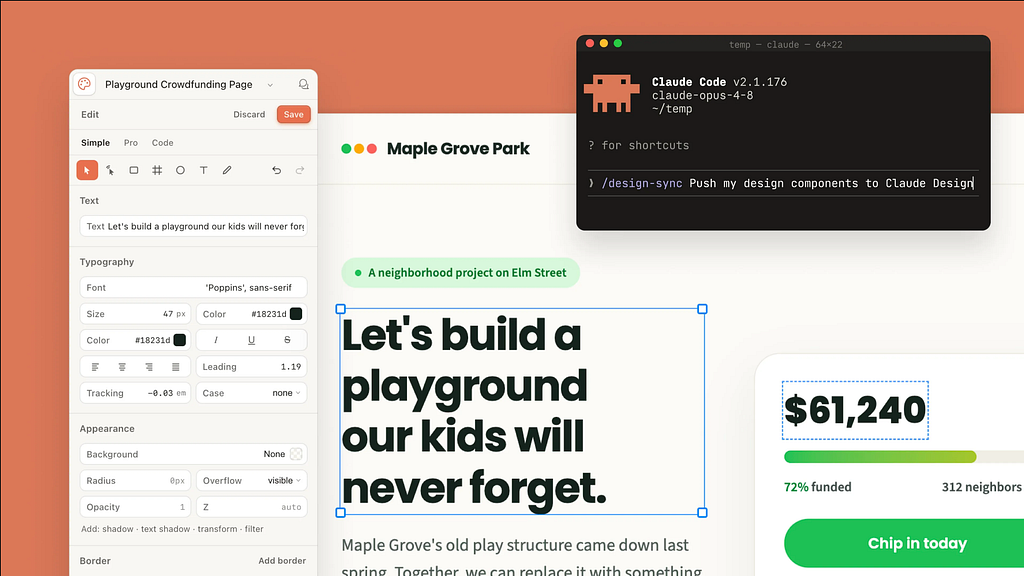
While Figma is defending the canvas, companies like Anthropic are helping normalise a different workflow entirely. Claude Code represents a real threat to Figma’s design dominance via a more agentic way of building software. A solution that operates across codebases, edits multiple files, and helps teams ship working products faster.
That matters because it shifts expectations. Once a team gets used to prompting real software into existence, a static mockup can feel like an intermediate step rather than a necessary one. Claude’s prototypes are now giving the vibes of an actual product. Some even claim that it is the product, or at least close enough to change how teams think.
Therefore, the strongest threat to Figma is a workflow that makes drawing less central. Even with Config 2026’s new materials and code-aware features, the larger trend remains the same: if teams can skip past the canvas by accelerating from intent to implementation with less translation, the value of designing to handoff vanishes.
The End of Proprietary Gravity
Design teams have seen this movie before. Photoshop gave way to Sketch, Sketch gave way to Figma, and each shift brought a new file format, a new workflow, and a new vendor promise. Every migration taught the same lesson: proprietary tools are powerful until the market starts demanding portability.
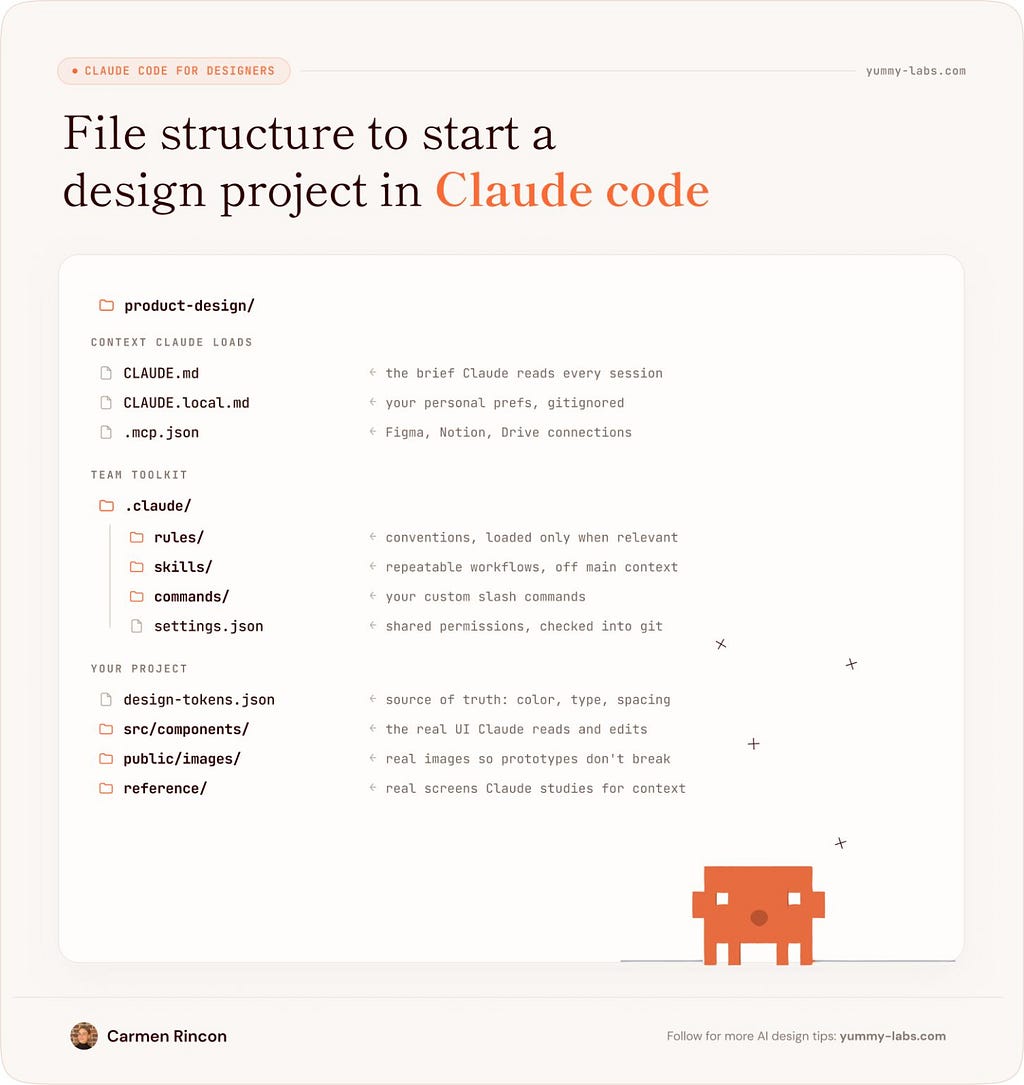
That lesson is now becoming more relevant than ever. The future of design is likely to be built around reusable tokens, readable structures, and tool-agnostic metadata rather than locked files that only live well inside one platform. The winning systems will be the ones that can travel between editors, browsers, codebases, and AI agents without losing meaning.
So while we see Config 2026 pushing in that direction, with motion exporting in CSS, JSON, React, MP4, WebM, animated SVG and GIF formats, we can also admit that the .figma canvas may stop being the canonical source of truth. In an AI-driven workflow, the real asset is not the visual file but the structured reusable intent behind it.
The Real Test
Even in a changing market, Figma has real strengths. Its collaboration culture is deeply embedded in how teams work, its ecosystem is mature, and its product remains an efficient place to align complex groups around design decisions. Those advantages should not be underestimated.
But strength can become inertia if the company mistakes habit for permanence. Config 2026 shows a company trying to turn its strengths into a new platform layer rather than a static product category. That is the right instinct over previous runs. It is also a sign of how much the market has shifted, where Config announcements avoid the theoretical, cringy concept like automation, generation, and iteration (AGI) back in 2024. Despite the design industry still cheering and celebrating with Figma, serious designers are now asking a more uncomfortable question: what if the most valuable part of design isn’t the place where we draw it but the way it survives across the product development process?
That is the challenge Figma now faces. Not how to make the canvas prettier, but how to make design survive after the canvas stops being central.
The verdict will not come from conference applause or feature demos. It will come after the conference hype from workflow behaviour. If teams continue to spend their most important time inside Figma, the canvas remains dominant. If they begin spending more time in code editors, AI agents, and structured design systems that travel cleanly between tools, Figma becomes one platform among many.
Config 2026 makes this test more interesting, not less. Figma is clearly betting that it can keep the canvas relevant by making it more powerful, more expressive, and more connected to code and AI. That is a serious fightback strategy, and it confirms the scale of the challenge. The company is done competing with other design tools. It is now competing with an entirely different way of building products.
That is why this moment feels bigger than one (or multiple) product launch. It is a test of whether product design remains a canvas-first discipline or becomes an architecture of intent that only sometimes needs a canvas at all.
Could we experience another Config blockbuster next year? Unlike other years, Figma will confront a definition change in design. And in the AI era, that may be the ultimate consequential hurdle to overcome.
References
Anthropic . (2026, June 17). Claude Design now stays on brand for daily work. Claude. https://claude.com/blog/claude-design-stays-on-brand-for-daily-work
Davies, R., & Taabassum, T. (2026, May 20). The Figma design agent is here. Figma. https://www.figma.com/blog/the-figma-agent-is-here/
Field, D. (2026, June 24). Config 2026: New materials, new tools and a more expressive canvas. Figma. https://www.figma.com/blog/config-2026-recap/
Hornsby, D. (2026, June 24). Introducing Figma Motion: Your canvas now has a timeline. Figma. https://www.figma.com/blog/introducing-figma-motion/
Lin, I., & Lumarie, J. (2026, May 28). Figma Make, now on your local code. Figma. https://www.figma.com/blog/figma-make-now-on-your-local-code/
Rethinking Figma in an AI World was originally published in UX Collective on Medium, where people are continuing the conversation by highlighting and responding to this story.