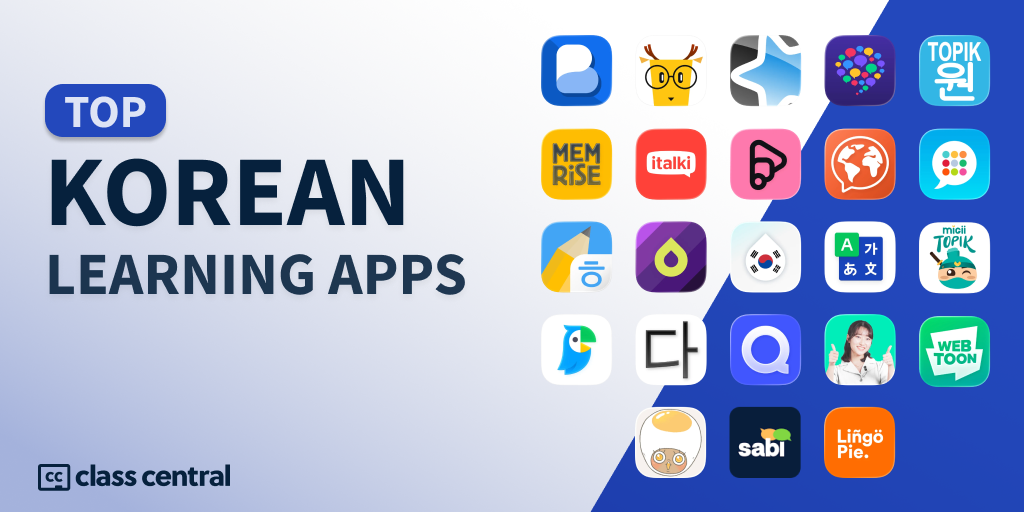
Korean is one of the most rewarding languages to pick up right now, and one of the more demanding for English speakers. The alphabet is new, the verb goes at the end of the sentence, particles do the work that word order does in English, and politeness is built into the grammar through speech levels and honorifics. None of that makes Korean impossible. It just means the right tools matter.
The good news is that the app ecosystem for Korean is strong. Whether you want to drill vocabulary, book a tutor, or learn from K-dramas, there is a tool built for it.
 No single app does everything well. The best Korean learners build a stack: a structured app for grammar, a spaced-repetition tool for vocabulary, a dictionary, and something for speaking practice. This guide is organized to help you do that.
One piece of advice before you start: learn Hangul first. The Korean alphabet is logical, and most people can read it within a few days. Apps that keep you leaning on romanization will slow you down.
I’ve organized the best apps by what they’re for. Each entry lists the platforms it runs on and how it’s priced.
 In this guide
General purpose apps
LingoDeer
LingoDeer was built specifically for Korean, Japanese, and Chinese, which is why it handles Korean grammar better than most general apps. Lessons are sentence-based and structured, with native audio, writing practice, and a clear path from Hangul through intermediate grammar.
The first lessons are free; full access needs a subscription. It is the best starting point if you want structure without a tutor.
Duolingo
Duolingo is the most popular language app and a low-friction way to start Korean. Short, gamified lessons cover vocabulary, reading, listening, and some speaking. Grammar explanations are thin and it moves past Hangul quickly, so pair it with a dictionary and a grammar resource.
It is free with ads, and Super removes them.
Rosetta Stone Korean
Rosetta Stone teaches through images and audio instead of translation, so you build associations directly in Korean. Speech recognition gives pronunciation feedback from the first lesson, and the program covers speaking, listening, reading, and writing across levels.
There is no free tier, but there is a money-back window if it is not for you.
Mondly
Mondly is a polished, gamified app in the same mould as the big all-in-ones. It offers daily lessons, themed topics, native audio, and an optional VR mode. It is a good casual pick if Duolingo’s style appeals but you want something different.
A daily lesson is free, and Premium unlocks the rest.
Busuu
Busuu recently added Korean, with a Complete Korean track plus dedicated Hangeul and K-drama courses. Its standout feature is feedback from native speakers on your writing and speaking.
The beginner track is usable on the free tier, and Premium adds grammar tools, offline access, and certificates.
Hangul & getting started
Learn to read Hangul before anything else. These apps focus on the alphabet, and both LingoDeer and Busuu also include strong Hangul intros if you would rather start there.
Write It! Korean
Write It! Korean focuses on writing Hangul by hand. It teaches stroke order and recognizes your attempts, correcting them as you go.
It is a good companion for the first week while the alphabet is still new.
Drops
Drops teaches Hangul and early vocabulary through images rather than translation, built around fast five-minute sessions. The visual approach keeps it engaging, and it is a painless way to get the alphabet and your first words.
The free plan caps you at five minutes a day.
Learn Korean & Study Hangul
This is a dedicated Hangul-first app that walks you through reading and pronouncing each letter before moving into words. It is useful if you want a single tool just for the alphabet stage.
Dictionary & reference
Naver Dictionary
Naver Dictionary is the standard Korean-English dictionary. It has rich example sentences, native audio, conjugation information, and handwriting and voice input for looking up words you cannot type. Most learners end up using it daily.
Papago
Papago is Naver’s translator, and the best option for Korean specifically. It handles text, voice, image, and conversation modes, and its Korean output reads more naturally than general-purpose translators.
Dongsa
Dongsa is a Korean verb conjugator. Enter a verb stem and it returns every form across tenses and politeness levels. Conjugation is exactly what trips up learners writing their first sentences, which makes this a handy reference to keep open.
Flashcards & vocabulary
Anki / AnkiDroid
Anki is the most powerful spaced-repetition tool, and a favorite of serious learners. You can build your own decks or download community Korean and TOPIK decks.
AnkiDroid is free, the iOS app is a one-time paid purchase, and AnkiWeb syncs your progress across devices.
Memrise
Memrise pairs spaced repetition with native-speaker video clips and an AI conversation partner, alongside an official Korean course.
User-created wordlists returned to the app in 2026, so you can add and share your own vocabulary again.
Quizlet
Quizlet is simple flashcards with a huge library of shared Korean sets. It is less sophisticated than Anki, but easier to start with and good for quick vocabulary drilling.
Conversation & speaking
Teuida
Teuida teaches speaking through point-of-view roleplay. You respond out loud to characters in simulated situations, with voice recognition checking your pronunciation.
It is light on grammar and writing, and it works best once you are past the absolute beginner stage.
iTalki
iTalki connects you with professional and community Korean tutors for one-on-one video lessons. You choose the tutor, the price, and the focus, from structured grammar to free conversation.
It is the most direct route to real speaking practice.
Preply
Preply is another tutor marketplace, with lesson insights that show how much you spoke and what to review next. You pick a tutor from their video and reviews, and you can switch until one fits your level and goals.
It is the right call if you want speaking practice baked into a regular routine.
HelloTalk
HelloTalk is a language-exchange community. You are matched with native Korean speakers learning your language, and you practice through text, voice, calls, and a social feed.
Built-in translation and correction tools make it easy to help each other.
Eggbun
Eggbun delivers chat-based lessons through a friendly bot. It feels like texting, which lowers the pressure, and it teaches grammar and vocabulary in small conversational steps.
Speechling
Speechling is a pronunciation tool. You listen to native audio, record yourself, and get feedback.
The free tier gives unlimited AI feedback, and the paid plan adds review from a human coach.
Learning from real Korean content works once you have the basics. These tools add study features on top of shows, video, and text.
Language Reactor
Language Reactor turns Netflix and YouTube into a study tool, with dual subtitles, a built-in dictionary, and vocabulary tracking. It also has a reading library of public-domain Korean texts and a curated video and podcast catalog, so it covers listening and reading in one place.
We reviewed it in depth here.
Sabi
Sabi adds dual subtitles and interactive exercises directly to Rakuten Viki. This is useful because Viki’s own Learn Mode was discontinued, and Language Reactor does not support Viki.
Pair it with Viki’s large K-drama catalog to study through the shows you are already watching.
LingoPie
LingoPie teaches through TV and film using its own licensed catalog, which includes Korean. It offers interactive subtitles, click-to-save vocabulary, and review games built from what you watch.
FluentU
FluentU uses short real-world clips, music videos, and news with clickable subtitles. Every word links to a definition and examples, and the app builds vocabulary from the content with spaced repetition.
Naver Webtoon
Naver Webtoon is not a study app, but it is Korea’s biggest webtoon platform and a source of authentic, high-interest reading once you have the basics. Read with a dictionary like Naver or Papago open alongside it.
Podcasts & audio
Talk To Me In Korean
Talk To Me In Korean is one of the most established Korean resources, with a large library of audio lessons organized into levels. The podcast is free, and the full platform is paid.
The free membership tier was removed in 2024, so you now need a subscription for the lesson materials.
KoreanClass101
KoreanClass101 offers podcast-style audio and video lessons across every level, built around natural conversations with vocabulary and grammar notes. It is inexpensive and well suited to listening practice on the go.
Pimsleur Korean
Pimsleur Korean is audio-first, built on graduated-interval recall. Each lesson runs about 30 minutes and focuses on speaking and listening, which makes it ideal for commutes and time away from a screen.
YouTube channels
GO! Billy Korean
Billy Go teaches structured, clear grammar and sentence lessons for every level, from Hangul through advanced points. It is one of the most recommended free Korean channels.
KoreanClass101 (YouTube)
The KoreanClass101 channel offers free lessons covering the alphabet, pronunciation, grammar, and vocabulary. It is a good complement to any paid app.
sweetandtastyTV
sweetandtastyTV focuses on the vocabulary and slang you hear in K-dramas and K-pop, with cultural context. The videos are casual and a good fit if media is what drew you to Korean.
TOPIK exam prep
If you are working toward the Test of Proficiency in Korean, these apps are built for it.
Migii TOPIK
Migii TOPIK is the most complete TOPIK prep app. It has full mock tests, practice for every section, and answer explanations, with progress tracking toward your target level.
TOPIK One
TOPIK One gives you real past papers to work through by section. It is a simple, free way to get familiar with the actual format of the test.
Prefer structured courses, university programs, and tutoring? See our companion guide, 8 Best Korean Courses. Learning another language too? We also cover the best Mandarin Chinese learning apps.
The post Best Korean Learning Apps for 2026: Free and Paid appeared first on The Report by Class Central.