

What if you could earn $3,000 a year from a whiteboard you give away for free?
John Schierman of MegansDailyDish.com places free chalkboards and whiteboards in restaurants and other busy venues.
The venue uses the board for daily specials. John sells small ad spots along the bottom to local businesses.
He’s placed more than 200 of these boards so far. Each one brings in around $3,000 a year.
(Check out John’s Community Boards program! New students get a free 15-minute coaching call with John and a free board!)
Tune in to Episode 763 of the Side Hustle Show to learn:
- how to place free chalkboards and whiteboards in restaurants and other high-traffic venues
- how to price, sell, and fill advertiser spots around the board
- how to turn one placement into a referral engine for more locations and more advertisers
- Shopify — Sign up for a $1 per month trial!

- Gusto — Get 3 months free of the leading payroll, benefits, and HR provider for modern small businesses!

- Indeed – Start hiring NOW with a $75 sponsored job credit to upgrade your job post!

- Monarch — Get an extended 30-day free trial!

John used to sell coupons printed on the back of grocery store receipt tapes. The ads worked, but they cost small businesses $8,000 to $12,000 a year for a single store.
That made them a tough sell for mom-and-pop shops.
Then he walked into McCoy’s in Elk River, Minnesota, and spotted a wood-framed whiteboard on the wall. A small gold plaque named the company that made it. That company was just 30 minutes from his house.
John went down the rabbit hole. He found an operator in Alabama who ran shared menu magnets, joined his group, and decided to launch his own boards.
How the Business Model Works
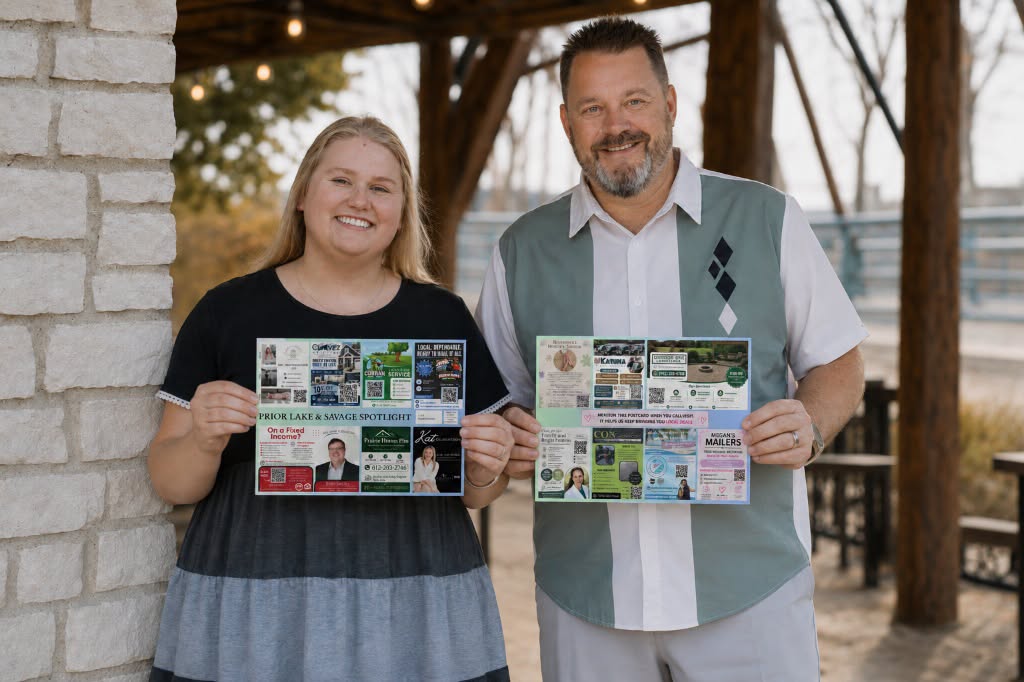
The pitch to a restaurant is simple: John gives them a free chalkboard or whiteboard, mounted on an easel, a wall, or the hostess stand with Command Strips.
The venue uses it to post daily specials, happy hour promos, or upcoming events. In exchange, John sells advertising space in a handful of small ad slots along the bottom of the board.
Restaurants are primed to say yes because they’re used to free stuff, from beer distributor sidewalk boards to placemat ads.
The catch, when there is one, gets addressed upfront: John shows the physical board so owners can see exactly what they’re getting into.
What He Charges Advertisers
Boards come with 3 or 6 ad spots. About two-thirds of his placements are the 6-spot size. Here’s the math on a 6-spot board:
- Cost: under $400, including the board ($350), markers, an easel, and Command Strips
- Price: $50 a month or $600 a year per spot, with a discount for paying in full
- Profit: over $3,000 a year per location
Nobody has chosen monthly billing. John now launches 4 boards at a time in a city and pitches a spot on all 4 for $200.
That can bring in $6,000 to $8,000 for a week to 10 days of work.
He’s also tested bundled offers like buy 2, get 2, or buy 3, get 1 free, to move faster on new placements.
Getting Warm Leads for Advertisers
Rather than cold-knocking every business, John built a referral system.
After a venue agrees to host a board, he follows them on social media, leaves a 5-star Google Business Review, then asks two key questions:
- Who shouldn’t be on this board?
- Who has to be on this board?
That second question almost always surfaces a list of vendors the venue already trusts. For example:
- the insurance agent who leads their Rotary meeting
- the plumber who unclogs their toilets
- or the electrician who wires their fryers
John then sends a short email name-dropping the referring business owner, which he says converts at a 70% close rate.
Why Advertisers Buy
Each board is category-exclusive, meaning only one realtor, one insurance agent, one HVAC company per board.
That exclusivity, plus the implied endorsement of the venue, makes the sale easier than a cold pitch.
John compares the effect to the “seen 7 to 9 times before you’re top of mind” rule of thumb, and references a nearby billboard seller’s “7-word rule” for keeping ad copy simple with a clear call to action, usually a QR code.
Finding Venues With AI
To scout a new city, John asks Gemini for 12 to 14 top-rated spots with high foot traffic and big seating capacity.
Then he plugs the list into Apple Maps to plan the fastest route. If you visit in person, skip the rush. A slow time like 2:30 in the afternoon works best.
John also likes to pair launches with a long weekend away. He places boards on Friday and enjoys the weekend. He sends his referral emails Monday and is done by the next Friday.
Renewals and Retention
John reports an 80% renewal rate among advertisers and roughly 98% retention on board placements themselves. He asks venues to commit to keeping the board up for a year.
The only board he’s had removed was from a location bought out by a chain that didn’t fit their “motif.”
When an advertiser doesn’t renew, John doesn’t replace the whole board. He has a local printer make a non-see-through sticker to cover just that one ad slot, keeping costs low.
He also keeps a small stash of backup boards at each venue in case one gets damaged or, in one case, a bored kid peels off the sticker.
Mistakes to Avoid
On his very first board, John didn’t ask who shouldn’t be included.
He ended up placing a hair salon ad that conflicted with a personal dispute the restaurant owner’s wife had with a salon employee.
He had to cover the ad with a sticker and refund the advertiser, though the salon owner simply asked to be moved to a different board.
The incident also led to a wave of referrals once the couple started recommending other restaurant owners in their network.
Tools/Tech
- Square – payment processing for advertiser payments
- Canva – designing the ads that go on each board
- ChatGPT and Gemini – brainstorming ad copy and researching high-traffic locations to target
- Apple Maps – routing the most efficient path between prospective venues
What’s Next for John?
John hasn’t touched several major venues in his own city yet, including a casino, an amusement park, and an 18,000-seat outdoor amphitheater, so he doesn’t see a saturation point locally.
He’s stayed away from national chains so far, though he has placed boards in one local chain with multiple locations.
He’s also started picking up adjacent work from advertisers who ask “what else do you have,” including postcard advertising (the shared postcard model covered in a past episode with Rachel and Dalton) and one-off projects like helping a flight instructor with a separate ad.
John’s #1 Tip for Side Hustle Nation
“Don’t overthink it, don’t overanalyze it, don’t think that you’ve got to have all your ducks in a row before you go out and do this.”
As John put it, referencing Rachel and Dalton’s phrase, “do it dirty.”
Episode Links
Looking for More Side Hustle Help?