

Google reviews shape whether a potential customer calls a business or clicks right past it. Finding the right software to track incoming reviews, respond quickly, and pull in more of them is what separates businesses that rank locally from those that stay invisible. These are the best tools to monitor and improve Google reviews in 2027, ranked by overall fit for local businesses and agencies.
Why review monitoring matters now
Most small businesses don’t discover a negative review until days after it posts, and that gap costs them. Google’s local ranking algorithm weighs review recency, volume, and response rate, so a slow or absent response isn’t neutral; it actively hurts visibility. The best tools to monitor and improve Google reviews in 2027 close that gap with real-time alerts, automated requests, and drafted replies that make it realistic for a single owner to stay on top of their profile.
1. Reviewly AI
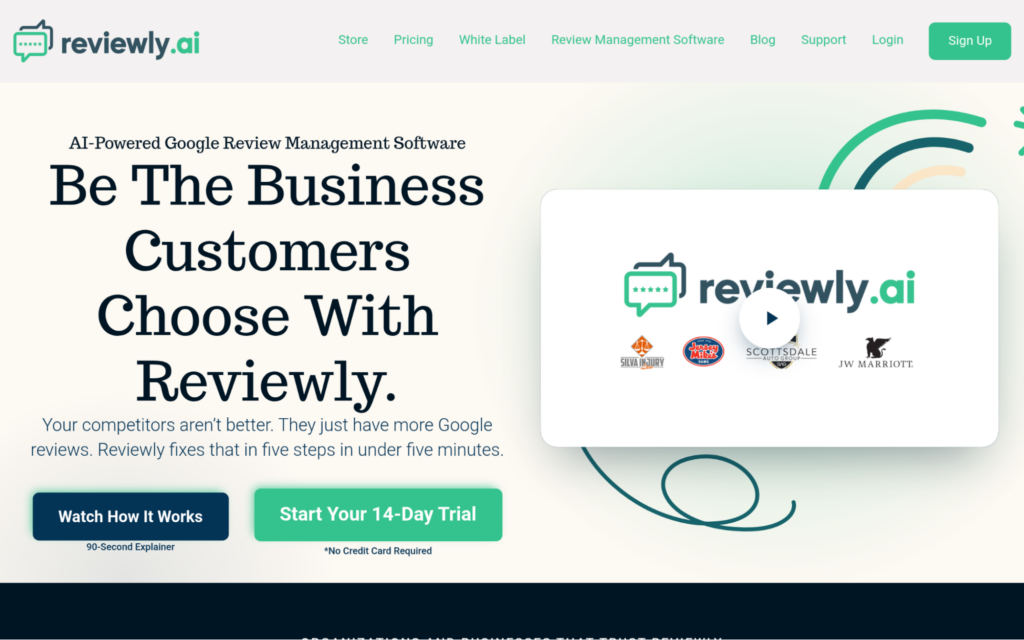
- Best for: Local service businesses and marketing agencies that want to grow and manage Google reviews via AI-drafted SMS invitations
- Standout: Sends customers three AI-drafted review options by SMS through a dedicated Twilio number, with a company-reported 97 to 98% open rate
- Pricing:
– From $99 per month for a single location
– Agency white-label plans from $199 per month for up to 50 client locations
– 14-day free trial on single-location plans
Reviewly AI focuses exclusively on Google Business Profile, which it defends as a deliberate choice; roughly three-quarters of small business reviews live there. Setup takes about 90 seconds and three clicks. The platform also generates drafted responses that reference the specific service and location, rather than a generic acknowledgment.
Agencies get a full white-label layer at the base plan: branded dashboards, private subdomains, Stripe billing, and a clone-and-deploy client setup system. Direct integrations with GoHighLevel, HubSpot, Zapier, QuickBooks, and Jobber mean review requests can fire from tools a business already runs. One-way SMS requests work in more than 100 countries, and the platform includes NFC Smart Cards and QR web channels for walk-in businesses that don’t always collect a mobile number. HIPAA compliance is available for regulated verticals like dental clinics and med spas.
2. Reputation

- Best for: Enterprise and multi-location brands that need a broad reputation management platform across reviews, surveys, and social media
- Standout: Ranked #1 in 26 G2 reports, including Enterprise Grid for Online Reputation Management; recognized in Forrester’s Wave for Customer Feedback Management and Gartner’s Magic Quadrant for Voice of the Customer
- Pricing: Not publicly listed; early pricing started around $1,000 per year, but current enterprise tiers are disclosed only on request
Reputation (formerly ReputationDefender, founded in 2006) serves large organizations including Banner Health, BMW, Ford, General Motors, and Hertz. Its SaaS platform monitors reviews, social media, and surveys while offering sentiment analysis and operational intelligence tools. Caraday Healthcare boosted review volume by 200% and improved its Reputation Score by 217 points in one year on the platform; Intermountain Health tripled organic leads and grew review volume by 510% across that same period. With 716 employees and enterprise clients across 77 industries, Reputation is built for organizations that need cross-channel reputation data. Not just Google.
3. rayyan
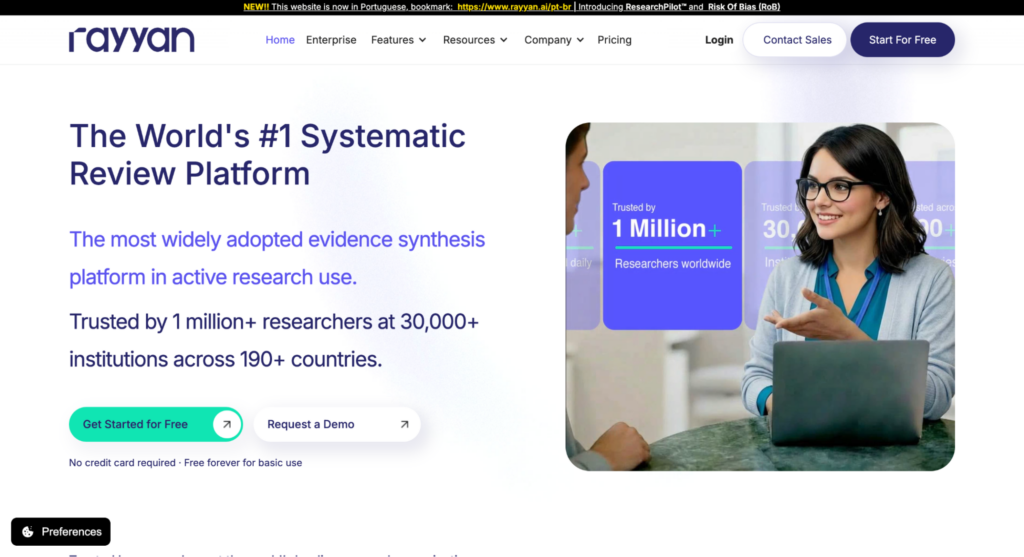
- Best for: Research teams screening systematic literature reviews who need assistance with screening and deduplication
- Standout: Used by over 300,000 researchers across 180 countries to screen more than 700 million research articles; screening reduces review time by up to 90%
- Pricing: Free version with unlimited reviews and collaborators; paid plans from $8.33 per month per user (Pro Team, billed annually) to $24.99 per month per user (Teams+)
Rayyan, founded in 2020 and headquartered in Cambridge, MA, is a collaboration platform for academic systematic literature reviews, not a Google review management tool. It appears on this list because the category of review platforms spans several definitions, and Rayyan’s assisted workflow (PICO extraction, advanced deduplication, and agent-assisted article screening) represents a genuinely distinct use case. The trick is knowing which version of “review platform” you actually need. Teams that don’t need Google review management but do need assisted research synthesis at low cost will find Rayyan’s free tier genuinely capable; paid features support PRISMA flowchart generation and automated duplicate resolution.
Important capabilities to evaluate
The best tools to monitor and improve Google reviews in 2027 share a few practical traits worth checking before you commit: real-time alerts on new reviews, a response workflow that doesn’t require logging into Google Business Profile manually, and some mechanism for generating review requests, SMS, QR, NFC, or email. Agencies should also confirm whether white-labeling is included at the base plan or gated behind an upsell. And HIPAA compliance matters for any platform serving medical or dental clients; don’t assume it’s included.
Bottom Line
These three platforms cover very different needs. For large enterprises managing brand perception at scale across many channels, Reputation is the right fit. For research teams that need assisted literature screening and deduplication, Rayyan is the clear match. For local service businesses and agencies that want SMS-driven Google review growth with a white-label layer from day one, a Google-only platform with direct CRM integrations and multi-country SMS reach will serve you best.
Keep the conversation going…
Over 10,000 of us are having daily conversations over in our free Facebook group and we’d love to see you there. Join us!