
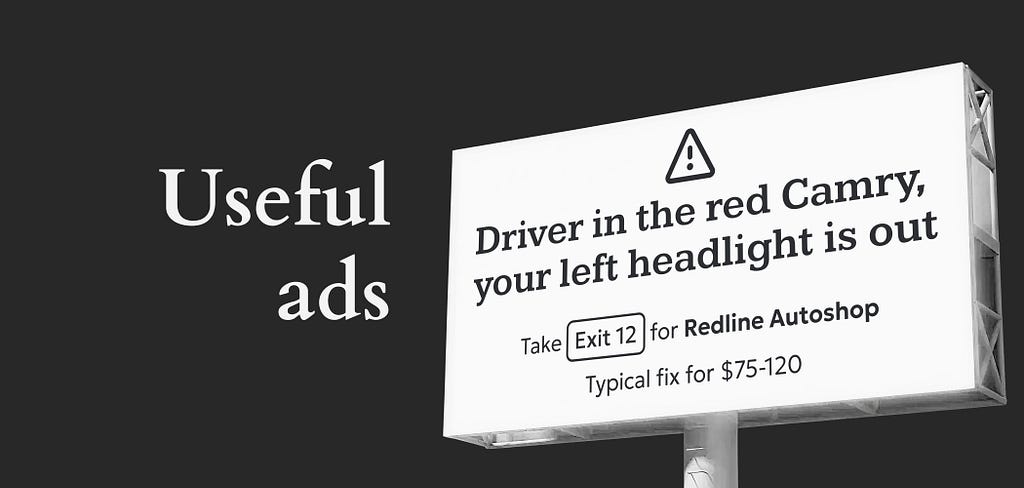
Redefining the relationship between AI utility and digital advertising
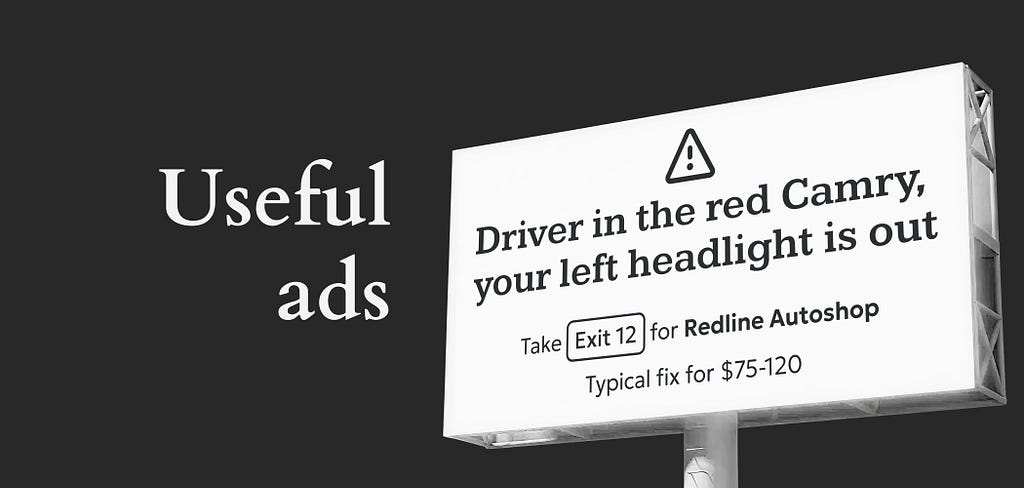
AI usage disclaimer: AI tools were used for editing visual assets, writing feedback, assistance in locating relevant sources, & Chicago-style citation formatting; all early drafts, ideas, arguments, & experiences in this article are my own.
Taxing advertising
I have a good friend & mentor at work, and we’ve been exploring new AI trends in tech and design. He brought up the news that OpenAI recently announced that it would begin testing ads in the free and Go tiers of ChatGPT in the U.S., with the promises that ads will be clearly labeled & won’t influence answers.¹ ² We’ve both fought against needless promotional content before and lamented that frontier AI platforms are falling into the same pattern. As designers and users, we’ve learned that “free” usually means putting up with interruptive, slightly creepy ads that feel more like a tax than a benefit — a frustration tax that now colors how we approach free‑tier services and now AI tools. However, we started chatting through it a bit more and explored whether there might actually be some good that can come out of it.
While advertisements in free services like ChatGPT risk frustrating users & harming brand trust, frontier AI models have a unique opportunity to replace the traditional “sponsored” tag with promotional features that genuinely enhance the utility of threads & responses — instead of undermining them. Before exploring how digital ads might actually do this, I want to briefly revisit how ads evolved on TV and YouTube, then look at the unique opportunities frontier AI platforms have, and finally ground it in a simple electrician problem to show how ads could enhance an AI chat thread.
New platform, same commercial
Billboards, cable TV commercials, and radio ads typically felt like a jarring distraction — pulling me out of driving, the show I was watching, or the song I was listening to. Further, the commercials themselves were usually irrelevant to whatever I was interested in. But since ads were less targeted to specific demographics on TV (aside from channels that entertained a certain subject like Comedy Central, Nickelodeon, or TV Land, etc.), it made sense that you would see a variety of advertisements ranging from uplifting prescription drug commercials to wacky toy ads for kids. And I remember feeling frustrated when I started seeing that same pattern begin on YouTube as though TV commercials were now coming to this new platform.
YouTube used to feel like a ‘free expression’ platform for anyone & everyone to make videos on the internet. It gave people the means to show off talented, creative, strange, and hilarious content that we used to expect from YouTube. Even though ads came onto the scene just a year later, YouTube’s CEO Chad Hurley put his ad approach this way:
We think there are better ways for people to engage with brands than forcing them to watch a commercial before seeing content. You could ask anyone on the net if they enjoy that experience and they’d probably say no.
— Chad Hurley ³
But when YouTube was acquired by Google, ads started to function like commercials on TV by the end of 2007, confirming my worry. While they were annoying, they were at least short, skippable, and rarely shown.⁴ Today, however, ads can last over 90 seconds if the user allows it, becoming a de facto commercial break. Free-tier users pay a ‘price’ too, since ad-breaks have a cool-down timer before having the choice to skip.
But YouTube ads felt more targeted, which was both helpful & creepy at times. If I started watching skateboarding videos, I might see advertisements for things skaters are interested in: skate decks, certain clothing brands, and X-Games announcements. With data sharing more broadly, I’d start seeing ads based on things I searched for online or just after I made an online purchase for a similar item. Still, it was better in a sense and more dialed in to relevant audiences than traditional TV or radio commercials.
All of this has taught us to expect that “free‑tier” experience means interruptive, slightly creepy, and rarely on our terms. That’s the mental model users will bring to free‑tier plans with ads in AI tools, and it functions like a frustration tax: free feels less like a gift and more like a tax you pay by waiting to actually use the product. The opportunity for frontier AI is to break that pattern by making promotional content feel like a feature that even paid‑tier accounts may want to keep, so paid plans can focus on adding capabilities rather than simply removing frustration taxes.
Strengths of the AI pioneer
Shifting over to ChatGPT and other frontier AI platforms, the obvious risk is that ads will simply adopt the same look & feel they have on search engines — specifically those “sponsored” results at the top of the page — but these tools are capable of much more than that. While I don’t have the exact data in front of me, I often wonder how frequently people scroll past those sponsored results to reach the first organic link and how often accidental clicks leave them feeling misled instead of helped. One recent roundup of digital ad research found that around 86% of users report banner blindness (effectively ignoring banner‑like advertising) and that average banner engagement rates hover around 0.06%.⁵
If frontier AI platforms adopt a similar pattern, I imagine the analytics data won’t change much. However, these platforms aren’t doing the same things as search engines are either — they do a lot more, of course. They’re great at synthesizing content from a variety of sources based on the content of the user’s prompt. And they’re quickly doing more.
Advertisements can also be better with AI platforms. If search engines, YouTube, and other digital platforms can have targeted ads just based on what’s known about the user’s interests, they can do all the more with a conversational AI-chat thread. Even a basic prompt contains far more data than a general search query, and users are far more likely to write in natural language to AI platforms than to traditional search boxes. This can include nuanced details, context, and specificity that wasn’t as easy to do with a search engine — even with advanced search tools. Further, AI removes the need to scan through each individual webpage because of synthesized responses and linking to the sources, allowing us to verify content.
Discovering marketed electricity
A month or so ago, several outlets in our kitchen stopped working after a GFCI outlet tripped, and a quick do-it-yourself (DIY) attempt led to a small spark behind the outlet. At that point, the problem moved from easy DIY project to I need a reputable professional who won’t overcharge me. So imagine I turn to an AI assistant and type something like:
I have three outlets that went out in our kitchen. I replaced a GFCI outlet, but when I pulled it back out to check the wiring I saw a small spark behind the outlet. I’m comfortable with basic DIY, but I don’t want to risk an electrical fire or make the problem worse. I’m looking for an electrician near me who is thorough, is transparent about pricing, and won’t pressure me into unnecessary work. Give me a few options and explain which one you’d choose for this situation.
This is a solid example of the kind of urgent, high‑anxiety scenarios where ads could either quietly undermine trust or actually help. To illustrate this further, I’m treating my electrical experience as a small case study, exploring what happens if we replace the “sponsored” tag on a search result with richer promotional features like coupons, adjacent follow-up answers, and a contextual panel that doesn’t distract from the main thread so much.
So, how might ads be smartly introduced from a prompt like this? Well, maybe there are a few ways. First, imagine a fairly conventional AI response: a ranked list of three electricians with one of them tagged “Sponsored.”
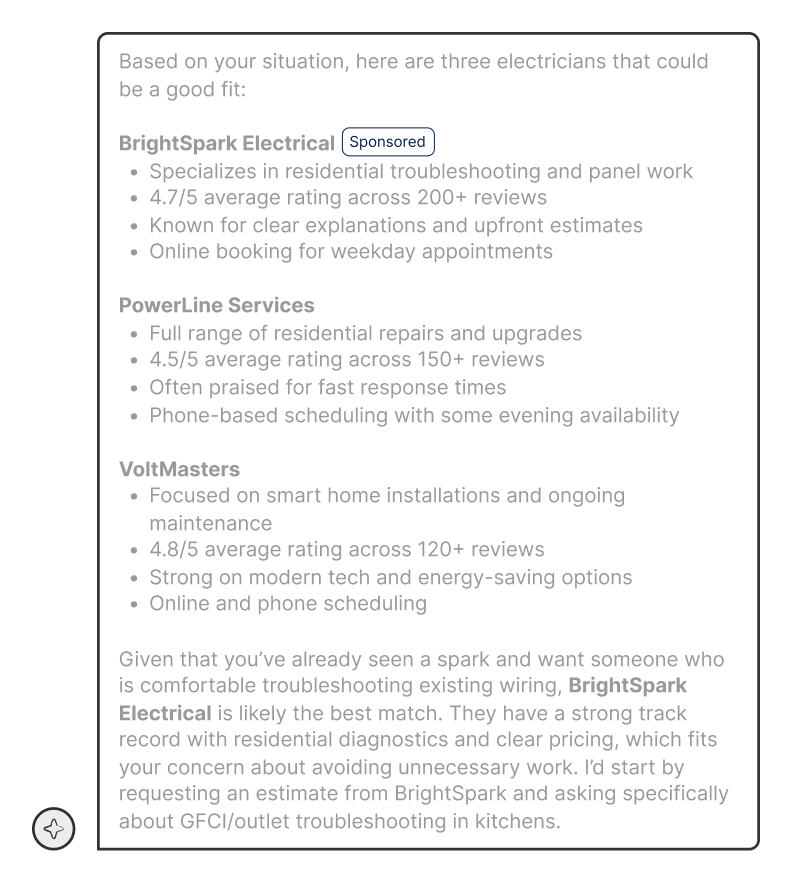
This is the default pattern we’ve inherited from search. It technically discloses the ad, but it also quietly introduces doubt for the whole recommendation: am I getting the best fit for my needs or just the company with the highest advertising budget?
In my actual experience, my AI thread included a local map view with some content cards for each electrical company in my area. Let’s build on that, using content cards as our starting point, and ask a few ‘what ifs’:
- What if the promoted company showed an accurate cost of the exact service I need, based on what other customers actually paid?
- What if there were coupons, discounts, or perks that directly benefit me for choosing that particular business?
- What if some of the “sponsored” content complimented what I was asking about, like payment plans or DIY tutorials?
Now compare that conventional AI response to one that uses thoughtfully integrated ads: the same electricians but with richer promotional features with a contextual panel that’s noninvasive to the main chat thread.

Under the hood, this card layout is doing a few specific things. First, I kept the familiar basics — company name, review rating, a link to the website, a call-to-action (CTA) to get in touch, and a short description. Second, the information is grouped by kind: company name, description & website link; cost, reviews, and a link to the full verbatims; and, promotional perk with a CTA for the next step in the user journey.
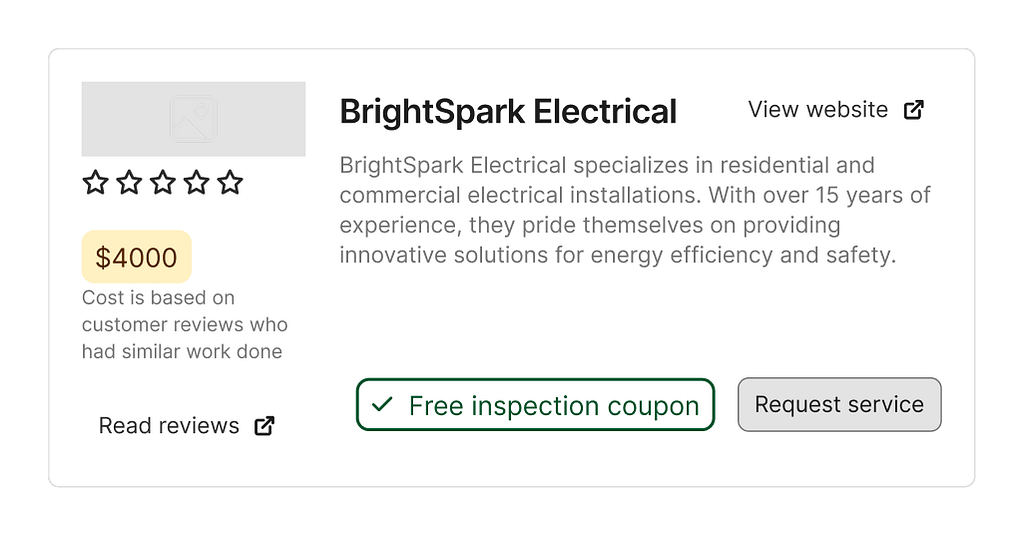
Where it begins to differ is in the cost row: instead of a vague price range, the card shows the specific amount customers reported paying for the service I’m asking about, plus a link to the reviews that mention the prices. That turns the “ad” element into a reasonable expectation, not just a badge.
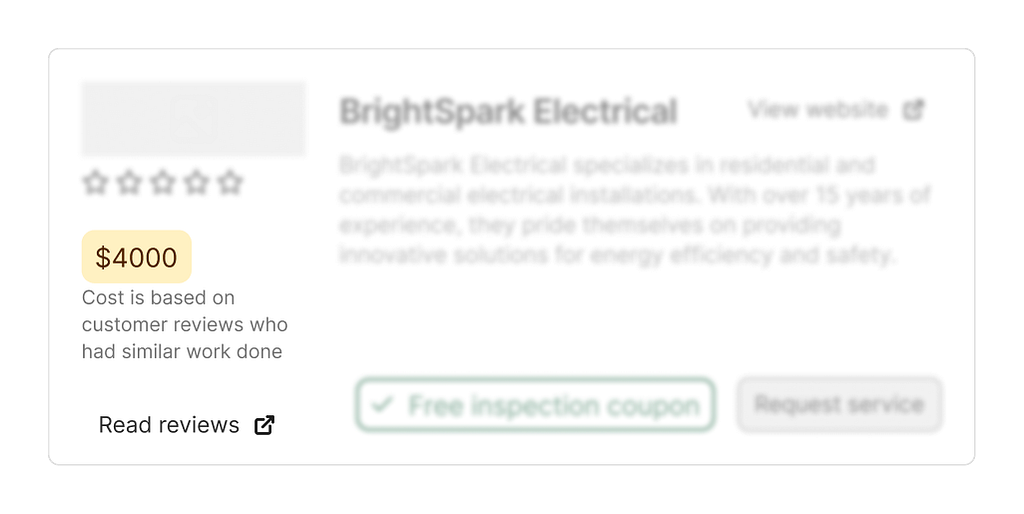
There’s also an emphasized coupon or perk label, providing another incentive that directly benefits the user, much like scouting through RetailMeNot or Groupon for a promo code. The difference is the value is surfaced in context, before you ever hit a checkout page.

Last, sponsored content can come from an information scent by labeling actions in the user’s own language (“Reliable DIY tutorials,” “Electricians with payment plans,” etc.), making them feel like relevant next steps rather than distractions. Together, these tweaks improve the overall signal‑to‑noise ratio by making sure every promotional element either clarifies incentives or opens a relevant, optional path you might actually want to take.
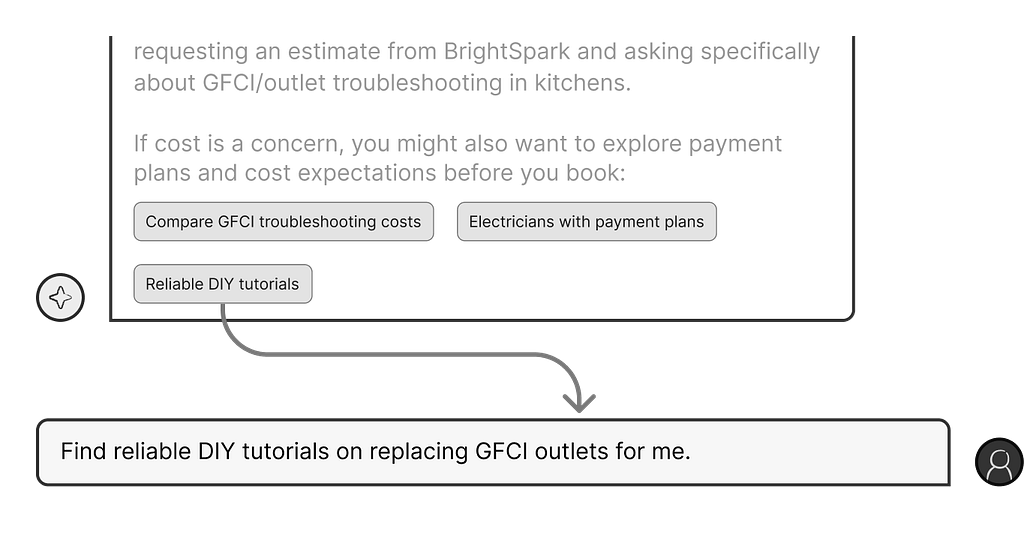
Each predetermined CTA launches a focused sub‑thread where the AI can surface related, sponsored resources without hijacking the main topic. This is where the thoughtfully-integrated ad pattern really shows up: the promotion lives in a side‑path the user chooses, rather than shoehorned into the main thread.

For the overall layout, all of this can be contained in a contextual, right‑aligned panel that curbs banner blindness by keeping the promotional content inside a dedicated space rather than cluttering the chat or page margins. It’s still promotional, but will compliment the user’s thread instead of interrupting the train of thought with noise or other frustration taxes.
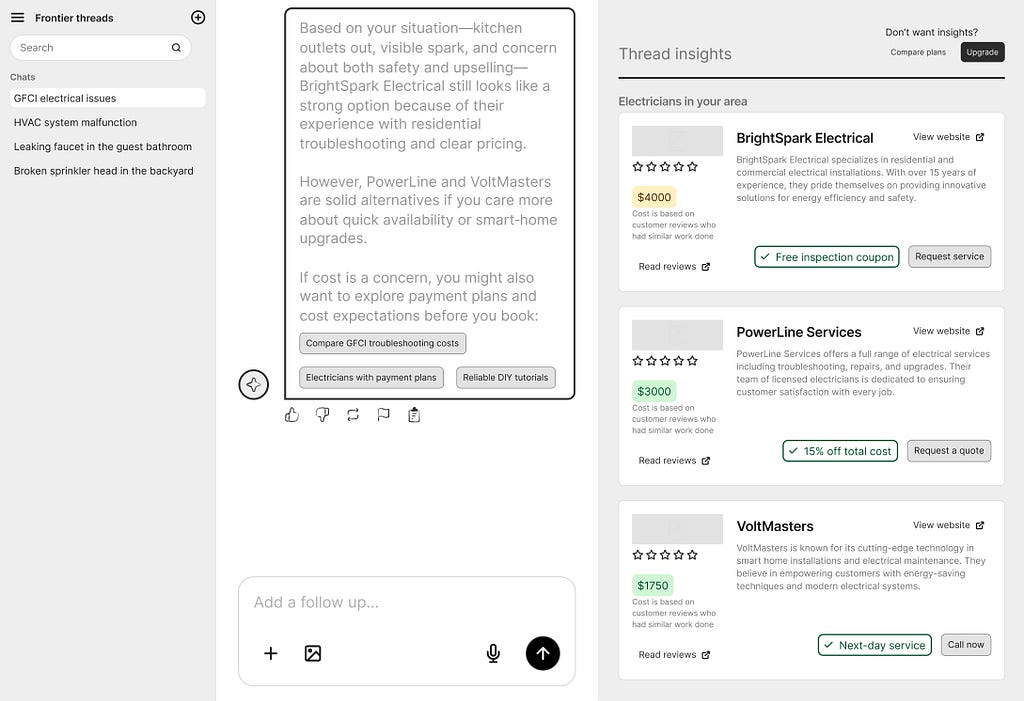
Cards with all the ad-types are most likely the ‘maximal’ version for a high‑stakes case, but even one or two of these ideas would give users a real sense of reciprocity & incentive to interact with the advertised perks. Companies willing to pay for ad space could compromise by allowing more transparency by showing the specific average amount customers paid, reciprocity by offering concrete perks & coupons, or autonomy by sponsoring alternative solutions like DIY content for their questions.
Compared to the tiny “sponsored” tag next to BrightSpark Electrical in the conventional AI response, these cards make the advertising work more for the users. The promoted content is still promotional, but it’s packaged utility in the form of transparent costs, valuable perks, and alternative solutions. Consequently, it’s more likely users will actually engage with it, instead of tuning out the noise or being suspicious of it.
Mapping out the new frontier
Free‑tier AI platforms with ads don’t have to inherit the same frustration tax we’ve learned from YouTube commercials and sponsored search results. The electrician example is small, but it shows how promotional content can be reshaped into something that actually helps in a stressful, high‑stakes situation.
Structurally, the move is simple: treat ads as enhancing features, not just paid recommendations. Thoughtfully-integrated ads in content cards, sub-threads offering alternative solutions, and dedicated layouts that compliment the main thread give advertised content visibility while simultaneously benefitting the user. At their best, these patterns also line up with the UX virtues I’ve hinted at earlier & argued for elsewhere: transparent content from promoted businesses, reciprocity in the form of perks & discounts, and preserving user autonomy by allowing the user to choose alternative paths — while also removing frustration taxes.⁶
As more frontier AI platforms roll out free‑tier plans with ads, the real question isn’t whether to show ads at all, but which patterns we normalize. Do we copy the suspicious “sponsored” tag & hope users still engage with it, or invest in thoughtful experiences that users would miss if premium plans removed them? Now is the moment to decide which pattern AI platforms ship.
References
[1] Simo, Fidji. “Our Approach to Advertising and Expanding Access to ChatGPT.” OpenAI. January 16, 2026. https://openai.com/index/our-approach-to-advertising-and-expanding-access.
[2] Capoot, Ashley. “OpenAI to Begin Testing Ads on ChatGPT in the U.S.” CNBC, January 16, 2026. https://www.cnbc.com/2026/01/16/open-ai-chatgpt-ads-us.html.
[3] QQTube (Terri Pinyerd). “When Did YouTube Start Ads? | A History of Video Advertising.” QQTube Blog, October 6, 2025. Accessed February 9, 2026. https://www.qqtube.com/blog/when-did-youtube-start-ads.
[4] Holmes, Gareth. “A Brief History of Video Advertising.” New Digital Age, 2026. https://newdigitalage.co/technology/a-brief-history-of-video-advertising.
[5] GrowthSRC Team. “Banner Blindness Statistics & Studies You Need to Know in 2025.” GrowthSRC. Last modified 2026. https://growthsrc.com/banner-blindness-statistics-studies.
[6] Walsh, Tanner. “Eudaimonistic-Centered Design: The Virtues of UX.” UX Collective (Medium). February 16, 2022. https://medium.com/user-experience-design-1/eudaimonistic-centered-design-92b69654ee25.
Designing useful ads was originally published in UX Collective on Medium, where people are continuing the conversation by highlighting and responding to this story.