
What this gentle genre of design reveals about building digital products for anxious times.
At some point in the last few years, millions of people arrived at the same conclusion: what they needed was a smaller, slower, quieter world. One with fish to catch, vegetables to grow, and absolutely no breaking news alerts. And so we reach for a virtual watering can.
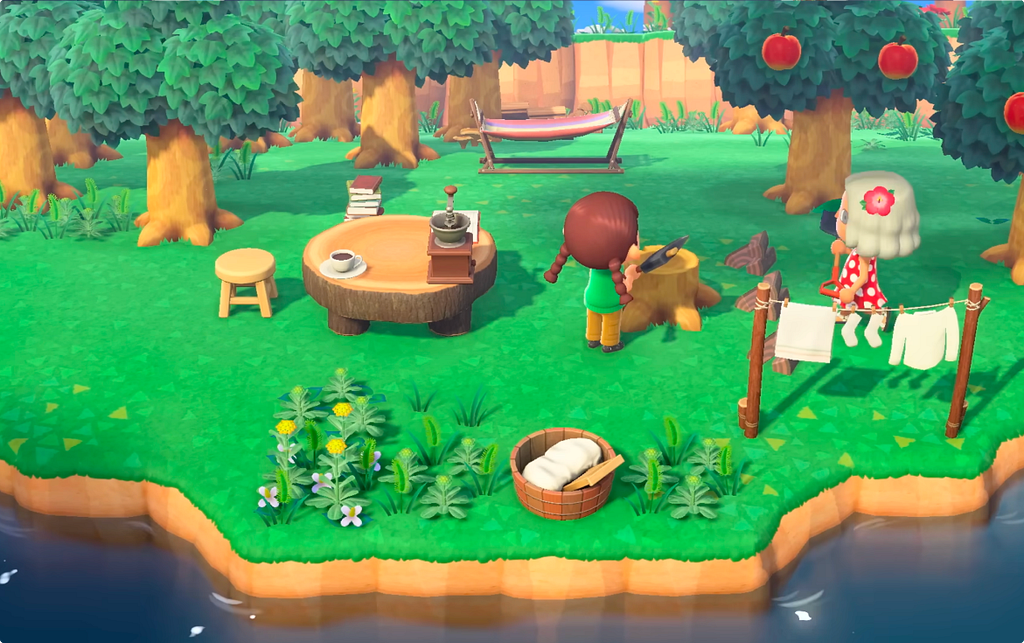
Cosy games are having a moment. Arguably, they’ve been having it for a while. Animal Crossing: New Horizons launched in March 2020, the same week California announced its first stay-at-home order as the pandemic took hold. The title went on to sell 11.77 million units in its opening weeks, which made it the best start for any Switch title at the time. That timing was coincidental. The response was not.
Valleys, farms, and the rise of peaceful islands
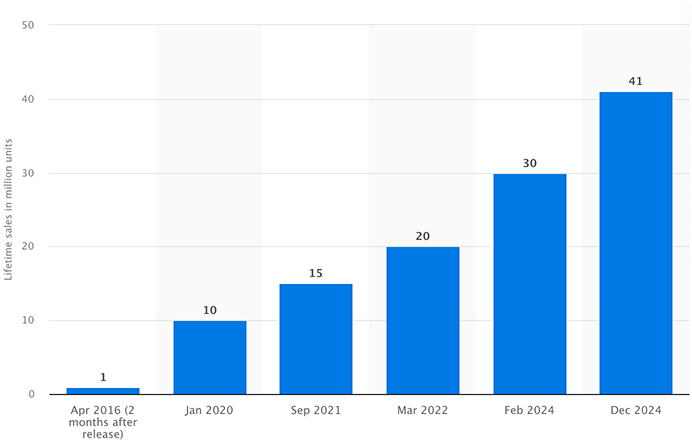
Nearly 50 million copies later, it remains one of the best-selling games in history. Stardew Valley, a farming game developed entirely by one person, has since matched it. To put that in context, according to industry analyst GameDiscoverCo, the share of Steam titles grossing over $100k that describe themselves as cosy grew over 6 times since 2022. The genre is no longer a niche. It’s a movement.
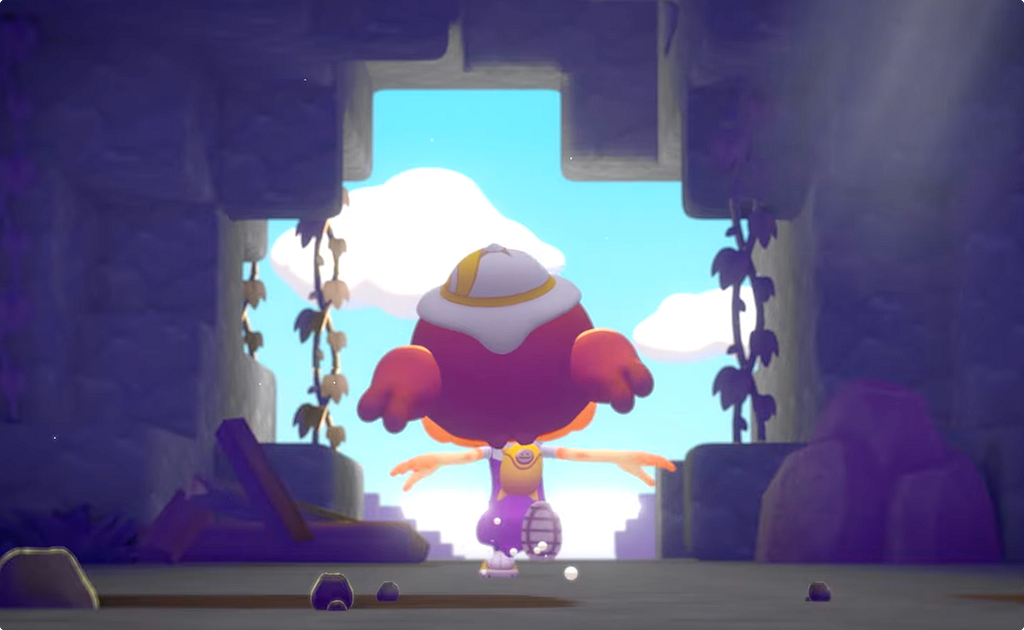
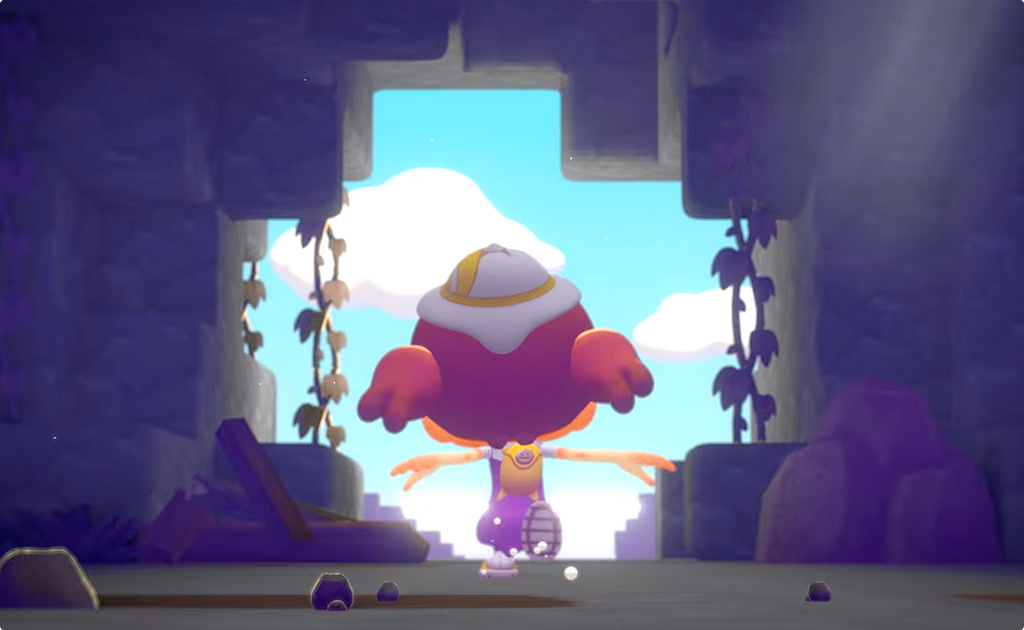
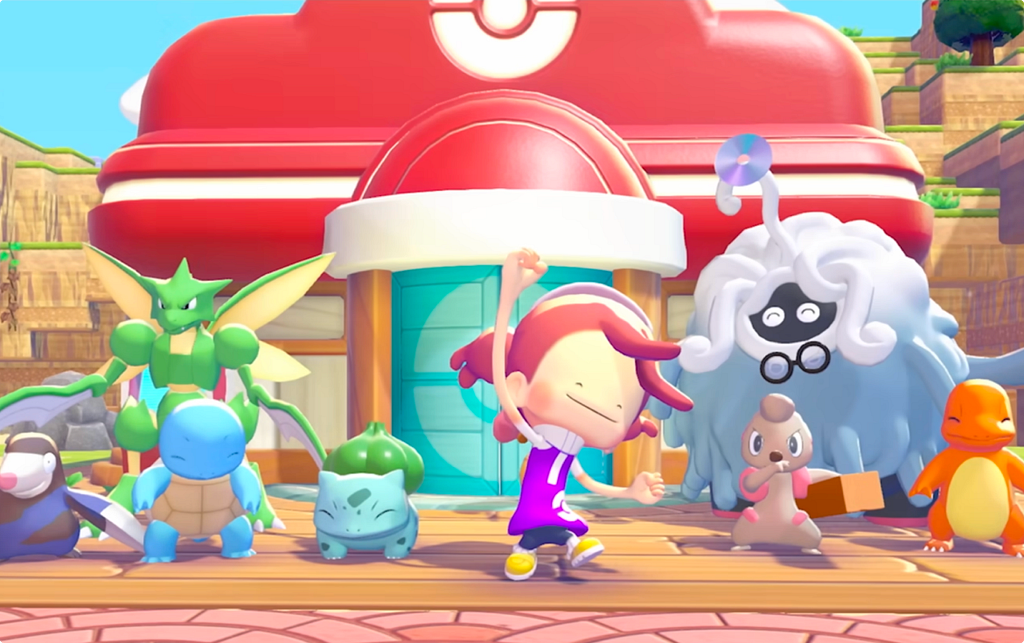
Now, in March 2026, Pokémon Pokopia has launched to near-universal acclaim: a life sim about rebuilding an abandoned island at your own pace, with no fail states, no timers, and no enemies. Just you, a Ditto in a human disguise, and a world that needs tending. The critics gave it an 89 on Metacritic. The timing, again, feels very deliberate. Even if it wasn’t.
Something is clearly going on. For designers, the interesting question is not just why people reach for these experiences, but what the genre has quietly figured out about human psychology that the rest of the product world is still catching up on.
Safety, abundance, softness
Before getting into the mechanics, it’s worth pinning down what “cosy” actually means, because it is, as any fan of the genre will tell you, a slippery term. Game design research collective Project Horseshoe defines cosiness as evoking the fantasy of safety, abundance and softness.
- Safety means an absence of danger or risk, where the player can be vulnerable without consequence.
- Abundance speaks to a world that provides: there is always enough to gather, enough to build, enough to do.
- Softness signals a low-stress environment where tempo is slow and scope is manageable. Activities are non-urgent but feel meaningful.
That three-word definition is a more precise design brief than it first appears. It’s not about aesthetics, though the rounded corners and pastel palettes are doing real work. It’s about psychological state management. The cosy genre is, at its core, designing for a nervous system that needs to come down.
Research into why people seek these experiences points to something called emotion-focused coping. Rather than tackling the source of stress directly, it builds the psychological resilience that makes doing so more possible. Cosy games provide what psychologists call a restorative environment: a space that allows mental fatigue to recover, attention to reset, and the sense of agency to return. Not escapism in the pejorative sense, but recovery in the clinical one.
The distinction matters. Cosy games are easy to dismiss as a light-coloured form of avoidance, but that framing misses the nuance. Used in moderation, they appear to do what they promise: improve mood, steady emotions, and reduce that low hum of dread. It’s only at the extremes that things get murkier. Excessive play among people already struggling can work against them. In other words, this kind of gentle design is not a cure. But it is, when done well, a genuinely useful tool.
Low stakes, high agency
A sentiment analysis of Animal Crossing tweets during the pandemic found that 72% of players associated the game with relaxation. Meanwhile, a Frontiers study found that as anxiety levels increased, so did engagement with the game specifically, not gaming in general. People weren’t just filling time. They were reaching for something that offered what their actual lives temporarily could not: a sense of control.
This is the part that should interest designers most. Cosy games are almost always built around what psychologists call low-stakes agency: the ability to make meaningful choices that have predictable, positive outcomes, in a context where failure either doesn’t exist or carries no real cost. You can choose what to build, when to build it, and at what pace. The world responds to your input. Things improve because of what you do. For a brain that has been marinating in uncertainty, that feedback loop is not trivial.
Self-Determination Theory, one of the more robust frameworks in motivational psychology, identifies autonomy, competence and relatedness as the three core psychological needs that, when met, produce genuine wellbeing. Animal Crossing: New Horizons, according to qualitative research with players during the pandemic, satisfied all three:
- players felt free to structure their own experience (autonomy),
- saw steady, visible progress (competence),
- and maintained social bonds through the setting’s shared island mechanics (relatedness).
The game wasn’t a distraction from these needs. It was a delivery mechanism, at a time when the real world was systematically failing to provide them.
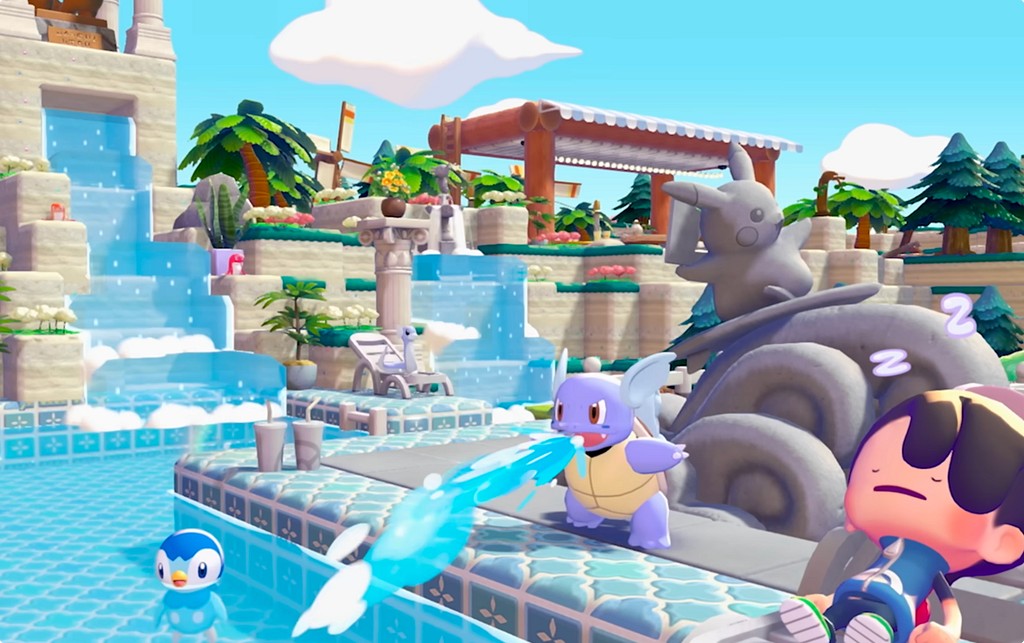
Pokémon Pokopia is built on an almost identical psychological blueprint. Nintendo’s own framing is telling: the main motivation is not to reach the end credits, but to create a world and live in it.
Chief director Takuto Edagawa described the core design question as mapping the cycles of player motivation, asking what players want to do and what they would want to start doing next. The art style keywords were “chill and pop’” and the music was built around the themes of “reconstruction and recovery.” That is not the language of entertainment. It is the language of healing.
Grief, but make it gentle
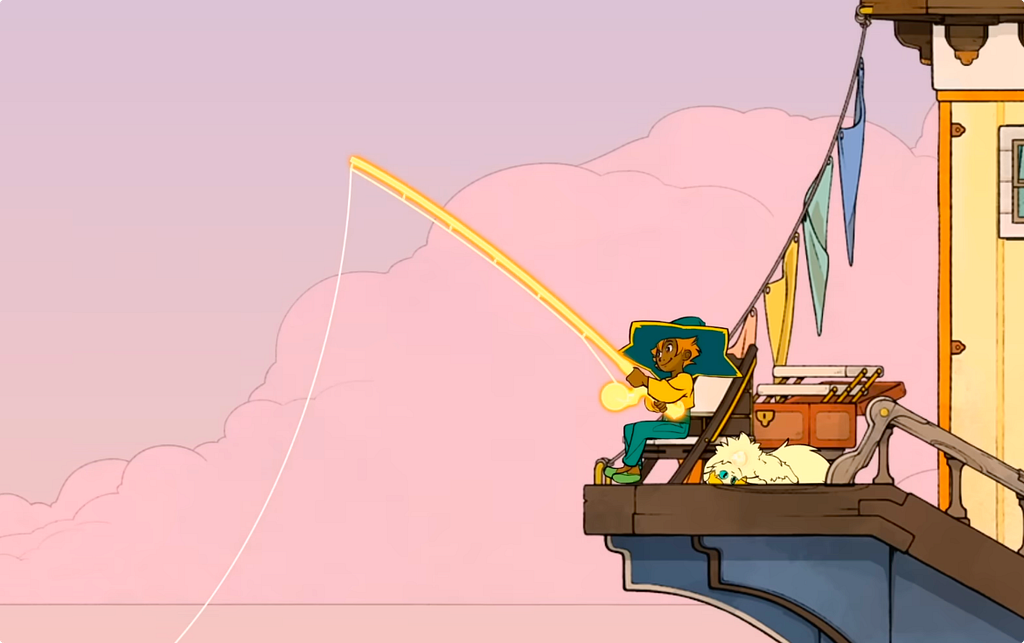
If Animal Crossing is the genre’s crowd-pleaser, Spiritfarer is its thesis statement. Released in 2020, the game casts you as a ferrymaster for the deceased, somewhere between Charon and a palliative care nurse, tasked with helping a cast of characters fulfil their final wishes before guiding them through the Everdoor. On paper, it is a game about death. In practice, it is one of the most carefully designed emotional experiences in the medium.
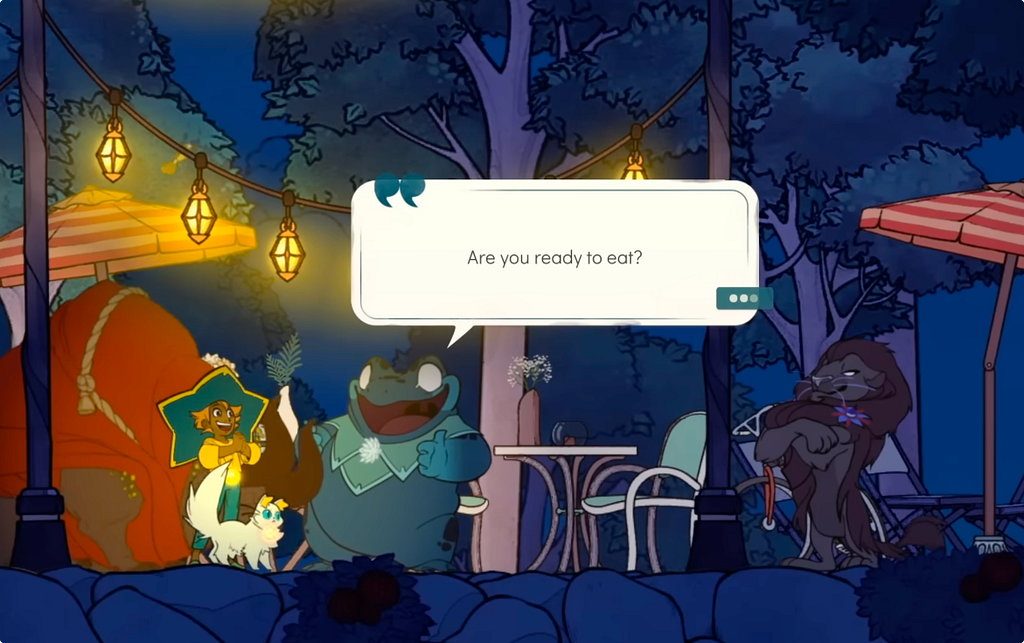
What makes Spiritfarer remarkable, from a design perspective, is that it doesn’t soften grief so much as structure it. A Springer study analysing the experiences of 54 players found that the game impacted players’ outlook on grief, empathy and loss management, not by resolving those feelings, but by creating a protected space in which to experience them. The hugging mechanic, in which you periodically embrace the spirits in your care with no tangible gameplay benefit, is the kind of design decision that looks small on a spec sheet and enormous in practice. Nurture as mechanic. Care as interaction model.
“It’s not our message, it’s all entirely yours. We’ve only created a playground and framework for you to deal with your own emotions in there.”
— Nicolas Guérin, Creative Director of Spiritfarer
Psychologists who study bereavement describe healthy mourning as a pattern rather than a sequence: moving between sitting with loss and returning to daily life, back and forth, for as long as it takes. Spiritfarer’s design mirrors this almost precisely. While you’re grieving one character’s departure, you’re tending to another’s requests. The ship fills with empty rooms, but also with new arrivals. You move between loss and life in a rhythm that players described as therapeutic (sometimes in ways they hadn’t anticipated), processing real grief through the proxy of the game.
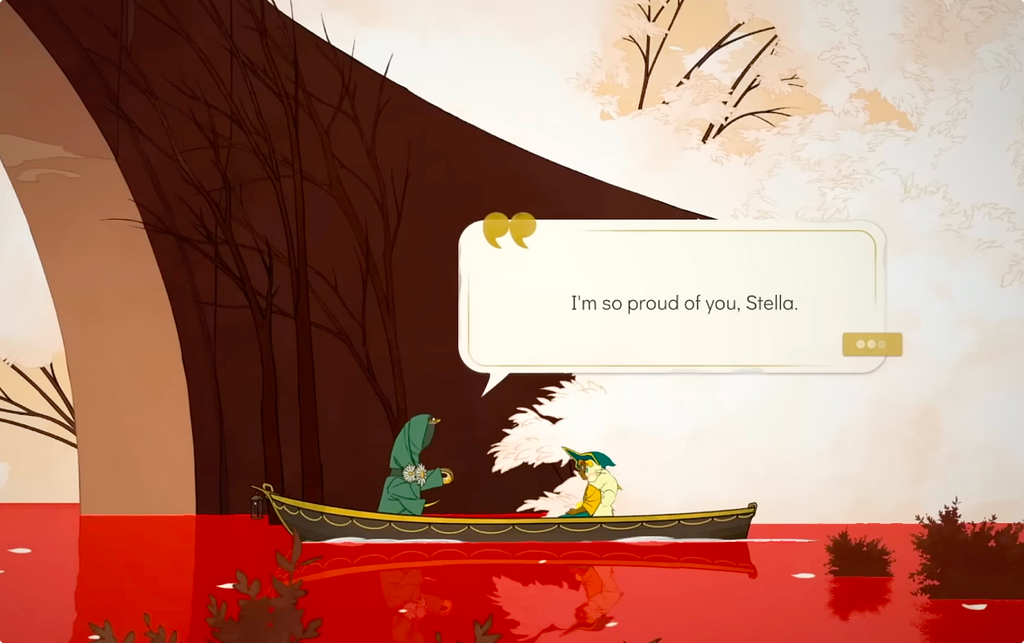
The design lesson here is not that every product should make users cry. It’s that soft aesthetics are not inherently superficial. In Spiritfarer’s case, the soothing visuals, gentle music and unhurried pace are load-bearing: they create the shelter that allows players to engage with material that would be unwatchable in a harsher register. The cosiness is doing structural work.
When cosy gets intentional
The influence of cosy game design has migrated, with varying degrees of success, into the app ecosystem. Finch is the most interesting example: a self-care app structured around a virtual pet bird that grows as you complete daily check-ins, breathing exercises and journaling prompts. Users can also set their own goals, ranging from clearing their inbox to doing laundry to completing an essay, all of which contribute to the tiny digital creature’s development.
Finch folds these into the same reward loop by the bird learning something new and going on adventures every time you show up for yourself. It is resolutely, deliberately gentle with its rounded typefaces, muted palettes, and lack of negative reinforcement for missing a day.
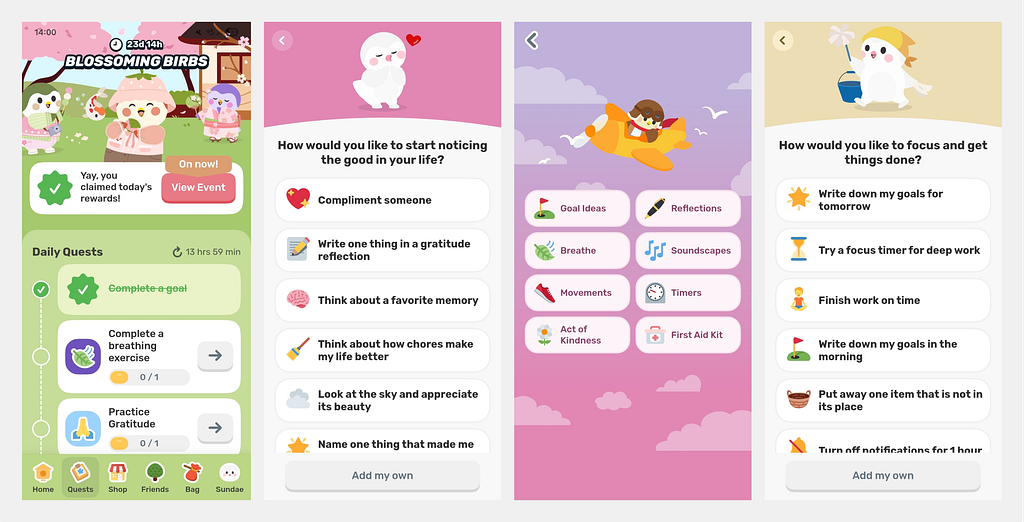
The design philosophy behind Finch is simple but precise: every delightful element serves a therapeutic goal. The animated companion builds emotional trust. The measured progression model, starting with basic check-ins and building gradually toward more substantive reflection, mirrors the kind of scaffolded exposure used in behavioural therapy. The collecting mechanics (where you dress up your bird or furnish their home) tap into the psychology of progress and achievement without weaponising it. There are no streaks you’ll feel devastated to break, so you feel safe picking up where you left off.
The critical distinction between Finch and the category of pastel-wrapped wellness apps it sits alongside is that the calming visuals are not decorative. It is functional. The softness lowers the psychological barrier to entry for activities like journaling, mood tracking, breathing exercises, and the quieter work of simply checking in with yourself.
This is where the critical design question surfaces: is the cosy aesthetic doing genuine psychological work, or has it become a shorthand that teams reach for without interrogating why? Rounded corners and pastel palettes applied to a product that still punishes missed days, creates FOMO through time-limited events, or deploys variable reward mechanics is not cosy design. It is dark pattern design wearing a soft cardigan. The visual language is borrowed; the psychological intent is opposite.
Soft lessons, hard rules
The cosy game genre has, without necessarily setting out to theorise, landed on a set of design principles that hold up under scrutiny. They’re worth naming explicitly.
Predictable positive feedback loops.
Cosy games operate on the principle that effort should produce visible, positive change. The island improves. The bird grows. The town fills with Pokémon. This sounds obvious, but it runs counter to a great deal of product design that optimises for variable reward: the unpredictable hit that creates compulsion rather than comfort. Duolingo’s old heart system was a useful counterpoint. Mistakes cost hearts, hearts cost progress, and the anxiety that created was precisely the opposite of what the research recommends.
Agency without consequence.
The ability to make choices that matter, in a context where getting it wrong doesn’t hurt, is genuinely calming. For product designers, this might mean thinking carefully about the cost of errors in user flows. Inline validation that flags errors before submission rather than after is a small example of the same principle: the user retains agency, the cost of getting it wrong drops, and the interaction feels safer as a result. Not every product moment needs to carry weight.
Pace as a feature, not a failure.
Cosy games explicitly design for slowness. Pokopia tells you directly: there’s no need to rush. This is a design value, not a technical limitation. In a product landscape obsessed with reducing friction and speeding up every interaction, there is an argument to be made for intentional pace, for moments designed to breathe.
Aesthetics as psychological infrastructure.
The visual and audio choices in these games are not cosmetic. The hand-drawn art, the understated soundtracks, the rounded forms: these are actively signalling safety to a nervous system that is scanning for threat. You don’t need pastel palettes to apply the principle. If you’re designing a product that serves users in vulnerable or high-anxiety contexts, the question of what your aesthetic is communicating is not secondary. It may be primary.
None of this is an argument for making every product look like a Studio Ghibli film. It’s an argument for taking seriously the question of what psychological state your design is producing, and whether that state is the one your users actually need. Restorative environments, low-stakes agency, predictable feedback: these are not cosy game mechanics. They are basic psychological conditions for feeling safe enough to engage. The genre just happened to figured that out first.
The edges of gentle
There is one last thing worth saying, because the honest version of this conversation includes it. Cosy design, however well executed, has limits.
It works best as a gentle buffer, not a lifeline for those in genuine crisis. Finch, to its credit, is explicit that it is not a substitute for professional care. The genre as a whole cannot metabolise real grief, or treat clinical depression, or resolve the conditions that produce collective anxiety in the first place.
What it can do is offer a moment of genuine recovery: a space where a depleted nervous system gets to regulate, where agency feels accessible again, where the feedback loops are kind. That counts. In a world that generates ambient dread at scale, the ability to design for restoration rather than engagement is a meaningful capability. It’s just not the whole answer.
The world is heavy. Sometimes you need to go virtual fishing or tend to a pixel garden. The best of this genre gets that. It knows when someone needs to rest, and sends them back to the world a little steadier.
Thanks for reading! 📖
If you enjoyed this, follow me on Medium for more on the psychology of design and technology.
References & Credits
Short, T. X., et al. (2017). Coziness in games: an exploration of safety, softness, and satisfied needs. Project Horseshoe. https://www.projecthorseshoe.com/reports/ph17/ph17r2.htm
Yee, J., & Sng, C. (2022). Animal Crossing and COVID-19: A qualitative study examining how video games satisfy basic psychological needs during the pandemic. Frontiers in Psychology, 13, 800683. https://doi.org/10.3389/fpsyg.2022.800683
Lewis, J. E., Trojovsky, M., & Jameson, M. M. (2021). New social horizons: anxiety, isolation, and Animal Crossing during the COVID-19 pandemic. Frontiers in Virtual Reality, 2, 627350. https://doi.org/10.3389/frvir.2021.627350
Association of Social Gaming with Well-Being (Escape COVID-19): A Sentiment Analysis. (2021). PMC. https://pmc.ncbi.nlm.nih.gov/articles/PMC8553656/
Glaser, N., Jensen, L., Riedy, T., Center, M., Shiett, J., et al. (2024). Unlocking the Everdoor: analyzing the serious game Spiritfarer. Educational Technology Research and Development. https://doi.org/10.1007/s11423-024-10357-x
Cozy games and their impact: an exploration study. (2024). Diva Portal (University of Skövde). https://his.diva-portal.org/smash/get/diva2:1881616/FULLTEXT01.pdf
Hu, F., Tai, Z., & Liu, J. (2025). The positive effect of video-game play on college students’ anxiety and depression symptoms during the COVID-19 pandemic shelter-in-place lockdowns: mixed methods study. JMIR Serious Games, 13, e58857. https://doi.org/10.2196/58857
Edagawa, T. (2026). Pokémon Pokopia: the final preview. IGN. https://ign.com/articles/pokemon-pokopia-the-final-preview
GoNintendo. (2026). Pokémon Pokopia devs share fresh insight (key phrases, dev team size, philosophical discussions, localization challenges and more). https://gonintendo.com/contents/57781-pokemon-pokopia-devs-share-fresh-insight-key-phrases-dev-team-size-philosophical
Morton, L. (2026). The cosy game boom is the clearest trend on Steam over five years of data. PC Gamer. https://www.pcgamer.com/games/life-sim/the-cozy-game-boom-is-the-clearest-trend-on-steam-over-five-years-of-data/
Barone, E. (2026). Stardew Valley 10-year anniversary. Stardew Valley. https://www.stardewvalley.net/stardew-valley-10-year-anniversary/
Nintendo. (2026). Shape the world and build a cosy new life in Pokémon Pokopia, available now. https://www.nintendo.com/au/news-and-articles/shape-the-world-and-build-a-cosy-new-life-in-pokemon-pokopia-available-now/
NordiskBil. (2026). Pokémon Pokopia is out, making Nintendo Switch 2 the home of cozy games. https://www.nordiskbil.com/nintendo-switch-2-cozy-games/
The calm and charm of cosy games in a chaotic world was originally published in UX Collective on Medium, where people are continuing the conversation by highlighting and responding to this story.