
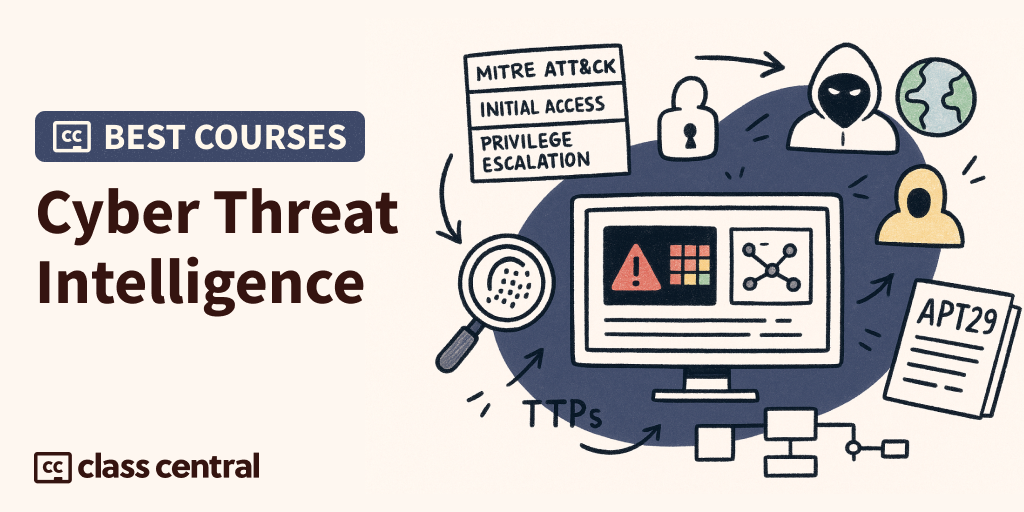

At 2:15 AM, our monitoring systems exploded with alerts. One of our clients, operating in a country engaged in armed conflict, was under attack. We’d received threat intelligence hours earlier from our CISO warning of potential cyber operations targeting organizations in the conflict zone. Now those warnings had become reality: massive EPS (Events Per Second) spikes across multiple servers, unusual egress traffic patterns suggesting data exfiltration attempts. Our threat intelligence team moved fast, correlating the attack patterns with known adversary tactics we’d been tracking. Within minutes, we contained what could have been a catastrophic breach.
Every day, you come across news about cyberattacks. Each one leaves behind digital artifacts, including IOCs (Indicators of Compromise) and attacker tactics and techniques. As a Threat Intel Analyst, our primary concern is analyzing this data to produce actionable intelligence that prevents future attacks. This intel is then shared with each client or integrated directly into their SIEM, turning raw data into real defense.
However, here’s where the real challenge lies: the threat landscape is constantly evolving. Threats posed to the banking sector are vastly different from those targeting the healthcare or automobile industries. Some threat actors have purely financial motives, hunting for quick ransomware payouts. Others want to steal credentials, conduct espionage, or simply deface websites for ideological reasons. They choose their methods and targets accordingly, creating a complex web of adversaries that requires constant analysis and adaptation.
Cybercrime cost the world an estimated $10.5 trillion in 2025, and Cybersecurity Ventures expects that number to keep climbing through the end of the decade. Organizations are hiring analysts who can decode these threat patterns. If you’re ready to enter this field, these courses will teach you to track adversaries, analyze their methods, and turn scattered intelligence into strategic defense.
What is Cyber Threat Intelligence?
Cyber Threat Intelligence is knowledge about adversaries: their motivation, intentions, and methods. It is collected, analyzed, and disseminated to help security and business teams protect critical assets. In simpler terms, we gather intel to enable threat-informed defense, staying one step ahead of attackers rather than constantly playing catch-up.
Think of it as the difference between knowing that cyberattacks happen versus understanding exactly who’s targeting your industry, what tools they’re using, and what they’re after. This intelligence transforms security from reactive firefighting to proactive defense.
Cost of Neglecting CTI
In 2021, gaming giant EA (Electronic Arts) learned this lesson the hard way. Attackers stole nearly 780 GB of data, including valuable source code for games like FIFA 21 and the Frostbite engine. The kicker? The initial breach started with stolen Slack session cookies that were being sold on dark web forums for a meager $10.
This was a preventable breach. Had EA’s threat intelligence team been monitoring dark web marketplaces for mentions of their company or employee credentials, they could have detected and invalidated those cookies before attackers gained access. Instead, a $10 purchase led to one of gaming’s most significant data breaches.
Types of Threat Intelligence
Threat intelligence operates at three distinct levels, each serving different audiences and purposes:
- Tactical Intelligence: Focuses on TTPs (Tactics, Techniques, and Procedures) used by threat actors. This technical intelligence feeds directly into security tools, covering IOCs, malware signatures, and attack patterns that your SOC team uses daily.
- Operational Intelligence: Provides specific technical details about ongoing or imminent attacks. This includes campaign analysis, threat actor infrastructure, and targeted vulnerabilities, the intelligence that helps incident responders and threat hunters understand active threats.
- Strategic Intelligence: High-level analysis designed for executives and decision-makers. This non-technical intelligence covers threat landscape trends, risk assessments, and adversary motivations that shape security strategy and budget decisions.
Why Should You Trust Us and This Guide?
Class Central is a TripAdvisor for online education. We make it easier to discover the right courses without having to jump across multiple platforms. With over 250,000 courses in our catalog, we’ve already helped more than 100 million learners find their next course.
Now, why should you trust this guide?
In my capacity as a senior security analyst, I have created multiple threat intel reports and advisories for clients and leadership. Additionally, I have trained young professionals to gather effective threat intel and map attacks to the MITRE ATT&CK Framework. I can vouch for this guide as I have personally benefited from the courses that I have covered in the list.
Which Cyber Threat Intelligence Course Is Right for You?





Learn CTI End to End, from Frameworks to Platforms (Udemy)
- Level: Beginner to Intermediate
- Rating: 4.5
- Duration: 8 hours
- Cost: Paid

What You’ll Learn
- SOC, Azure, and Zero Trust foundations before the CTI material starts
- The intelligence cycle and CTI-related frameworks, including MITRE ATT&CK
- Threat actors and APTs, and how to research them
- CTI tools and platforms: open-source TIPs and Microsoft Defender XDR
- Where generative AI genuinely helps a CTI workflow
- Four case studies: MISP on Azure, researching APT41 with ATT&CK, CTI in Microsoft Sentinel, and building a CTI program
Most CTI courses stop at concepts. The gap I see most often in junior analysts isn’t that they can’t define the intelligence cycle, it’s that they’ve never touched the platform where the intel actually lives.
This is the course that closes that gap. Christopher Nett, who also teaches the ATT&CK course below, spends the back half on tooling: standing up MISP on Azure, working with open-source threat intelligence platforms, and wiring CTI into Microsoft Sentinel. That last part matters, because feeding intel into a SIEM is a large share of the day job in most CTI roles.
Two caveats. The APT41 case study overlaps with the ATT&CK course, so if you take both, expect some repetition. And the Azure and Defender XDR material means the hands-on portions lean Microsoft. If your shop runs Splunk or Elastic, treat those sections as transferable patterns rather than step-by-step instructions.
It also covers something most CTI syllabi still ignore: a blueprint for building a CTI program from scratch. If you’re the person being asked to start the function rather than join one, that section alone justifies the price.
Learn the Basics of MITRE ATT&CK Framework and CTI (Udemy)
- Level: Beginner to Intermediate
- Rating: 4.5
- Duration: 3.5 hours
- Cost: Paid

What You’ll learn
- Basics of SOC and security solutions like EDR, XDR, SIEM, SOAR
- MITRE Att&ck Framework, Pyramid of Pain
- Use case of APT 41/ Winnti, mapping it to MITRE and Pyramid of Pain
I completed this course a while back. This course is very well designed to give you the crux of the MITRE ATT&CK framework. MITRE is a globally accessible knowledge base of adversary tactics, techniques, and procedures (TTPs):
- Tactics – Tell us WHY an adversary is attacking, i.e., intent and objective.
- Techniques – Deal with HOW an attack works, i.e., methods used in the attack.
- Procedures – Tell about a set of actions performed using a technique to execute an attack.
For example, Reconnaissance (Tactic) → Active Scanning (Technique) → Vulnerability Scanning (Sub-technique).
Christopher Nett shares a lot of practical insight, which makes this course ideal for anyone looking to learn MITRE for real-world defense. It covers both the theoretical and practical aspects through use cases of Winnti/APT 41 (Advanced Persistent Threat). Further, it delves into other frameworks like the Cyber Attack Kill Chain and the Diamond Model of Intrusion. This course is suitable for beginners and experienced professionals who wish to brush up on their fundamentals.
NOTE: A lot of CTI terms trace their origin to military jargon. The Cyber Attack Kill Chain, for example, was coined by Lockheed Martin.
Learn Threat Hunting Skills for SOC Analysts (Udemy)
- Level: Intermediate to Advanced
- Rating: 4.6
- Duration: 8.5 hours
- Cost: Paid

What you’ll Learn
- How to set up a lab using VMware Workstation Pro
- Advanced threat hunting scenarios using tools like Splunk as SIEM and BloodHound to map Active Directory
- Essential tools & network analysis using tools like Wireshark, tShark, RITA
- Advanced detection with Suricata/Zeek
As a senior security professional, I have come across incidents where there was a breach without any alerts getting triggered. It’s a nightmare for any security professional, but this can be prevented by focusing on detection over prevention.
This gives rise to a new breed of security analysts, a.k.a “Threat Hunters,” who operate with the mindset that our defense is already breached. That gives us the Golden Rule of Cybersecurity: “Assume breach.”
What I like about the instructor, Vonnie Hudson, is that he doesn’t follow a textbook approach; rather, he hits you with the ground realities of security operations. As modern SOCs require proactive threat hunting, it moves beyond traditional security monitoring. The course focuses on tools like Splunk, which is widely used in the industry.
This course directly addresses the skills hiring managers look for in SOC analysts. It’s ideal for someone looking to transition from a Tier 1 to a Tier 2 SOC analyst role. But if you’re new to cybersecurity, you might feel overwhelmed, so cover foundational courses first.
Learn to Gather Threat Intel to Take Down Threat Actors (Udemy)
- Level: Beginner to Intermediate
- Rating: 4.4
- Duration: 1.5 hours
- Cost: Free (no certificate)

What You’ll Learn
- CTI fundamentals and the phases of threat intelligence
- Profiling and feature extraction to classify threat actors in specific groups
- Clustering and correlation based on behavior/features to understand attack flow
- Tracking and neutralizing threat actors/groups for proactive defense
I remember when I started working on CTI, the mistake that I made, and many others make, is focusing solely on IOCs (malicious domains, URLs, hash values), not knowing attackers can easily abandon them, which makes them practically useless beyond a certain time. This course dismantles that false notion within the first few modules.
What attackers can’t abandon easily are their motives and behavior, tactics, and techniques. As systems are logical but people are psychological, this lays the groundwork to track and neutralize threat actors. This course gives a high-level overview of the phases of threat intelligence, which will help build a solid foundation, but experienced professionals might find it surface-level. It offers a bird’s-eye view into CTI, so learners can decide based on their goals.
One thing worth knowing going in: this is the free preview of CyberTraining 365’s paid Certified Cyber Threat Intelligence Analyst course, which runs the same eight phases across roughly ten hours. Use the preview to decide whether the approach suits you before paying for the full version.
Learn the Fundamentals of Threat Intelligence Lifecycle (IBM via Coursera)
- Level: Beginner to Intermediate
- Rating: 4.7
- Duration: 16 hours
- Cost: Paid

What You’ll Learn
- Fundamentals of CTI and how to turn raw data into intelligence
- OSINT (Open Source Intelligence), HUMINT, SIGINT, IMINT/MASINT
- How to streamline and automate CTI
- Difference between data vs. information vs. intelligence
- How to write reports for executives vs. operatives, and their formats
This course is offered by IBM and covers the full intelligence lifecycle: planning & direction → collection → data sources → processing → analysis & production → dissemination. The course comprises six modules, assessments, and a shareable certificate backed by IBM.
The course is loaded with concepts, so expect to do some heavy lifting. It’s suitable for beginners and managers alike, so you can avoid imposter syndrome in strategic meetings. Furthermore, it covers topics like reporting, which is crucial as CXOs need to act on those.
Even though it offers great depth in the CTI lifecycle, the course misses out on tools like SIEM, EDR, and XDR. Pair it with the Cyber Threat Intelligence course at the top of this guide if you want the tooling side covered.
Learn about Advanced Persistent Threat and Real-World Use Cases (Udemy)
- Level: Intermediate
- Rating: 4.5
- Duration: 2 hours and 34 minutes
- Cost: Free (no certificate)

What You’ll Learn
- Advanced Persistent Threat (APT) fundamentals
- Modern malware techniques: encrypted communication channels, kernel-level rootkits, and sophisticated evasion capabilities
- Cyber Attack Kill Chain and APT lifecycle
- Case studies involving APT1 and Stuxnet
During my academics, I worked on case studies on APTs. I was surprised to find that a lot of APTs are state-sponsored, with hundreds or thousands of hackers working day and night to launch attacks on other states.
This course covers APTs and their real-world use cases. APTs use advanced and sophisticated techniques like zero-day exploits and custom malware to breach security controls. They are persistent: once inside, they maintain a long-term hold, sometimes for 5 to 10 years of sustained intelligence gathering. The course further delves into APTs like APT1, which is attributed to Unit 61398 of China’s People’s Liberation Army (PLA), a state-sponsored group involved in cyber espionage. It targets primarily critical US infrastructure like aerospace, energy, telecommunications, and finance.
Although this course misses out on vulnerabilities and countermeasures, it’s well-suited for aspiring threat intelligence analysts, as APTs pose a significant risk to enterprise security.
Learn OSINT Collection from Working Practitioners (YouTube)
- Level: Intermediate
- Rating: 4.7
- Duration: 6 hours
- Cost: Free (no certificate)

What You’ll Learn
- Finding information on a person from public sources, and the tradecraft limits of doing it
- Geospatial intelligence (GEOINT) and where the jobs in it are
- Pulling metadata out of files, not just photos
- Moving past plain Google searching to systematic harvesting
- OSINT applied to malware research
- How the OSINT community and volunteer efforts like Trace Labs operate
Collection is the phase most CTI courses skim, and OSINT is where a lot of that collection actually happens. A threat actor profile usually starts in open sources long before it touches a paid feed.
This is a Penn State playlist rather than a packaged course, and that’s the trade. There’s no assessment, no certificate, and no tidy through-line. What you get instead is practitioners talking about their actual casework: Micah Hoffman on harvesting OSINT systematically, Kirby Plessas on metadata, Adrian Korn on Trace Labs’ volunteer search efforts, and a session on OSINT for malware research.
The talks date from 2022, so specific tools and sites have shifted since. The methods haven’t. Treat it as training in how to think about collection, then check the tooling against something current before you rely on it.
It’s the only dedicated OSINT coverage in this guide, and at six hours for free it’s the cheapest gap in your skill set to close.
Learn about Cyber Threat Landscape (LinkedIn)
- Level: Beginner to Intermediate
- Rating: 4.6
- Duration: 1 hour
- Cost: Free trial

What You’ll Learn
- Cyberattacks like malware, ransomware, phishing, and smishing, plus practical ways to defend against them
- Risks associated with business email compromise, botnets, and DDoS attacks
- Zero-day exploits and AI-driven attacks and mitigation
- Threats like deepfakes and insider threats, with tips to recognize and counter them effectively
- Challenges of IoT devices, shadow IT, and supply chains, and how organizations can secure them
In my experience, a lot of organizations treat cybersecurity as a one-time solution. This doesn’t account for emerging threats: as threat actors evolve, so should security measures. The last few years have completely transformed the way we interact with technology, from IoT to generative AI to smart devices. This has made life easier but also complicated cybersecurity, as each endpoint is a potential loose end.
What I like about this course is that Marc Menninger not only highlights modern security challenges but also provides practical countermeasures to address them. He brings to the table discussion about the challenges organizations face while securing their critical infrastructure.
This course is easy to follow and covers a broad range of topics, but doesn’t include any labs or real-world scenarios. At an hour long it’s the shortest pick here, so it works well as an orientation before the heavier courses. I would recommend it to those looking to understand the philosophy of cybersecurity without worrying too much about hands-on skills.
The post 8 Best Cyber Threat Intelligence (CTI) Courses for 2026 appeared first on The Report by Class Central.