
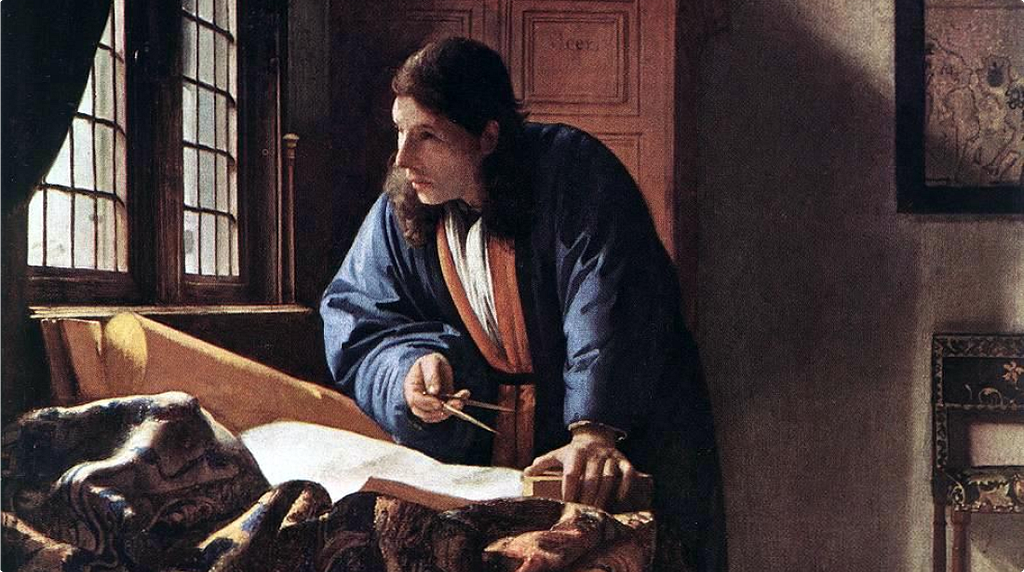
Are we makers by nature — or consumers by design?
You were wired to create. The digital environment around you was designed to keep you consuming. So, what happens when something has to give?
Picture a designer at the end of a working day. They’ve reviewed a dozen AI-generated concepts, responded to Slack threads, scrolled through Dribbble for inspiration that never quite arrived, and delivered a prototype that wasn’t entirely theirs. Technically productive. Creatively hollow. But the real question isn’t why we consume so much. It’s what happens to us when we quietly lose our own relationship with making.
Creation and consumption aren’t opposites. They’re a loop. For designers in particular, that loop is under pressure from several directions at once. The platforms they help build often pull attention toward passive browsing. The AI tools now absorbing the generative parts of their work push them further toward evaluation and away from ideation. And an always-on digital environment leaves almost no room for the idle, wandering thought that creativity actually depends on. Something is getting squeezed, and it isn’t obvious until you notice the flatness.
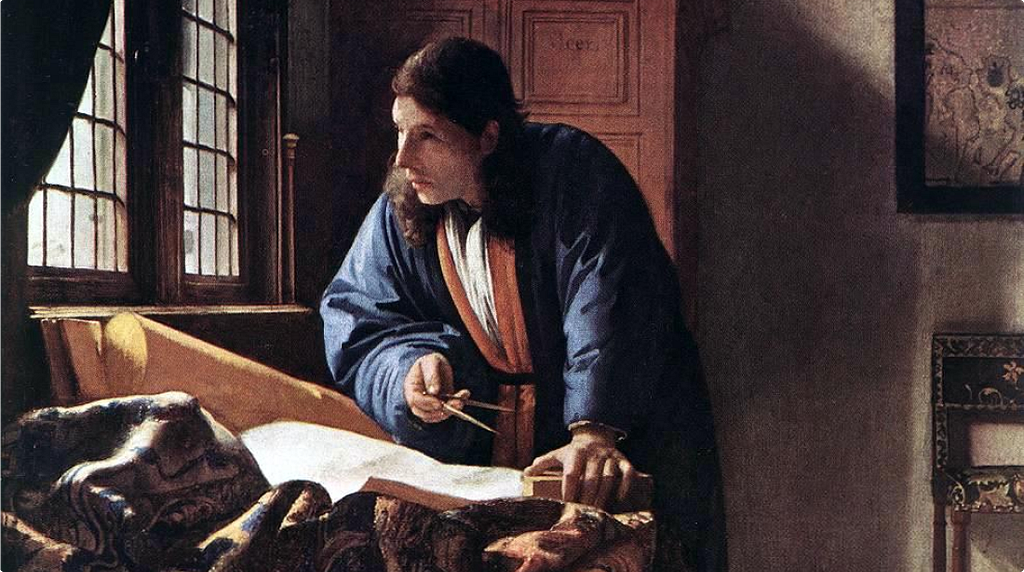

The quiet room your brain needs
There is a part of the brain that becomes most active when you stop trying. The default mode network (DMN) lights up during rest, mind-wandering, and undirected thought. It’s not the brain doing nothing. It’s the brain doing some of its most valuable work: connecting unrelated ideas, simulating futures, rehearsing perspectives, generating the kind of associative thinking that tends to look a lot like creativity.
Passive content use suppresses it. While scrolling looks like rest, neurologically speaking, it really isn’t. The brain is occupied rather than restored, processing a rapid succession of inputs without ever settling into the quieter, generative state the DMN requires.
Evidence from short-form video use reinforces this.
A 2024 study by Yan and colleagues found that frequent short-form video viewers showed weaker executive function (our capacity for focus) and poorer self-control. It’s part of a broader pattern. The more time we spend in content environments built for speed over depth, the harder sustained focus becomes. Researchers at Tianjin Normal University scanned over 100 university students and found that those most hooked on short-form video had more grey matter in the orbitofrontal cortex, the brain region associated with reward and pleasure. This suggests heightened sensitivity to the dopamine hits these platforms are engineered to deliver. In other words, the deeper in you are, the bigger the buzz — and the harder it becomes to step away.
The prefrontal cortex, our centre for impulse restraint and sustained attention, also takes strain. It’s like endlessly rehearsing the opening bars of a song but never getting to the rest of the piece. You lose the muscle for the longer form.
For designers, this isn’t abstract. A lot of the best design thinking happens in the gaps: in the shower, on a walk, staring out of a train window. These aren’t inefficiencies in the creative process. They are the creative process. When the gaps get filled with algorithmically curated content, something gets crowded out.
So why, given all of this, does scrolling feel so natural?
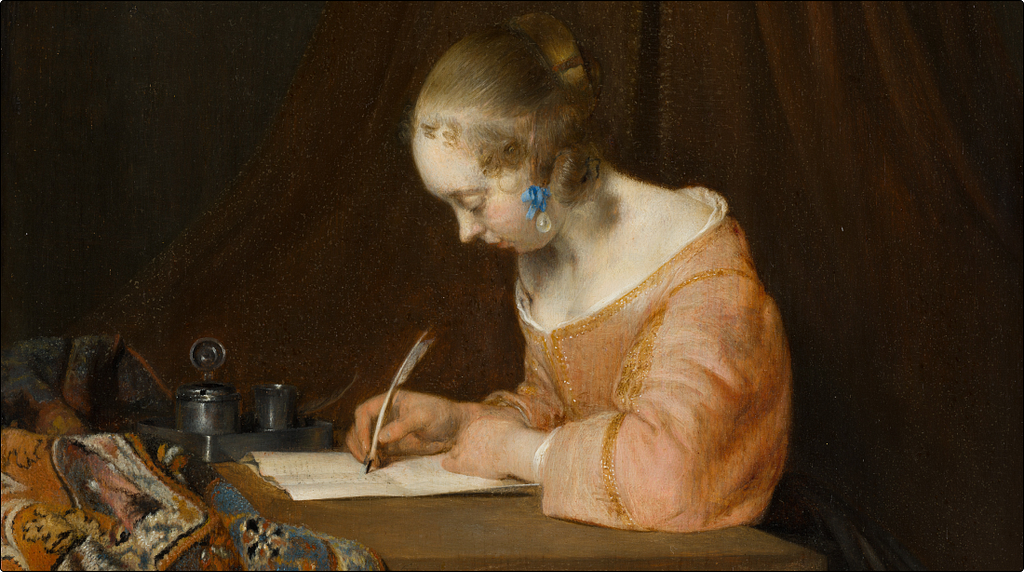
The path of least resistance
Humans have been making things for over 45,000 years. Cave paintings, tools, textiles, language, music: the drive to create is one of our most consistent species-level behaviours. Anthropologists largely agree that making things isn’t a byproduct of being human. It’s a defining feature of it.
But we are also efficient creatures. When ready-made things exist, consuming them tends to be the path of least cognitive resistance, and from an evolutionary standpoint, conserving energy is sensible. There’s no contradiction in being both. We are a species capable of extraordinary creative effort that also defaults to mentally sitting back when the environment makes it easy enough.
What has changed isn’t human nature. It’s the environment. Platforms engineered for maximum engagement have shifted the default so far toward consumption that maintaining the other side of the loop now requires deliberate effort. The teams behind these systems understood exactly what they were doing. TikTok’s algorithm analyses a vast range of behavioural signals to tailor content within the first hour of use, making its recommendations increasingly difficult to step away from. None of that happened by accident.
The psychologist Mihaly Csikszentmihalyi spent decades studying the experience of deep creative absorption, which he called flow: a state of complete immersion in a challenging, generative activity. The neurological and psychological signature of flow is distinctive. It leaves people feeling restored, purposeful, and energised. Aimless browsing tends to produce the opposite effect. It leads to a vague flatness, a sense of time having passed without much to show for it, and an impulse to reach for more of the same. The brain knows the difference even when we’ve stopped noticing it consciously.
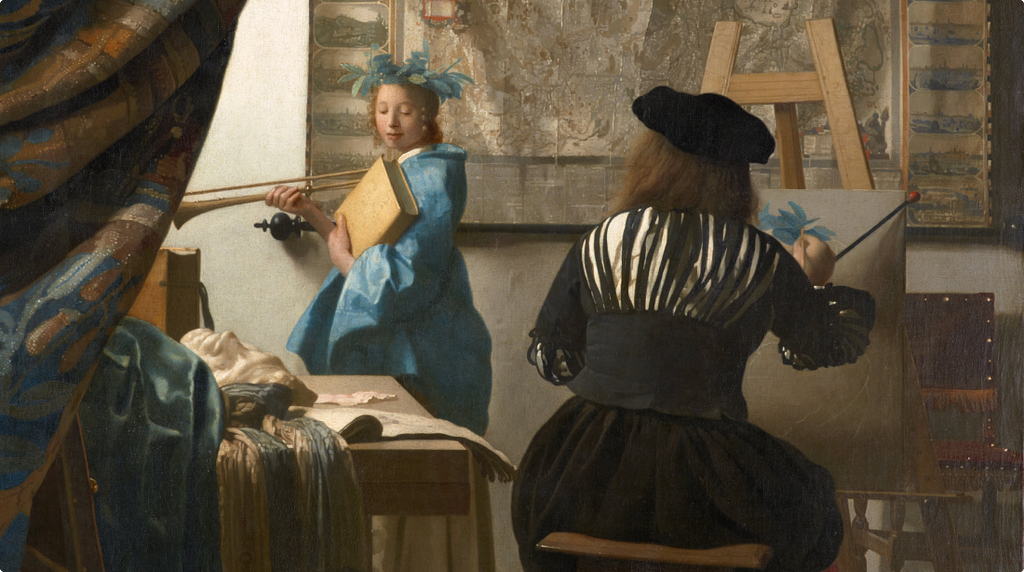

The designer’s particular bind
UX practitioners sit in an unusual position relative to this problem. They understand the mechanics of compulsive consumption at a professional level. Variable reward, infinite scroll, frictionless access, social proof, notification design. These aren’t abstract concepts. They’re documented patterns with well-understood behavioural effects, and many designers have spent years applying them.
That expertise cuts both ways. It’s professionally valuable. It’s also, in a subtle way, implicating. Yet, the people who best understand how attention gets captured are not obviously better at protecting their own.
The problem has sharpened with the arrival of generative AI tools. A qualitative analysis published in 2025 found that automating ideation stages led many designers to feel their role had shifted from creator to curator. Rather than generating ideas from scratch, they were selecting, refining, and directing AI outputs. Reactions were mixed: some welcomed the shift, others found it subtly destabilising, and many landed somewhere in between.
This matters because of what self-determination theory tells us about the conditions for meaningful work. Autonomy, mastery, and purpose are the three pillars, and creative work, at its best, tends to deliver all of them. The early, generative phases of design are where those conditions are most alive. The messy thinking, the decisions that feel genuinely yours, the sense that something is being built rather than assembled. When AI absorbs those phases, it doesn’t just alter the process. It gradually renegotiates what the work feels like to do.
There’s also a less obvious dimension to this. If your creative output increasingly involves prompting and evaluating AI-generated material, you may be spending more of your working day as a consumer of generated content than is immediately obvious. The balance tilts further.
“…because there is only one of you in all time, this expression is unique.
And if you block it, it will never exist through any other medium and will be lost.”
— Martha Graham
When the loop falls out of balance
The effects extend beyond individual well-being. A 2024 paper published in Science Advances examined the causal impact of generative AI on creative writing and found something counterintuitive. Writers with access to artificially generated ideas produced more creative individual outputs, but the collective diversity of content decreased across the board. Everyone benefited individually. The broader creative landscape became more homogeneous.
For designers, the effects run deeper than they first appear. AI tools are trained on existing work, optimised by design for what has already performed well. When thousands of practitioners prompt from the same models, the outputs begin pulling in the same aesthetic directions. Visual languages that were once distinct start to converge, and what made each practitioner’s work identifiable slowly gets ironed out.
A 2024 Quantum Workplace survey found a notable link between frequent AI tool use and higher burnout rates. The 2024 Upwork research suggests why. When organisations introduce AI without restructuring the work around it, the time saved rarely stays saved. It becomes room for more output, faster turnaround, and a growing list of tools to manage on top of everything else. Designers end up running at the same pace, now with an AI collaborator added to their workload rather than subtracted from it. The consumption end of the loop gets heavier. The generative end gets lighter. And the imbalance accumulates quietly.
Creator burnout data points in the same direction: people who spend most of their time producing content at volume often report feeling creatively depleted rather than nourished. Output and vitality, it turns out, aren’t the same thing.

Tending the loop
None of this is an argument against AI tools, or even against limited passive intake. Both have genuine value. The issue isn’t either side of the loop in isolation. It’s the ratio, and whether anyone is paying attention to it.
Consumption feeds creation when it’s active and selective: reading something demanding, encountering work that surprises you, experiencing things that don’t arrive pre-digested. Creation, in turn, sharpens the capacity for better consumption. Having made something yourself changes how generously and critically you receive what others make. The two are not competing activities. They’re mutually sustaining, as long as the balance holds.
For designers specifically, what’s worth protecting isn’t the workflow in general. It’s the originating parts. Early-stage ideation, conceptual exploration, the messy thinking that happens before anything is polished. These are the phases that build skills, develop a point of view, and produce work that feels distinctly personal. Outsourcing them to a machine isn’t neutral. It gradually removes the source material for everything that follows.
This isn’t a wellness concern in the conventional sense, though it has personal costs. It’s a professional one. A designer who has stopped generating ideas and only evaluates them is doing a different job, with different skills, and a different relationship to their own creative identity. That shift may be appropriate in some contexts. It’s worth being deliberate about it, rather than drifting into it under the pressure of deadlines and tool availability.
The DMN, after all, doesn’t care about productivity targets. It needs genuine downtime: unstructured, unscheduled, free from the pull of the next notification. Gloria Mark’s work at UC Irvine found that it takes roughly 25 minutes to fully regain focus after an interruption, and that people switch tasks more than 30 times per hour on average, nearly twice what they estimate when asked. The environment many designers work in isn’t just unfriendly to creative thinking. It’s actively incompatible with it.
Scroll a little less, make a little more. It sounds like self-help advice. The neuroscience, the creativity research, and the psychological data on professional identity all suggest it’s closer to occupational hygiene.
The species that painted caves and carved tools and invented language did not do so because it was efficient. It did so because something in the act of making things felt necessary. That hasn’t changed. It’s just harder to hear over the feed.
Thanks for reading! 📖
If you enjoyed this, follow me on Medium for more on design, psychology and technology.
References & Credits
- Brumm, A., et al. Oldest cave art found in Sulawesi. Science Advances, 7(3): eabd4648, 2021.
- Adobe Creative Frontier Study (2024).
- American Psychological Association. Work in America Survey (2023).
- Billion Dollar Boy / FiveTwoNine. Creator Burnout Research (2024).
- Csikszentmihalyi, M. Flow: The Psychology of Optimal Experience. Harper & Row, 1990.
- Dasari, P. AI Anxiety among Creative Professionals: Global Stress and Future Outlook. SSRN, August 2025.
- Doshi, A.R. & Hauser, O.P. Generative AI enhances individual creativity but reduces the collective diversity of novel content. Science Advances, 2024.
- Gao, Y., et al. Neuroanatomical and functional substrates of short video addiction and its association with brain transcriptomic and cellular architecture. NeuroImage, 2025.
- Mark, G. Attention Span: A Groundbreaking Way to Restore Balance, Happiness and Productivity. Hanover Square Press, 2023.
- McKinsey & Company. The Human Side of Generative AI: Creating a Path to Productivity (2024).
- PsyPost. Large meta-analysis links TikTok and Instagram Reels to poorer cognitive and mental health. 2025.
- Quantum Workplace. Employee Engagement Trends Report (2024).
- Taranov & Kawabata. Redefining Creativity and Identity: Graphic Designers’ Experiences of AI Adoption. Journal of Multidisciplinary Research and Innovation, Vol. 1, №6, 2025.
- Upwork Research Institute. From Burnout to Balance: AI-Enhanced Work Models (2024).
- Yan T, Su C, Xue W, Hu Y and Zhou H. Mobile phone short video use negatively impacts attention functions: an EEG study. Frontiers in Human Neuroscience, 18:1383913, 2024.
Are we makers by nature — or consumers by design? was originally published in UX Collective on Medium, where people are continuing the conversation by highlighting and responding to this story.