

A Business Plan Is Your First Step Toward Success
A business idea can sound brilliant in your head and still fall apart when you start asking the difficult questions. If you are learning how to create a business plan, those questions should come before the polished charts and financial projections: Who will actually buy your product? Which problem does it solve? Why will customers choose it over existing alternatives? How will you reach them? How will the company make money? And what will success look like in one, three, or five years?
These questions matter because planning can help founders test their assumptions before they commit too many resources. Research published by Harvard Business Review found that entrepreneurs who write business plans are more likely to get their ventures off the ground, although the researchers also emphasize that planning works best when it develops alongside other startup activities.
That is what a business plan should do. It should give you a practical way to examine your idea, understand your market, define your business model, plan your route to customers, and estimate what you need to build and grow the company. For a business plan for startup, this process can also help you identify weak assumptions before they become expensive problems.
Whether you are preparing to launch an AI product, SaaS platform, EdTech solution, or HR Tech company, how to create a business plan starts with understanding the decisions behind each section. Your plan can also connect your brand strategy with your go-to-market approach and give your team a clearer direction for business growth.
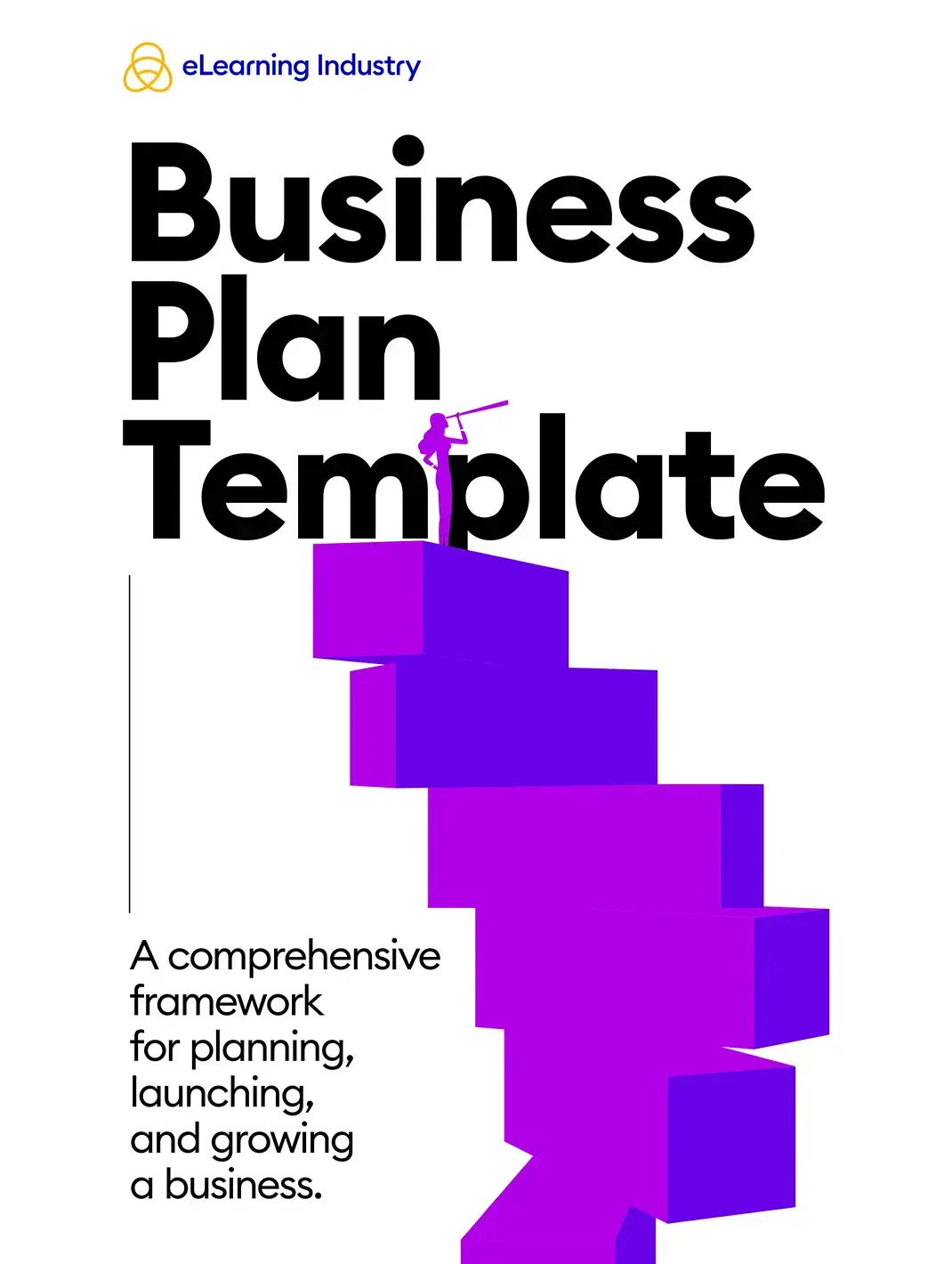
In this guide, we’ll walks you through the process step by step. Instead of starting with a blank document, download the free Business Plan Template and complete each section as you go.
Key Takeaways
- The essential elements of a strong business plan, from your business model and target audience to your strategy, finances, and growth goals.
- What makes a business idea commercially viable, including the problem it solves, the market opportunity, and why customers would choose it.
- How to define your target market and competitive advantage with practical ways to understand your ideal customers and differentiate your offering.
- The building blocks of a practical go-to-market strategy.
- The financial, operational, and strategic factors behind sustainable growth, including funding needs, financial projections, measurable milestones, and potential risks.
eBook Release
Are you ready to start building your business from the ground up?
Leverage our Business Plan Template to put everything in the right order.
In This Guide, You Will Find…
Why Do You Need To Create A Business Plan?
A business plan gives you a structured way to test your idea before you invest significant time, money, or resources into it. While investors may ask to see one, that is only one reason to create it. A strong plan helps you:
- Validate your idea and uncover weak assumptions
- Identify market opportunities and understand customer needs
- Evaluate competitors and clarify your position
- Define your business model and revenue model
- Develop a practical go-to-market strategy
- Estimate costs and resource requirements
- Set realistic business goals and milestones
- Align cofounders and teams around the same priorities
- Prepare for potential funding conversations
- Identify risks and plan how to address them
For a SaaS, EdTech, AI, or HR Tech company, the planning process can also help you connect your product, target audience, positioning, and brand strategy for growth. A startup business plan gives you a place to bring these decisions together and revisit them as your company develops.
When Investors Are Involved
If you plan to raise funding, investors will want to understand how you think about the business as a whole. Your plan should connect the dots between the problem, market, solution, competition, growth, economics, and risk. They need enough evidence to assess whether your assumptions are grounded in research and whether your growth plans are realistic.
Before You Start: 4 Rules For Creating A Strong Business Plan
1. Keep It Clear And Simple
When learning how to create a business plan, focus on clarity rather than trying to sound impressive. Avoid unnecessary jargon, complicated explanations, and excessive detail. Your reader should quickly understand what your company does, who it serves, and how it operates. A clear plan also makes it easier for cofounders, employees, partners, and potential investors to work from the same information.
2. Be Realistic, Not Optimistic
Base your assumptions on evidence, research, and reasonable expectations. For example, if you estimate customer acquisition, compare your assumptions with relevant B2B lead generation benchmarks and your own early results where available. Avoid presenting ambitious forecasts as guaranteed outcomes. Realistic assumptions make your projections more useful and give you a stronger basis for adjusting your business goals as you learn.
3. Start With The Problem, Not The Product
When considering what does a business plan include, remember that the customer problem should come before your product description. Explain who experiences the problem, how it affects them, and why existing alternatives may not solve it effectively. Then show how your solution addresses that need.
4. Show How The Business Will Make Money
Your plan should make the revenue logic easy to understand. Explain what customers pay for, how you charge them, and what needs to happen for the company to become financially sustainable.
Start With Your Executive Summary
Your executive summary appears at the beginning of your business plan, but you will often find it easier to finalize after you have developed the rest of the plan. By then, you will have clearer information about your market, customers, competitors, finances, and growth plans, making it easier to summarize the business accurately.
Keep this section focused on the information someone needs to understand your company quickly. Include:
- Company name and a one-line description
- The customer problem you want to solve
- Your solution and how it addresses that problem
- Your target audience
- Your revenue model
- Your competitive advantage
- Your funding requirement, if applicable
- Your three-year vision
If you are learning how to create a simple business plan, think of this section as a concise overview rather than a shortened version of every section that follows. Your reader should understand what the company does, who it serves, and where it is going without needing to read the full document first.
For example, our free business plan template includes fill-in fields and a completed fictional example. You can use the example to see how the key business decisions come together without copying its content.
What Makes A Strong Executive Summary?
Avoid long company histories, generic mission statements, unsupported claims, and excessive product features. Instead, focus on the facts and decisions that define your opportunity. Your brand positioning strategy, target market, business model, and growth direction should feel connected rather than presented as separate ideas.
As you work through this business plan guide, return to the summary at the end and make sure it accurately reflects the plan you have developed.
Describe Your Company And The Market Opportunity
Your company description should explain what you are building, why it exists, and where you want to take it. When learning how to create a business plan, start with the information that gives readers a clear picture of the company and its direction.
Include:
- What the company does and who it serves
- Your mission and core values
- Business structure and ownership
- Key team members, roles, and relevant expertise
- Your long-term objective
Keep the description practical. For example, an AI-powered learning platform could explain how it helps companies personalize employee training, who it serves, and what it aims to achieve over the next several years. The business plan format you use should make these details easy to find without turning the section into a company history.
Define The Problem And Explain The Opportunity
Next, show why the business needs to exist. A strong market opportunity starts with a specific customer problem rather than a broad statement about industry potential. Ask yourself:
- What pain point exists, and who experiences it?
- How serious and frequent is the problem?
- What does it currently cost customers in time, money, or lost productivity?
- What alternatives do customers use today?
- Where do those alternatives fall short?
Then connect the problem to changes in the market. Look for evidence of growing demand, industry shifts, unmet needs, or changes in customer behavior. Explain why those factors create an opening for your company now.
For a SaaS, EdTech, or HR Tech business, this section can also show how technology or changing buyer expectations are driving growth. Support important claims with credible market research rather than relying on assumptions.
Define Your Target Audience And Ideal Customer
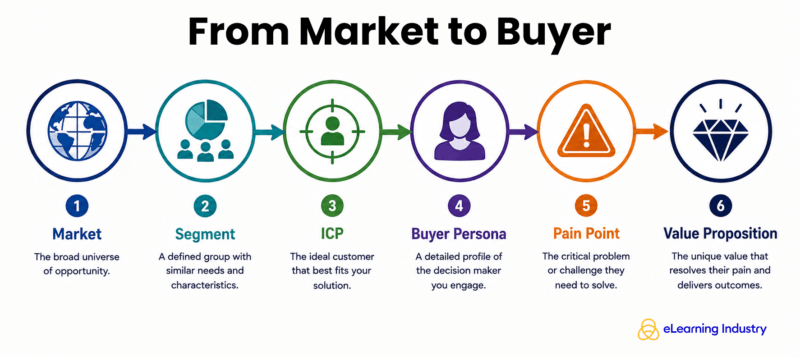
A clear target market helps you decide who to sell to, how to position your solution, and where to focus your marketing and sales efforts. Instead of describing your audience as “businesses” or “learning professionals,” identify the characteristics that make someone more likely to need, use, and pay for your solution.
For B2B companies, define an Ideal Customer Profile (ICP) that describes the type of organization you want to attract. Depending on your product, this can include industry, company size, location, role or seniority, responsibilities, and specific pain points. Also consider what customers use today, what triggers them to look for a new solution, and what might prevent them from buying.
For example, market segmentation for learning tech might separate organizations by industry, workforce size, training needs, or digital maturity. A Learning Tech company could then focus its messaging on organizations with large distributed teams and a clear need for scalable employee development.
Remember that the person using your product may not control the purchase. Your audience can include:
- User: Uses the product regularly.
- Champion: Supports the solution internally.
- Decision-maker: Approves the purchase.
- Economic buyer: Controls or approves the budget.
Understanding these roles gives your startup business plan more depth and helps you answer what to include in a business plan when describing customers.
Explain Your Products, Services, And Competitive Advantage
Your product or service section should make it easy to understand what you are selling, how it solves the customer’s problem, and why customers would choose it over other options. In business planning, avoid describing features without explaining the value they create.
Start with the actual offering, then connect each important feature to a customer benefit and measurable outcome. For example, an AI learning platform might use adaptive learning paths to personalize training, helping employees focus on relevant skills and helping L&D teams improve learning outcomes.
AI pricing strategies and models should also match how customers receive value. Depending on your business, you might use:
- Subscriptions, licensing, usage-based pricing, or freemium
- One-time purchases or professional services
- A hybrid model combining products and services
Explain why your pricing approach makes sense for your customers and your costs. Your revenue marketing approach should also connect with the way you attract and convert those customers.
Finally, define what gives you an advantage. Competitive analysis can help you identify meaningful differences, but avoid relying on claims such as “innovative,” “better quality,” or “AI-powered” without evidence.
When considering how to create a business plan, focus on specific advantages that customers can understand and competitors cannot easily replicate.
Conduct A SWOT And Competitive Analysis
A SWOT analysis helps you understand where your business stands before you make major decisions. Look at your internal strengths, such as expertise, technology, partnerships, or customer relationships, alongside weaknesses, such as limited resources, skill gaps, or product limitations. Then assess external opportunities, including changes in customer needs, technology, or the market opportunity, and threats, such as new competitors, regulatory changes, or pricing pressure.
Your competitive analysis should then show how your company compares with the alternatives customers already have. Compare products or services, target audiences, pricing, positioning, strengths, weaknesses, distribution, and your specific advantage.
Avoid saying, “We have no competitors.” Even if no company offers exactly the same solution, customers can choose indirect alternatives. They might use spreadsheets, internal processes, consultants, another type of software, or simply continue doing things the way they do today.
When learning how to create a business plan, use both analyses to identify gaps, test assumptions, and make more informed decisions. Together, they can support data-driven growth by showing where you have an opportunity to differentiate and where you need to reduce risk.
Build Your Marketing, Sales, And Go-To-Market Strategy
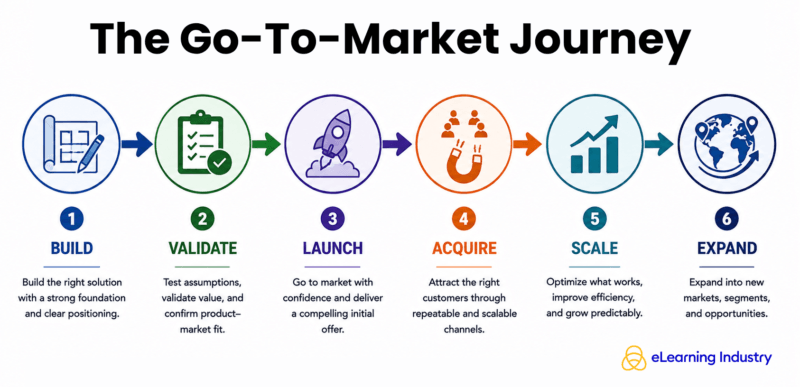
A good product is not enough. Your plan needs to explain how customers will discover, evaluate, and ultimately buy it. When considering what does a business plan include, your marketing and sales approach should connect directly to your audience, buying journey, and business model.
Marketing Strategy
Choose channels based on where your ideal customers already research solutions and what type of buying journey you have. Depending on your audience, your mix could include SEO, GEO and AI visibility, content marketing, social media, paid advertising, email, PR, thought leadership, original research, podcasts, webinars, industry directories, events, and partnerships.
For eLearning and HR Tech companies, eLearning Industry offers content marketing, webinars, eBooks, research, directory visibility, and lead-generation solutions for reaching relevant corporate buyers.
Your full-funnel marketing strategy should move prospects from awareness to consideration and conversion rather than treating every channel as a separate activity.
Customer Acquisition
Map the journey from first interaction to purchase and retention. Track:
- Acquisition channels, leads, conversion rates, and CAC
- Funnel progression and sales-qualified opportunities
- Retention and LTV
Use these metrics to understand which channels create qualified pipeline, not simply traffic or lead volume.
Sales And Go-To-Market
Your sales strategy should define whether you use self-service, inbound, outbound, direct sales, partnerships, or enterprise sales. Then estimate the sales cycle and identify who owns each stage.
Your go-to-market strategy should bring these decisions together: who you target, how you reach them, how you convert them, and what needs to happen after the sale to support sustainable growth.
Create Your Financial Business Plan And Funding Strategy
Your financial section should show whether the business can become financially viable and what it will take to get there. When learning how to create a business plan, answer six practical questions: How much money is required? Where will it come from? How will it be spent? What will the company cost to operate? How much revenue could it generate? When could it become profitable?
Funding Requirements
Start by estimating your funding requirements based on realistic operating needs, not an arbitrary target. Possible sources include:
- Founder capital
- Loans
- Angel investment
- Venture capital
- Accelerators
- Grants
- Crowdfunding
Explain what the money will fund, such as product development, hiring, technology, marketing, sales, or working capital. For B2B companies, marketing benchmarks can help you test whether planned acquisition costs and conversion assumptions are reasonable.
Financial Projections
Your financial projections should cover the areas that matter most to your business:
- Revenue and expected growth
- Costs and gross margin
- Operating expenses
- Cash flow
- Break-even point
- Profitability
For example, projecting €1 million in Year 1 revenue means little without showing the logic behind it. Connect the forecast to Customers × Price × Conversion × Growth assumptions and explain why each assumption is realistic.
That detail matters because investors aren’t only evaluating the numbers. They’re evaluating the assumptions behind the numbers. Your model should make those assumptions visible, testable, and easy to update as new information becomes available.
Define Your Goals, Milestones, And Risks
The final part of your startup business plan should make success measurable. A clear plan gives you a way to track progress, identify gaps, and adjust priorities as the business develops. When you understand how to write a business plan step by step, goals and risks should connect directly to the assumptions and strategies you have already defined.
Year-One Goals
Set specific targets for the first 12 months. Depending on your business, these could include:
- Customers, ARR or revenue
- Product adoption and retention
- Partnerships and market expansion
- Funding secured
Avoid broad statements such as “Grow quickly.” Instead, turn them into measurable milestones, such as reaching 100 paying customers, achieving €500,000 in ARR, or expanding into two new markets.
Metrics
Choose metrics that show whether your business is moving toward its business goals. Depending on your model, track:
- Revenue, ARR/MRR, and pipeline
- CAC, LTV, and churn
- Retention and conversion rate
- Active users and product adoption
For AI business models, you may also need metrics related to usage, engagement, inference costs, or customer retention. For customer acquisition, monitor both volume and efficiency so you can see whether growth is creating sustainable economics.
Risks And Mitigation
Identify the major risks that could affect execution, including market, product, financial, competitive, regulatory, talent, and acquisition risks. For each one, document its potential impact and define a practical mitigation plan.
This turns risk management into an active part of planning rather than a list of hypothetical problems.
Download The Free Business Plan Template
Knowing what belongs in a business plan is one thing. Turning all those decisions into a clear, structured document is another. If you’re learning how to create a business plan, you need a practical format that helps you move from ideas and assumptions to concrete decisions.
That’s why we’ve created a free Business Plan Template you can complete alongside this guide. The template includes:
- Executive Summary
- Company Summary
- Market Opportunity
- Target Audience
- Products and Services
- SWOT Analysis
- Competitive Analysis
- Marketing and Sales Strategy
- Go-To-Market Roadmap
- Financial Planning
- Goal Planning
- Appendix
- Final Business Plan Checklist
The template also includes fill-in prompts, practical examples, common mistakes to avoid, and a fictional learning tech startup example showing what completed sections can look like. You can use it to clarify your strategy, organize priorities, and connect marketing activities with business growth. It can also help you translate ideas such as brand awareness campaign examples into a broader, measurable plan.
Download the free business plan template and turn your business idea into a structured plan you can use to validate your strategy, align your team, plan growth, and prepare for conversations with investors or other stakeholders.
Key Takeaway
A strong business plan gives you more than a document to share with investors. It gives you a structured way to test your idea, understand your customers, define your market position, plan your route to revenue, and prepare for the challenges ahead. If you’re learning how to create a business plan for a startup, the process itself can reveal assumptions that need more research before you commit significant resources.
From your executive summary and target audience to your competitive analysis, marketing strategy, financial plan, and milestones, each section should support the same business direction. Your plan should also connect practical decisions, from your marketing technology stack to your sales process and financial assumptions, rather than treating each area in isolation.
Keep the document focused and measurable. A clear business plan format makes it easier to review progress, communicate priorities, and update your strategy as you learn. Whether you’re planning a brand awareness campaign, launching a new product, entering a market, or preparing for funding discussions, the same discipline applies: define the objective, support your assumptions, and measure the outcome.
If you’re still asking what to include in a business plan, use the free template alongside this guide and build your plan section by section. The result should be a working business tool you can revisit as your company grows.
FAQ
A business plan is a written document that outlines a company’s goals, target market, strategy, operations, and financial projections. It helps guide business decisions and communicate the company’s potential to investors or lenders.
Start with an executive summary, then describe the business, market, products or services, marketing and sales strategy, operations, management team, and financial projections. Finish by reviewing the plan for accuracy, clarity, and consistency.
Most business plans include an executive summary, company description, market analysis, products or services, marketing and sales plan, operations, management structure, and financial projections. Some also include an appendix with supporting information.
There is no fixed length, but a traditional business plan is often around How do you write a business plan for a startup?, depending on the business and its purpose. A simple internal plan can be much shorter.
Focus on the problem you’re solving, target customers, competitive landscape, business model, go-to-market strategy, team, startup costs, revenue assumptions, and funding requirements. Because startups have limited historical data, clearly explain the assumptions behind your forecasts.
Not always, but lenders and investors commonly use business plans to evaluate a company’s opportunity, strategy, risks, and financial outlook. The level of detail required depends on the funding source and stage of the business.
Free templates are available from organizations such as the U.S. Small Business Administration and other business-support platforms. Choose a template that matches your business type and the purpose of the plan.