

You Built Your Podcast. Now What?
A B2B podcast can feature insightful conversations, respected industry experts, and ideas that help business leaders solve real problems. But none of that guarantees the right people will hear it. Knowing how to market a podcast means thinking beyond publishing episodes and sharing the occasional LinkedIn post. It requires a deliberate approach to discovery, distribution, and engagement that connects your content with the people most likely to value it.
According to Edison Research’s The Infinite Dial, 55% of Americans aged 12 and older consumed a podcast in the past month, demonstrating how established podcast consumption has become. For B2B brands, however, reach alone isn’t the ultimate measure of success. Reaching relevant decision-makers, potential partners, and industry influencers can be more valuable than attracting a much larger but unrelated audience.
That is where a structured podcast marketing strategy makes a difference. Instead of treating every episode as a standalone publication, companies can build a repeatable system that combines guest promotion, search optimization, email distribution, social media, video, and employee advocacy. Repurposing conversations into podcast clips, articles, newsletters, and other useful resources creates additional entry points for new listeners. It also helps address the practical question of how to increase podcast downloads without relying on a single channel.
Ultimately, sustainable growth comes from making promotion part of the production process, not an afterthought. Let’s analyze how you can turn individual episodes into lasting assets that build credibility, strengthen relationships, and support measurable marketing outcomes.
Key Takeaways
- B2B podcast marketing should prioritize audience relevance over raw download volume.
- Every episode should produce multiple discoverable assets rather than remain a single audio file.
- Guests can become powerful distribution partners when brands make episodes easy and worthwhile to share.
- Video clips, short-form content, email, SEO, YouTube, and social media can extend the lifespan of each episode.
- Strong podcast pages should be optimized for both human discovery and search rather than functioning as basic embedded players.
- Podcast hosts and guests can strengthen executive thought leadership alongside the show itself.
- Distribution should begin before an episode is published, not after.
- B2B podcast success can include authority, relationships, qualified conversations, pipeline influence, and content efficiency—not just downloads.
Are you searching for your next favorite podcast?
Listen to our shows and learn how you can be a part of them.
In This Guide, You Will Find…
What Is Podcast Marketing?
Podcast marketing is the process of increasing awareness, discovery, consumption, and repeat listening through distribution, content repurposing, search optimization, social media, email, partnerships, guest promotion, paid campaigns, and other audience-development tactics.
Understanding how to market a podcast starts with recognizing that creating and publishing content are only parts of the process. Podcast production involves recording and editing episodes. Distribution makes those episodes available on podcast platforms, websites, and other channels. Marketing gives people reasons and opportunities to discover, explore, and share the show.
Podcast growth goes a step further by turning initial discovery into a growing, relevant audience. For B2B companies, this means attracting industry professionals, decision-makers, potential customers, and influential voices rather than focusing exclusively on download numbers. Effective B2B podcast marketing connects promotional activities with the company’s audience and business objectives.
When integrated with a broader brand strategy for growth, podcast marketing can strengthen credibility, increase visibility, support thought leadership, and contribute to long-term business development.
Define What Podcast Growth Means For Your B2B Brand
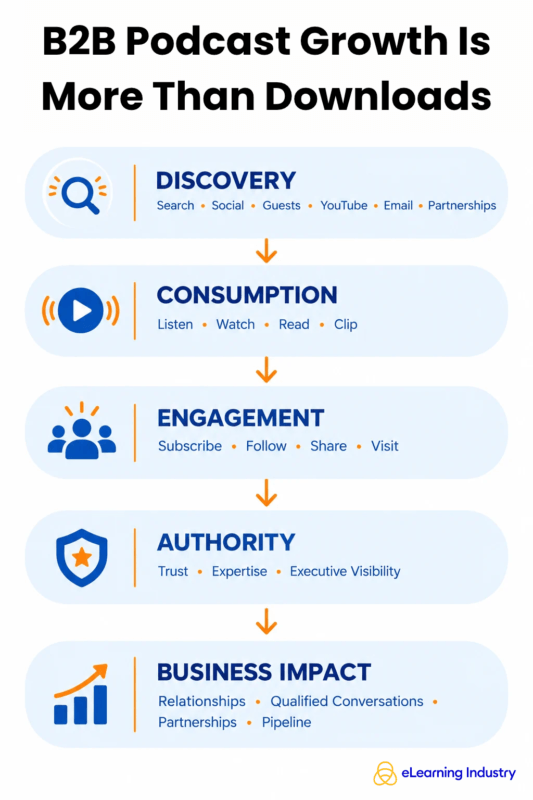
Podcast growth means different things depending on your business goals. While a consumer podcast may prioritize downloads, subscribers, and advertising revenue, a B2B branded show should measure success by how effectively it reaches relevant professionals, builds relationships, and supports commercial objectives.
Before deciding how to market a B2B podcast, define what growth should achieve for your brand. Your priorities might include reaching decision-makers at target accounts, increasing executive visibility, strengthening guest relationships, establishing B2B thought leadership, growing your newsletter, attracting qualified website traffic, generating sales conversations, or influencing pipeline opportunities.
Consider two hypothetical podcasts. Podcast A generates 20,000 downloads but attracts few relevant B2B decision-makers. Podcast B generates 1,500 downloads, including 150 executives from target companies. Which delivers more value? It depends on the business objective, the quality of those relationships, and whether listeners take meaningful next steps.
This distinction should guide how to promote a podcast and which performance indicators matter most. Downloads and subscriber numbers help measure reach, while podcast audience engagement, repeat listening, and podcast retention offer insights into whether people find the content valuable. Website visits, newsletter sign-ups, guest referrals, qualified leads, and sales conversations reveal how podcast activity contributes to broader business goals.
Are you interested in discovering relevant podcasts? Check out our shows and let us know if you’d like to be featured.
15 Podcast Marketing Strategies For Growing Your B2B Audience
1. Start With A Clearly Defined Podcast Audience
Before deciding how to market a podcast, establish exactly who the show serves and why those people should listen. A podcast aimed at “business leaders” is too broad to guide effective promotion. A show for founders and CMOs scaling B2B technology companies gives you a much clearer direction.
Define your audience by considering:
- Challenges: What problems do listeners need to solve?
- Interests: Which topics would make them invest their time?
- Guests: Which experts or practitioners would they value hearing from?
- Differentiation: What insights can your conversations offer beyond existing articles and videos?
- Sharing potential: Which ideas would listeners want to discuss with colleagues?
Clear positioning helps you choose stronger topics, attract relevant guests, and create promotional assets that resonate with prospective listeners. Knowing your audience also makes it easier to decide how to market a podcast effectively, from selecting relevant topics to choosing the right distribution channels.
2. Optimize Your Podcast For Search
Effective podcast marketing involves more than adding keywords to titles. Optimize episode titles, descriptions, show notes, and supporting webpages. For example, replace “Episode 24 With John Smith” with “How B2B Companies Can Improve Enterprise Sales.” Include relevant search terms naturally, publish accurate transcripts, and link to related articles and episodes. Check out the best marketing podcasts to understand what sets them apart from their competition.
Also, consider how people search for solutions within your industry. Research common questions your target audience asks and use those questions to guide episode titles and supporting content. Include guest names, relevant topics, and specific business challenges where appropriate. This makes episodes easier to identify in search results and helps potential listeners understand their value. Additionally, add descriptive headings to show notes and summarize the most useful lessons from each conversation.
3. Build A Dedicated Page For Every Episode
Give every episode its own webpage so audiences can discover it through search engines and your existing website.
Include:
- A descriptive title and summary.
- An embedded audio or video player.
- Key takeaways and guest information.
- Relevant resources and internal links.
- A clear call to action.
For example, an episode about enterprise AI could link to implementation guides and related interviews. This creates additional discovery opportunities while encouraging visitors to explore your website.
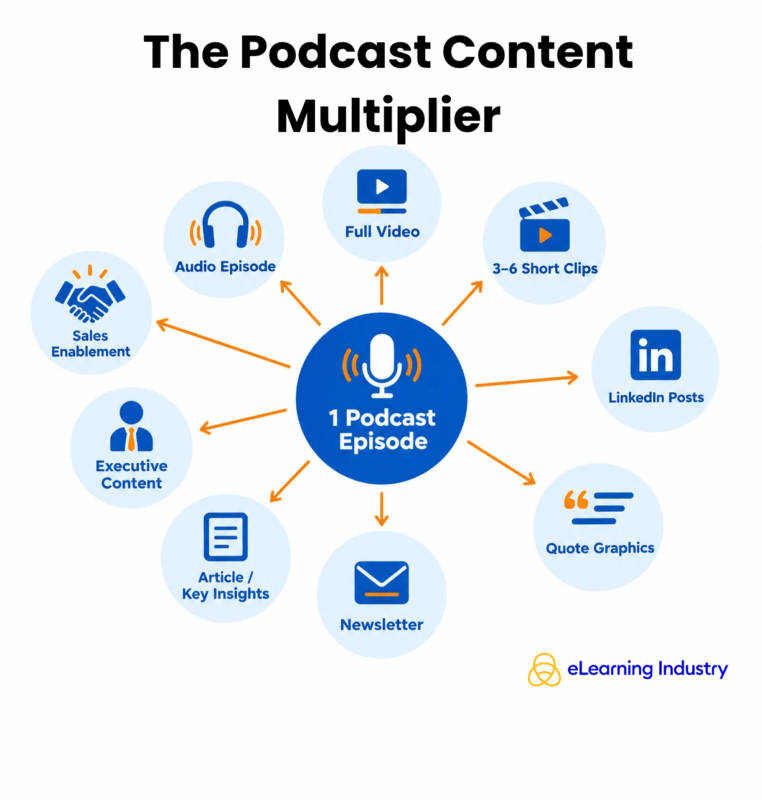
4. Turn Every Episode Into Multiple Content Assets
A podcast content repurposing strategy helps you reach different audiences without creating every asset from scratch.
Turn one conversation into:
- Short videos: Highlight memorable insights.
- Articles: Expand on the strongest ideas.
- Social posts: Share practical tips and quotes.
- Newsletters: Summarize key lessons.
- Sales resources: Give representatives useful insights to share with prospects.
Choose formats based on audience preferences and the episode’s strongest moments. Each asset should provide standalone value and have a clear purpose, whether attracting attention, encouraging listens, or educating potential customers.
5. Create Short Video Clips Built Around Strong Ideas
Short videos can introduce your show to people who might never discover a full episode. Start with a surprising insight, strong opinion, useful framework, or interesting question instead of a lengthy introduction.
Remove unnecessary context, add accurate captions, and prioritize platforms where your audience is active, particularly LinkedIn and YouTube Shorts. Instagram Reels and TikTok may also be suitable, depending on your audience.
When considering how to market a podcast, remember that each clip should provide value before asking viewers to listen to the full conversation. Use a relevant caption and a clear next step. Create several clips from an episode when the discussion contains distinct, independently useful moments. Test different openings and topics to discover which ones attract meaningful engagement.
6. Turn Your Guests Into Distribution Partners
Guests bring professional networks, industry credibility, and audiences who may appreciate your conversations. Make guest amplification easy with a promotional kit containing the episode link, short clips, suggested copy, quote graphics, and publication details.
Personalize these assets around the guest’s strongest insights rather than sending everyone identical materials. Explain the benefits of participating, too. People wondering why they should be a podcast guest must understand that appearances can help them share expertise, reach relevant professionals, build relationships, and contribute to meaningful industry discussions.
So, send materials when the episode goes live, and make sharing straightforward with prewritten captions that guests can adapt to their own voice. Follow up politely if appropriate, but do not assume every guest will promote the episode.
7. Activate The Host’s Personal Brand
Company accounts shouldn’t be the only channels promoting your show. Executive hosts can share what surprised them, which ideas changed their perspective, or what they learned during a conversation. This complements thought leadership marketing by demonstrating expertise through authentic discussion rather than relying exclusively on corporate messaging.
Remember that the most effective posts go beyond announcing a new recording. A host might explain why a guest’s perspective challenged an industry assumption, outline three lessons from a conversation, or ask their professional network how it handles a similar problem.
Invite comments and respond thoughtfully to relevant discussions. Over time, these interactions help hosts build relationships with customers, prospects, partners, and industry experts. The podcast becomes a source of original ideas that supports the host’s professional presence throughout the week.
8. Use Email To Build Repeat Listening
Email marketing helps reconnect with people who already know your company, even when they miss social media announcements. Use your existing newsletter, a dedicated podcast mailing list, or segmented campaigns based on readers‘ interests. Lead with an interesting idea rather than simply announcing a new episode.
For example, explain why a guest believes enterprise AI adoption is primarily a change-management challenge, then invite readers to hear the full discussion. You can also share key takeaways, recommend related episodes, and highlight upcoming guests. Monitor clicks and repeat engagement to identify topics that encourage subscribers to return.
Don’t forget to segment email content where possible. A sales leader may be interested in conversations about qualification and pipeline management, while a marketing executive may prefer episodes about attribution or demand generation best practices. Relevant recommendations make the newsletter more useful and help subscribers discover episodes aligned with their responsibilities.
9. Publish Full Episodes On YouTube
YouTube provides another searchable destination for video podcasts, helping viewers discover conversations through search results, recommendations, and related videos. So, start by optimizing titles, thumbnails, descriptions, chapters, and playlists. Use Shorts to introduce strong moments and direct interested viewers toward complete episodes.
You should tailor the packaging to each platform rather than automatically reusing identical titles everywhere. If you’re exploring how to start a podcast, consider early on whether video fits your audience, production resources, and long-term publishing schedule. A consistent, well-packaged series is more sustainable than an ambitious video format your team cannot maintain.
Moreover, make each video accessible by using accurate captions, clear audio, and useful timestamps. Organize episodes into playlists around recurring themes so viewers can find several relevant conversations without searching individually. Review watch time, audience retention, and traffic sources to identify topics that keep people engaged.
10. Cross-Promote With Guests, Partners, And Other Podcasts
Potential activities include guest exchanges, newsletter recommendations, joint interviews, collaborative clips, and cross-promotion. Choose partners based on audience relevance rather than follower counts. A small industry newsletter reaching your ideal buyers may offer more value than a large general-interest channel.
These relationships can support an earned media strategy when independent publications or industry voices choose to feature your conversations. To make collaboration easy, propose a specific topic, explaining its value to the partner’s audience, and supply relevant assets. You could also pitch podcast guests as experts for industry articles or invite publication editors to discuss emerging trends.
11. Use Employees As An Amplification Network
Your employees can help introduce the show to relevant professional communities. Rather than asking everyone to share the same company post, give them content they can adapt to their interests and expertise.
Provide:
- Clips relevant to individual departments.
- Guest quotes and useful takeaways.
- Suggested talking points and direct links.
- Short summaries employees can share with colleagues or customers.
Sales teams might highlight an episode about buyer behavior, while product teams share insights about customer experience. To make the process sustainable, create a simple internal resource where employees can find newly published episodes and ready-to-use assets. Explain who each episode is most relevant to and provide suggested ways to introduce it naturally.
12. Repurpose Podcast Insights Into Searchable Content
A practical process is to:
- Identify the episode’s strongest ideas.
- Research relevant audience questions.
- Develop original articles, FAQs, or practical guides.
- Link to the episode for additional context.
- Connect each resource to related website content.
This can support SEO and AI search visibility by making expertise available in useful, accessible formats. Evergreen resources can continue attracting relevant visitors long after publication. When considering how to market a podcast beyond its launch, look for insights that will remain useful months or years later. These can become valuable resources that extend the life of your conversations.
13. Use Paid Promotion Selectively
Options include LinkedIn advertising, YouTube campaigns, newsletter sponsorships, and industry publications. Before investing, decide whether you want to increase relevant episode-page visits, reach target accounts, or generate event registrations. Test modestly and evaluate traffic quality, engagement, and conversions.
Avoid buying generic traffic merely to inflate download numbers. Paid distribution should complement useful content and organic promotion, not replace them. Then, compare results across campaigns and audiences. If one episode attracts more relevant visitors or produces stronger engagement from your target market, use those findings to refine future promotion.
14. Promote The Podcast Inside Your Existing Content Ecosystem
Consider adding episode links to:
- Related blog articles and resource pages.
- Newsletters and email campaigns.
- Webinar pages and downloadable guides.
- Executive profiles and author biographies.
- Relevant product or service pages.
Effective podcast promotion feels like a natural extension of the content someone is already consuming. Contextual recommendations make better use of existing traffic and create additional opportunities for discovery. These are practical podcast marketing ideas that can help you reach people who already trust your company, rather than relying entirely on new audiences.
15. Build A Consistent Distribution System For Every Episode
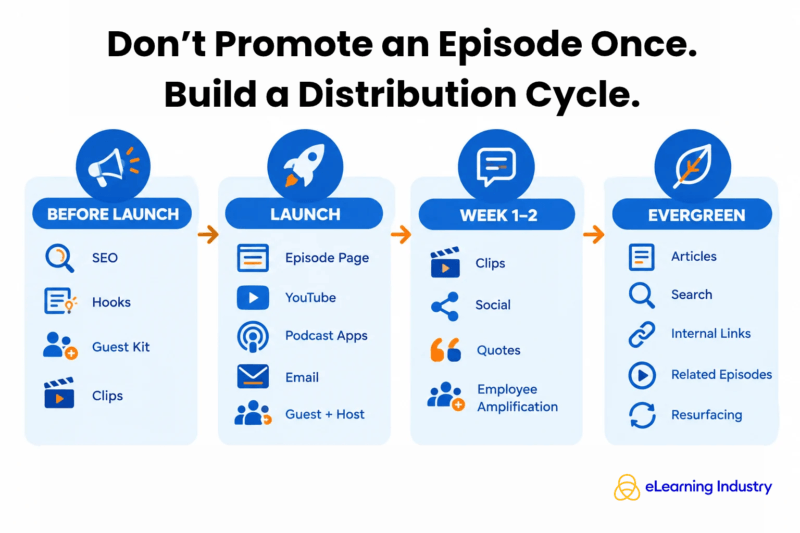
Before publication:
- Identify strong hooks and quotes.
- Prepare clips and guest assets.
- Optimize the episode page.
- Draft social posts and newsletter copy.
- Confirm promotional responsibilities.
Launch week:
- Publish on podcast platforms and YouTube.
- Release the dedicated webpage.
- Activate host and guest promotion.
- Share the episode through employee networks.
After launch:
- Publish additional clips and insights.
- Add episode links to related articles.
- Resurface evergreen conversations.
- Review engagement, traffic, leads, and business outcomes.
A documented process also clarifies how to promote a podcast on social media by ensuring that each channel receives relevant assets rather than identical posts.
How To Market A Podcast On Social Media
Understanding how to market a podcast on social media means adapting content to each platform rather than posting identical clips everywhere.
- Share native video, host perspectives, guest insights, and behind-the-scenes content.
- Use text posts, quotes, and carousels to communicate practical B2B lessons.
- Encourage meaningful professional discussions.
YouTube Shorts
- Lead with strong hooks and standalone insights.
- Direct interested viewers to full episodes.
Instagram And TikTok
- Use short, engaging clips when your audience is active on these platforms.
- Test formats that fit your brand and audience preferences.
Measure Performance
- Track engagement, relevant conversations, and brand sentiment to refine your distribution strategy.
How Podcast Marketing Supports B2B Thought Leadership
Podcasts help executives become recognizable industry voices by sharing expertise, original perspectives, and practical insights. These are key benefits of thought leadership marketing, especially in competitive B2B markets where trust influences purchasing decisions.
Build A Recognizable Area Of Expertise
A CEO who regularly discusses AI, growth, go-to-market (GTM) strategies, and business transformation can establish a distinct professional identity. Consistent topics help audiences associate the executive with specific industry challenges.
Turn Expertise Into Opportunities
Effective podcast marketing strategies can create opportunities beyond the show, including:
- Executive visibility: Reach relevant decision-makers.
- Earned media: Attract industry coverage.
- Speaking opportunities: Secure conference invitations.
- Partnerships: Build valuable professional relationships.
- Brand authority: Strengthen recognition and trust.
Podcast Marketing, SEO, And AI Discovery
Understanding how to market a podcast means making this content easy to discover and useful beyond the original episode. Podcasts create original information that can reach audiences across multiple searchable formats, including:
- Episode pages and show notes
- Video and short clips
- Articles and expert insights
- Quotes and key takeaways
Strengthen SEO Visibility
A strong podcast SEO strategy focuses on searchable episode pages, clear titles, useful summaries, internal links, relevant topics, video optimization, and structured content. These elements help search engines understand and surface your expertise.
Support AI Discovery And GEO
Podcasting does not guarantee citations from ChatGPT or other AI tools. However, original expert perspectives and first-hand information can become accessible through well-structured text, video, and web content. Consistent publishing may also support share of voice SEO by expanding your brand’s presence across relevant industry topics.
How To Measure B2B Podcast Marketing Success
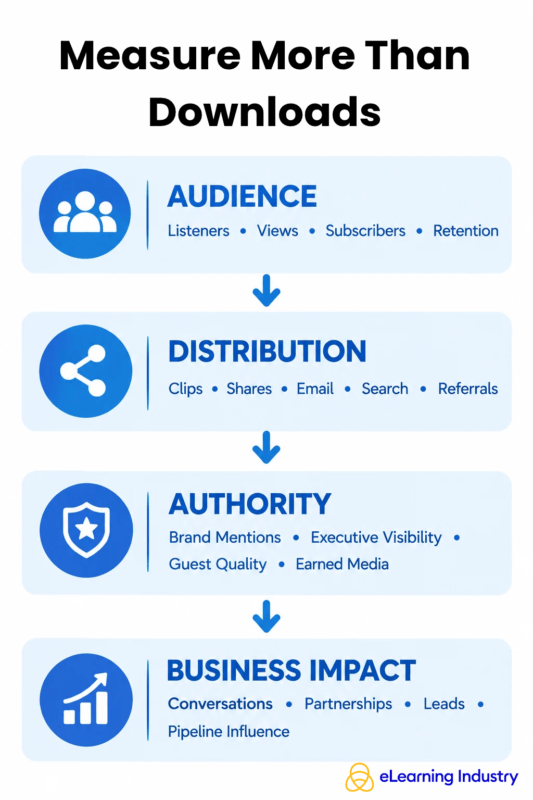
Audience
- Downloads and listens.
- Video views and podcast subscribers.
- Returning listeners.
- Episode completion and retention rates.
Distribution
- Social clip views and engagement.
- Email clicks and referral traffic.
- Organic traffic driven by podcast SEO.
- Guest shares and audience reach.
Authority
- Executive engagement and executive thought leadership.
- Brand mentions and guest quality.
- Speaking invitations and earned media.
- Inbound guest and partnership interest.
Business
- Qualified conversations with target accounts.
- Targeted leads generated through podcast content.
- Sales opportunities and pipeline influence.
Partnerships And Referrals
- Meetings booked with decision-makers.
- Conversions attributed to podcast campaigns.
- Engagement from priority accounts.
- Revenue influenced by podcast marketing.
Common Podcast Marketing Mistakes
- Publishing without a distribution plan: Decide how each episode will reach its intended audience before launch.
- Promoting only on launch day: Share episodes repeatedly across relevant channels.
- Sharing only from company accounts: Encourage executives and employees to participate in promotion.
- Using generic episode titles: Write specific, descriptive titles that communicate value.
- Creating weak clips: Open with a compelling hook that earns attention.
- Posting identical assets everywhere: Adapt formats and messaging to each platform.
- Not involving guests: Give guests ready-to-share promotional assets.
- Ignoring email: Include episodes in relevant newsletters and subscriber campaigns.
- Skipping episode pages: Publish dedicated pages with summaries, resources, and clear links.
- Publishing raw transcripts: Edit transcripts into useful, structured content rather than relying on unedited text.
- Tracking only downloads: Measure engagement, leads, and pipeline influence.
- Chasing audience size: Prioritize relevant listeners over vanity metrics.
- Ignoring targeting: Understand what is share of voice and monitor your brand’s visibility against competitors.
- Overspending on paid promotion: Target relevant roles, industries, and accounts.
- Giving up too early: Build consistency beyond the first five episodes.
- Creating content without a clear audience: Define listener needs before planning topics.
- Neglecting distribution strategy: Learn how to market a podcast through consistent promotion and a structured podcast content repurposing strategy to support sustainable podcast audience growth.
Conclusion
Understanding how to market a podcast starts with knowing your audience, defining measurable goals, and choosing distribution channels that align with your objectives. From optimizing episode pages for search to sharing clips on social media, featuring expert guests, and repurposing insights into articles and newsletters, every activity should serve a clear purpose.
Whether you produce an audio show or a video podcast, consistency and relevance matter more than chasing download numbers alone. Effective podcast marketing ideas combine valuable content with strategic podcast distribution, audience engagement, and ongoing performance measurement.
We know very well that building a B2B podcast requires more than recording an interview. You need the right concept, guests, production, distribution, and promotional strategy to turn conversations into an audience. eLearning Industry helps Learning Tech, HR Tech, EdTech, AI, and workplace-learning brands turn expertise into podcast content that reaches L&D and HR decision-makers through eLI’s established media ecosystem.
With the right approach, your podcast can become a lasting marketing asset that elevates thought leadership, creates meaningful connections, reaches relevant decision-makers, and contributes to measurable business outcomes over time.
Market a podcast by defining your target audience, creating valuable episodes, and promoting them through social media, email newsletters, your website, and podcast directories. Consistent publishing and guest collaborations can also help attract new listeners.
Focus on a specific niche, publish consistently, optimize episode titles and descriptions, and encourage listeners to share episodes. Collaborating with relevant guests and promoting content across multiple channels can help you reach new audiences.
Promote a B2B podcast through LinkedIn, industry newsletters, company blogs, email campaigns, and professional communities. Invite industry experts as guests, repurpose episodes into thought leadership content, and connect each episode to your audience’s business challenges.
Share short video clips, key quotes, actionable insights, and episode highlights tailored to each platform. Use compelling captions and clear calls to action, and encourage guests to share the content with their own networks.
Yes. SEO can improve podcast discoverability through optimized episode titles, descriptions, transcripts, show notes, and supporting blog posts. These elements help search engines understand your content and connect it with people searching for relevant topics.
Track downloads, unique listeners, audience retention, subscriber growth, website traffic, and engagement. For B2B podcasts, also measure qualified leads, conversions, target-account engagement, and revenue influenced by podcast content to understand its business impact.