
UX pattern research: Pinning, Favorites, Save for Later & Urgency Flags
I forget to take the garbage out. Every Friday. Without fail. So I wrote it on the blackboard in my kitchen, not a reminder on my phone, not a calendar event, but a blackboard. I see it when I make coffee, when I wash the dishes, and so does my partner. It’s visible to the whole household, without being loud or cluttering our space.
That’s pinning. Which made me wonder about all the other patterns we use every day in UX, and how often we confuse them. But I had four of them, and I was confusing all of them.
A mailman rings your door, has 10 letters and an urgent telegram. The telegram reads on the last line reply as soon as possible. That’s flagging. A sense of urgency that needs to cut above the noise.
You walk into a bookstore, find a book you’ve been meaning to read, bring it home, and set it on your nightstand. That’s Save for later. You’ve decided you want it, you just want to get to it in your own time.
You walk into a second-hand record shop and find an album you’ve been looking for for years. You bring it home and slide it onto your shelf, not because you’ll play it tonight, but because it belongs there. It says something about you. That’s a favorite.
And the garbage reminder written on the kitchen blackboard, visible to everyone, humble enough not to shout, but always there in context when it matters. That’s pinning.
1. Flagging: The Red Ribbon in the File Cabinet
Flagging, as a UX behavior, is any mechanism that says this item needs to leave the stream and enter a decision queue. The real mental model isn’t a flag on a pole. It’s a nurse in an ER deciding what gets a doctor’s eyes first. Signal detection theory in UX works the same way: filter out the noise, preserve attention for what truly matters.
The metaphor: Think of a red ribbon sticking out of a manila folder in a filing cabinet. It doesn’t move the folder to the top of the pile. It doesn’t mean you love what’s inside. It means: open me, handle me, decide on me. Same energy as the telegram, quieter, and waiting for you at your desk.
- AlayaCare takes flagging one step further with an AI-powered hub that automatically scans thousands of clinical notes and surfaces the ones that need attention: fall risks, medication non-adherence, changes in cognitive state. Clinicians can also flag notes manually when something warrants a second look. The system raises the ribbon either way: this patient needs attention.
- PagerDuty pages engineers at 2am when a system goes down. No flag icon. Pure urgency signal demanding immediate action. The pattern is identical. The vocabulary is completely different.
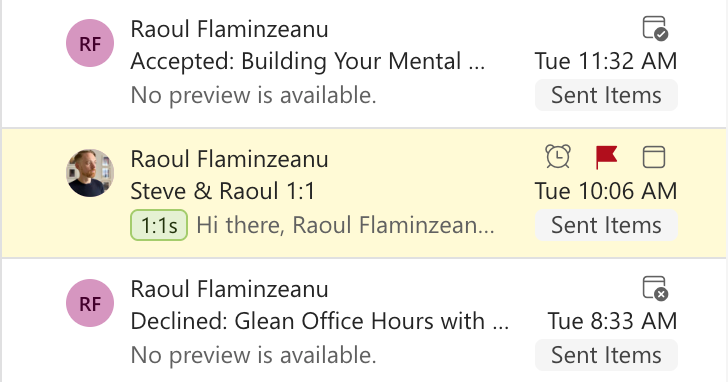
- Outlook Mail, in a more literal sense, lets users flag emails with colored ribbons for follow-up, so important messages don’t drown in the inbox.
Key trait: Flagging is fundamentally about signal versus noise.
2. Save for Later: The Nightstand
Save for Later, as a UX behavior, is any mechanism that removes an item from the active flow and holds it in a personal queue, not because the user has decided against it, but because they’re not ready to act on it yet. It’s deferred attention, not curation. The item doesn’t disappear. It waits. And it carries a quiet obligation with it: I owe this my time.
The metaphor: A nightstand. You put things there because you haven’t gotten to them yet. It’s not a bookshelf. Nothing on a nightstand is there to stay. It’s a queue with an implicit clock. The longer something sits there, the more it nags.
- Slack understood this the hard way. Their old star system tried to be both a favorite and a reminder, and did neither well. Users had already started marking messages as unread just to save them for later. Slack eventually formalized that behavior into a dedicated Later tab, with states for “in progress,” “archived,” and “completed.” The queue behavior is now explicit.
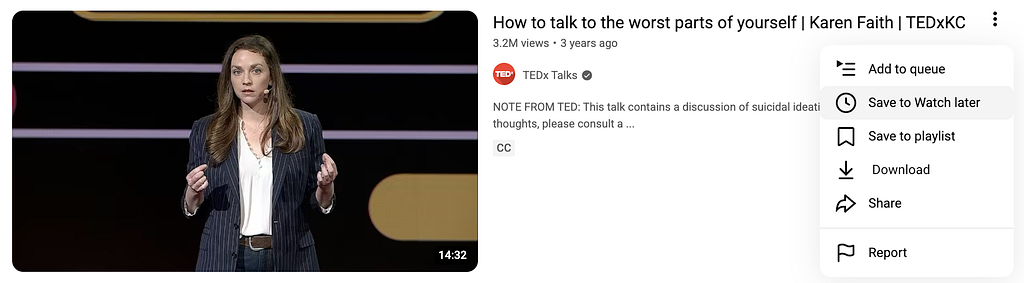
- YouTube’s Watch Later playlist works on the same principle. You’re not saying you love a video. You’re saying you owe it your attention when you have the time.
- Amazon makes the pattern most visible. When you move an item out of your cart and into “Saved for Later,” it drops to a shelf just below the active cart, always in sight, never in the way. Shoppers had already been using the cart as a holding area. Amazon formalized that behavior and gave it its own space.
Key trait: If the item feels incomplete rather than valued, it belongs here. That’s the nightstand test.
A word of caution: Save for Later starts as a relief, a guilt-free way to say not now, but soon. But nightstands accumulate. Think of a magazine subscription you’ve had for years, the stack growing taller every month, each new issue arriving before you’ve touched the last. Every time you walk past it, the guilt compounds. Psychologists call this the Zeigarnik Effect: our brains fixate on unfinished tasks, treating every open loop as an unresolved problem. A Save for Later list that keeps growing stops feeling like a tool and starts feeling like a debt. Designing for this pattern means designing for the anxiety it can produce over time: ways to surface, prune, and close loops, not just open them.
3. Favorites : The Bookshelf
Favorites, as a UX behavior, is any mechanism that lets a user mark an item as personally meaningful, not because it needs action, not because it’s unfinished, but because it reflects something about who they are. It’s curation, not obligation. No clock, no urgency, no queue. Just: this matters to me.
The metaphor: A bookshelf, not just for books. Consumer researcher Russell Belk called this the Extended Self: our possessions are not just things we own, but reflections of who we are. What you choose to keep visible says something about you. Favorites work the same way.
- Browser bookmarks are where this pattern began digitally. Netscape introduced them in 1994, and the mental model has held ever since. You find something worth keeping, you save it, and it waits in a place you control.
- Spotify built an entire identity layer around the same idea. When you save a song to Your Library, you’re not adding it to a queue. You’re saying something about your taste. The collection grows over years, shifts with you, and nothing in it asks you to act.
- Instagram’s Saved Collections take it furthest: private, named boards that nobody else sees. Apartment ideas, recipes, design references. A shelf organized entirely around what matters to you right now.
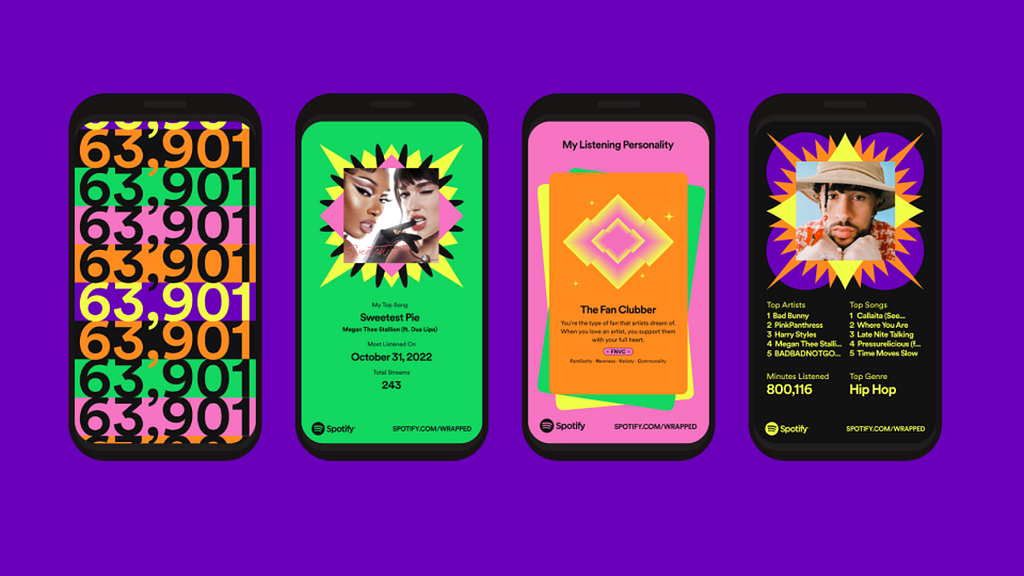
Key trait: Favorites express intent without commitment. No urgency implied, no expiration date, no action required. Just: this is a little bit me.
4. Pinning : The Thumbtack on the Corkboard
Pinning, as a UX behavior, is any mechanism that locks an item to a fixed, visible position — not because the user values it, not because it needs action, but because it needs to be findable without searching. It’s spatial memory made permanent. The item doesn’t move. Everyone knows where it is.
The metaphor: A corkboard in a shared space. Not a personal shelf, not a filing cabinet — a corkboard on the wall that anyone walking into the room can see. You’re not saying you love what’s pinned there. You’re not flagging it for urgent action. You’re saying: this needs to be within reach, for me and for everyone else in this room.
- WhatsApp pins messages in group chats. The address of the party venue pinned once, visible to everyone. The pin holds one thing in place while everything else keeps moving.
- Google Classroom pins announcements to the top of a class stream so every student sees the same information first, regardless of when they log in. One person pins for many. The corkboard is asymmetric, but it serves the whole room.
- AlayaCare, a home-based care platform, applies the same pattern clinically. A coordinator pins a note to a client’s profile: a care instruction, a critical update, a flag for the next visit. Any caregiver who opens that profile sees it immediately. The corkboard is in the room. Everyone who walks in benefits from it.
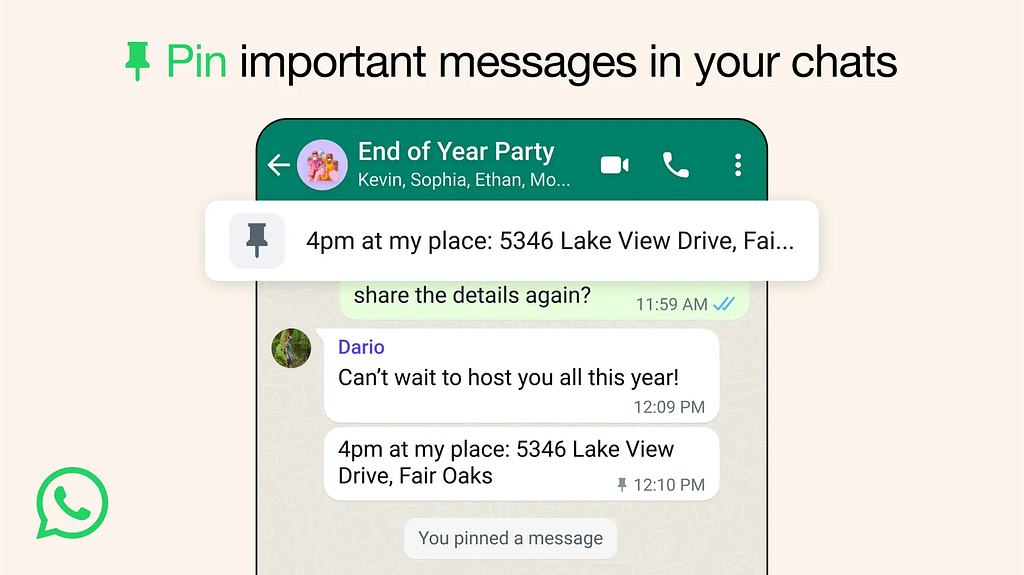
Key trait: Pinning is about position, not preference. It’s temporary by nature. You pin and unpin as context shifts. And unlike every other pattern in this article, it’s rarely just for you.
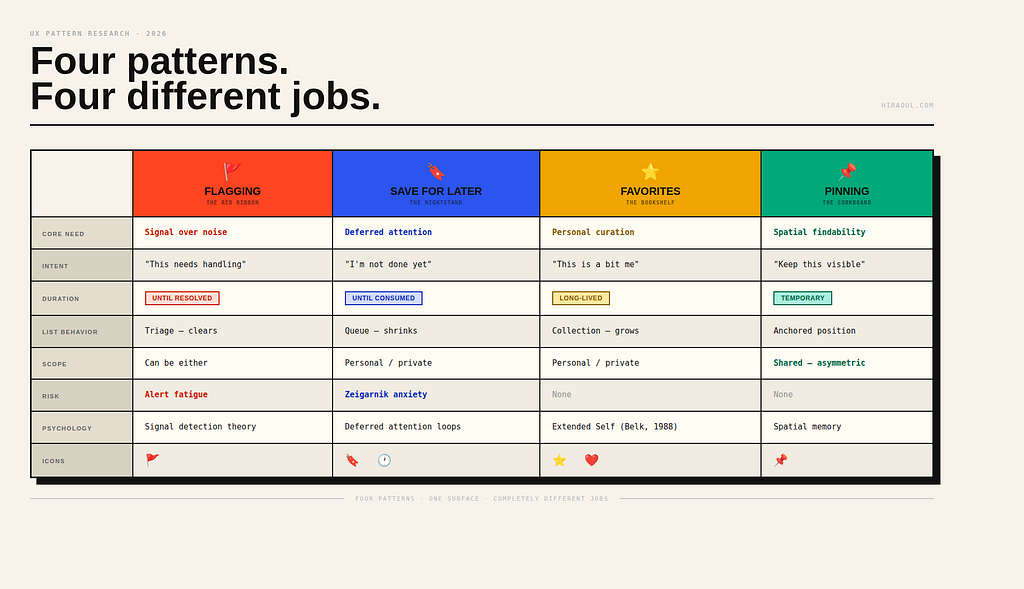
These four patterns feel similar because they share a surface: they all let you mark something. But what you’re marking, and why, and for whom, are four completely different answers. And sometimes the right pattern is all four at once: a flagged item saved for later, pinned for the team, and eventually added to someone’s favorites. Getting that distinction right is the difference between a feature that feels obvious, one that creates friction nobody can name, or remembering to take out the trash.
Sources
UX Bulletin. (n.d.). Signal detection theory in UX. https://www.ux-bulletin.com/signal-detection-theory-in-ux/
Ayari, K. (n.d.). The complete guide to email triage. Ayari. https://ayari.io/article/email-triage-guide
Femon. (2026, January 25). Feature analysis: Shopping cart “Save for Later” functionality. Medium. https://medium.com/@femon020531/feature-analysis-shopping-cart-save-for-later-functionality-d3ec22b12da9
Srichandan, S. (2021, November 23). The psychology of unfinished tasks: The Zeigarnik and Ovsiankina effects. Ness Labs. https://nesslabs.com/unfinished-tasks
Starr, R. J. (2025, December 10). The unfinished mind: The psychology of the Zeigarnik Effect and mental clutter. https://profrjstarr.com/the-psychology-of-us/the-unfinished-mind-why-incomplete-tasks-disturb-our-peace
Psychology Today. (n.d.). Zeigarnik Effect. https://www.psychologytoday.com/us/basics/zeigarnik-effect
Belk, R. W. (1988). Possessions and the extended self. Journal of Consumer Research, 15(2), 139–168. https://academic.oup.com/jcr/article-abstract/15/2/139/1841428
Chen Xing. (n.d.). Notes on the extended self theory. https://chenxing.space/consumer-behavior/notes-on-the-extended-self-theory/
Pendlebury, J. (2017, December 29). Hearts don’t lie: The importance of ‘favouriting’ in e-commerce. Medium. https://medium.com/the-ux-chap/hearts-dont-lie-the-importance-of-favouriting-in-e-commerce-82d14d1c196f
Slack. (n.d.). Pin messages and bookmark links. Slack Help Center. https://slack.com/intl/en-ca/help/articles/205239997-Pin-messages-and-bookmark-links
Pinning is not saving. Saving is not favoriting. Favoriting is not flagging. was originally published in UX Collective on Medium, where people are continuing the conversation by highlighting and responding to this story.