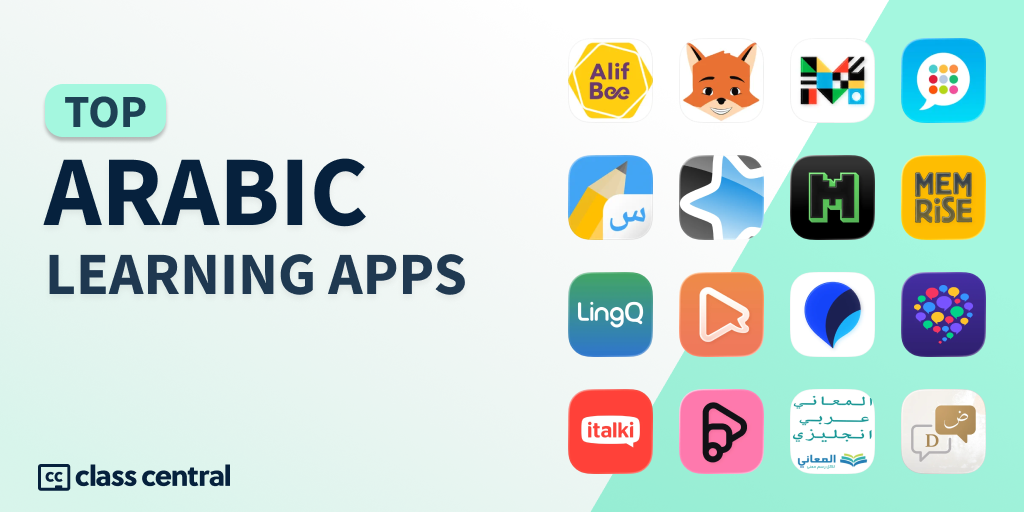
Arabic isn’t one language, which is the first thing most apps get wrong. There’s Modern Standard Arabic for news and formal writing, and there are the spoken dialects people actually use day to day — Egyptian, Levantine, Gulf, Iraqi, Moroccan. An app that drills MSA won’t get you through a taxi ride in Cairo or a TV drama in Beirut. The script adds another hurdle: letters connect, change shape by position, and usually drop short vowels.
So in this Best Course Guide I look at what each app is actually good for — MSA, dialects, grammar, reading, listening, speaking, lookup — and not just the ones that are most popular.
To make the list easy to navigate, I’ve broken it down into six categories:
Note: Prices are listed in USD. App pricing may differ due to promotions or regional pricing, so check the official pricing page before subscribing.
Best Arabic Learning Apps — Overview
| App |
MSA |
Dialect |
Grammar |
Vocabulary |
Listening |
Speaking |
Reading |
Writing |
Best for |
| General Purpose |
| AlifBee |
 |
|
|
|
|
|
|
|
Arabic-specific structured study |
| Kaleela |
|
|
|
|
|
|
|
|
MSA plus dialect coverage |
| Mango Languages |
|
|
|
|
|
|
|
|
MSA or dialect conversation practice |
| ArabicPod101 |
|
|
|
|
|
|
|
|
Audio and video lessons |
| Script & Handwriting |
| Write It! Arabic |
|
|
|
|
|
|
|
|
Handwriting the Arabic alphabet |
| Vocabulary & Review |
| Anki |
|
|
|
|
|
|
|
|
Custom flashcards and SRS |
| Clozemaster |
|
|
|
|
|
|
|
|
Sentence-based vocabulary acquisition |
| Memrise |
|
|
|
|
|
|
|
|
Native-speaker phrase videos |
| Reading & Listening |
| LingQ |
|
|
|
|
|
|
|
|
Reading and listening with real content |
| Al Jazeera Learning Arabic |
|
|
|
|
|
|
|
|
Free MSA reading and grammar |
| Playaling |
|
|
|
|
|
|
|
|
Captioned real-world Arabic videos |
| Speaking |
| Pimsleur |
|
|
|
|
|
|
|
|
Speaking and listening practice |
| HelloTalk |
|
|
|
|
|
|
|
|
Language exchange |
| italki |
|
|
|
|
|
|
|
|
1-on-1 tutor lessons |
| Preply |
|
|
|
|
|
|
|
|
Regular tutor-led study |
| NaTakallam |
|
|
|
|
|
|
|
|
Levantine and MSA speaking practice |
| Dictionary & Lookup |
| Almaany |
|
|
|
|
|
|
|
|
Quick Arabic–English lookup |
| Living Arabic |
|
|
|
|
|
|
|
|
Root and dialect dictionary |
General Purpose Arabic Learning Apps
 AlifBee
Cost: Freemium, with paid plans
AlifBee is the app for people who’d rather use something built for Arabic than a general platform that happens to have Arabic to appeal to the mass market.
Beginners will learn the alphabet, handwriting, right-to-left reading, basic grammar, listening, and sentence-building all in one app, which prevents decision fatigue.
The curriculum runs ten levels and a couple hundred lessons across reading, writing, and speaking, all anchored in Modern Standard Arabic. So it suits anyone who wants a formal foundation for school, work, media, or eventually branching into a dialect. AlifBee treats MSA as the front door to the rest of Arabic, and the course is built around that idea.
Kaleela
Cost: Freemium, with paid plans
What I like about Kaleela is that it admits Arabic’s variety of problems on day one instead of hiding it. Neither a glorified alphabet app nor a phrasebook, it hands you a real route into MSA and a spread of dialects: Jordanian and Palestinian, Syrian, Egyptian, Iraqi, Saudi.
Breadth is the whole pitch. Letters, formal Arabic, grammar, and regional varieties all sit under one roof, which is exactly what you want when you haven’t yet decided whether your Arabic is for reading, travel, family, work, or one specific country.
Mango Languages
Cost: Freemium or paid plans; plenty of people get it free through a library or institution
If the MSA-versus-dialect question already has your head spinning, Mango is the gentlest place to land.
There are multiple tracks you can pick from, such as Modern Standard Arabic, and there’s Egyptian, Iraqi, and Levantine.
The lessons live in practical dialogue: listening, pronunciation, the phrase patterns you’d actually reach for. You won’t get deep into writing or formal grammar here, but among the mainstream consumer apps, few do a better job of getting Arabic out of your eyes and into your mouth.
ArabicPod101
Cost: Free samples, multi-tier plans for full access
If your day already includes a commute, a walk, or an hour of cooking, ArabicPod101 turns that dead time into listening practice.
The format is audio and video lessons — dialogue, then the vocabulary, grammar, pronunciation, and cultural notes around it — with pathways to follow rather than a pile to dig through.
You’ll get the most out of ArabicPod101 if you’re someone who can’t stand slogging through textbooks and instead prefers listening or reading short explained episodes.
Arabic Apps for Script, Pronunciation, and Handwriting
Write It! Arabic
Cost: Freemium, with paid options depending on platform
Arabic’s first obstacle isn’t just recognizing 28 new symbols, it’s forming them correctly, in the right strokes, as they morph across positions.
Write It! Arabic drills exactly that, with handwriting recognition, stroke guidance, test and review modes, progress tracking, and offline support. If your memory works through your hand, tracing the letters makes them concrete in a way flashcards never will.
Arabic Apps for Vocabulary and Review
Anki
Cost: Free on desktop and Android, $24.99 on iOS
Anki isn’t an Arabic app until you make it one, either by importing a deck or by building cards from your own lessons. And Arabic vocabulary badly needs the repeated contact it gives you: new roots, patterns, broken plurals, dialect words, and a dozen near-identical forms slip away fast if you meet them only once.
In Anki, a single card can hold the script, transliteration, audio, an example sentence, a dialect note, an image. Though some people (me) may enjoy spending an entire afternoon fiddling with card templates, you can get pre-made cards from the Anki deck browser or from Arabic language learning communities (one I recommend is Refold).
Clozemaster
Cost: Free | Premium
Clozemaster catches you at the point where isolated flashcards start to feel hollow.
It’s aimed at intermediate and advanced learners and uses a fill-in-the-blank format. Rather than show you a word alone, it drops it into a sentence and asks you to supply the missing piece.
That makes it a poor first app and a good second or third one. Once you’ve got the script and some basic structure down, seeing vocabulary in context beats memorizing loose lists, and Clozemaster is built almost entirely around that move.
Memrise
Cost: Freemium, with paid subscription from $24.99 monthly, $299.88 yearly, and $329.99 lifetime, though there are often discounts and regional pricing.
Reach for Memrise when you feel your study routine has gone too quiet. Arabic’s rhythm and pronunciation are hard to absorb from the page, and Memrise leans on clips of native speakers using phrases in context, so the words arrive attached to real voices.
These days it leans more on those speaker videos and AI conversation features, so it helps expose you to new words and strengthen your listening skills.
Arabic Apps for Reading and Listening
LingQ
Cost: Freemium; multiple tiers, with cheapest starting from $14.99 monthly
LingQ is made for the awkward middle: when beginner lessons have gone stale but native material still feels like a wall. Arabic learners stall here a lot, because real texts arrive unvoweled, dense with vocabulary, and stuffed with structures no beginner app ever bothered to show you.
It bridges that gap by turning reading and listening into a single workflow built from podcasts, books, shows, videos, and articles, plus anything you import yourself. Tap a word, save it, review it later, and keep feeding yourself material you actually care about.
Al Jazeera Learning Arabic
Cost: Free
Al Jazeera’s learning portal is where you go when you want Arabic that connects to actual reading rather than another set of app sentences. It’s a free educational resource stocked with media articles, everyday-communication texts, literary passages, grammar rules, and more — built squarely for people drawn to MSA, news, current affairs, and formal comprehension.
There’s more here than the front page suggests: grammar, reading texts, listening material, and graded content all sit together. It’ll feel dense to an absolute beginner, but the moment the script and basic sentence patterns stop being your bottleneck, it turns into one of the richest free resources around.
Playaling
Cost: Free trial, with paid access
Playaling tackles the part of Arabic most apps tiptoe around: real spoken language. Interviews, comedy, clips, ordinary chatter — the stuff textbook audio scrubs too clean. It’s built on real-world video, with content across Levantine, Egyptian, Gulf, Maghrebi, MSA, and Educated Spoken Arabic.
The interactive captions are what make it work. You can watch genuine footage and tap straight through to a word, its pronunciation, and its meaning without abandoning the clip — an audio dictionary running underneath the whole thing. Skip it if you only care about formal writing; lean on it hard if you want to understand how Arabic actually sounds out loud.
Arabic Apps for Speaking
Pimsleur
Cost: Freemium
If speaking is the thing you keep finding reasons to dodge, Pimsleur drags it to the front. The Arabic courses (covering Modern Standard, Eastern, and Egyptian) are built on listening and answering out loud, which is a far more active thing than hearing a phrase and tapping the right tile.
What you’re paying for is oral reflex: prompt, response, prompt, response, until the words come without you first hunting for them on a screen.
HelloTalk
Cost: Freemium
Sooner or later Arabic has to become a social thing, and HelloTalk supplies the other people.
It’s a language-exchange app where you can practice your target language with native speakers, with text, voice, video, plus translation, transliteration, and correction tools.
By only sending a few messages, you’ll have what textbooks don’t: spelling habits, dialect choices, natural phrasing, the way a real person actually replies.
How good the practice is depends entirely on who you meet. Some exchanges turn into a regular thing; others evaporate after two messages. But it offers what no self-contained app can fake: actual humans using the language back at you.
italki
Cost: Paid per lesson
With a tutor, Arabic stops being theoretical. italki connects you with one who hears your pronunciation, catches when you’ve come out sounding stiff and over-formal, explains why one dialect says it differently, and bends the lesson around whatever you’re actually after: in 30-, 45-, 60-, or 90-minute slots, paid as you go, with teachers setting their own prices.
That flexibility matters enormously for Arabic. A decent tutor will help you pull apart Quranic Arabic, MSA, Egyptian, Levantine, Gulf, Moroccan, business Arabic, travel Arabic, and family conversation into paths you can actually choose between.
Preply
Cost: Paid per lesson / subscription model depending on tutor
Just like italki, Preply also connects you with Arabic tutors, but the experience leans more toward a managed platform: matching, a virtual classroom, scheduled lessons, and an ongoing relationship with one teacher rather than a fresh arrangement each week. You can book a 25- or 50-minute trial to test the fit before committing.
It’s the right call if you want speaking practice baked into your routine instead of cobbled together each time. As with any tutor marketplace, the teacher matters far more than the brand — so read the profiles, the reviews, and the trial lessons closely.
NaTakallam
Cost: Paid private sessions and programs
NaTakallam offers Arabic conversation with a more human, mission-driven model behind it. It’s known for pairing learners with displaced-person tutors and conversation partners, and Arabic happens to be one of its strongest languages — through private-session packages or an Arabic for Professionals program that blends live instruction with self-paced study.
The draw goes beyond “find a tutor.” It’s an especially good fit if you’re focused on Levantine Arabic, practical conversation, humanitarian or NGO work, or you simply want your learning to mean something beyond the lesson itself.
Arabic Dictionary, Lookup, and Input Tools
Almaany
Cost: Free
Need a quick gloss and nothing else? Almaany handles it.
It has Arabic-to-English for when you’re starting out, and Arabic-to-Arabic for when you’re confident with your basic vocabulary, along with offline summaries and fuller results online. It’s broad, fast, and available on web and mobile alike.
I’ve used it a lot for my Arabic studies, especially when I was reading كتاب الآجرومية with a sheikh and there were so many new vocab to pick up. Thus, I can whole-heartedly recommend it to any learner — especially since it’s free anyways :).
Living Arabic
Cost: Free website, with app options
Living Arabic is among the best lookup tools going, precisely because it never treats dialects as a footnote.
It carries dictionaries for Egyptian, Levantine, and Classical Arabic, and the app claims north of 200,000 definitions and example phrases spanning Classical Arabic and MSA plus Levantine, Egyptian, Maghrebi, Iraqi, Gulf, Yemeni, and Sudanese.
The post The Best Apps to Learn Arabic in 2026 appeared first on The Report by Class Central.