
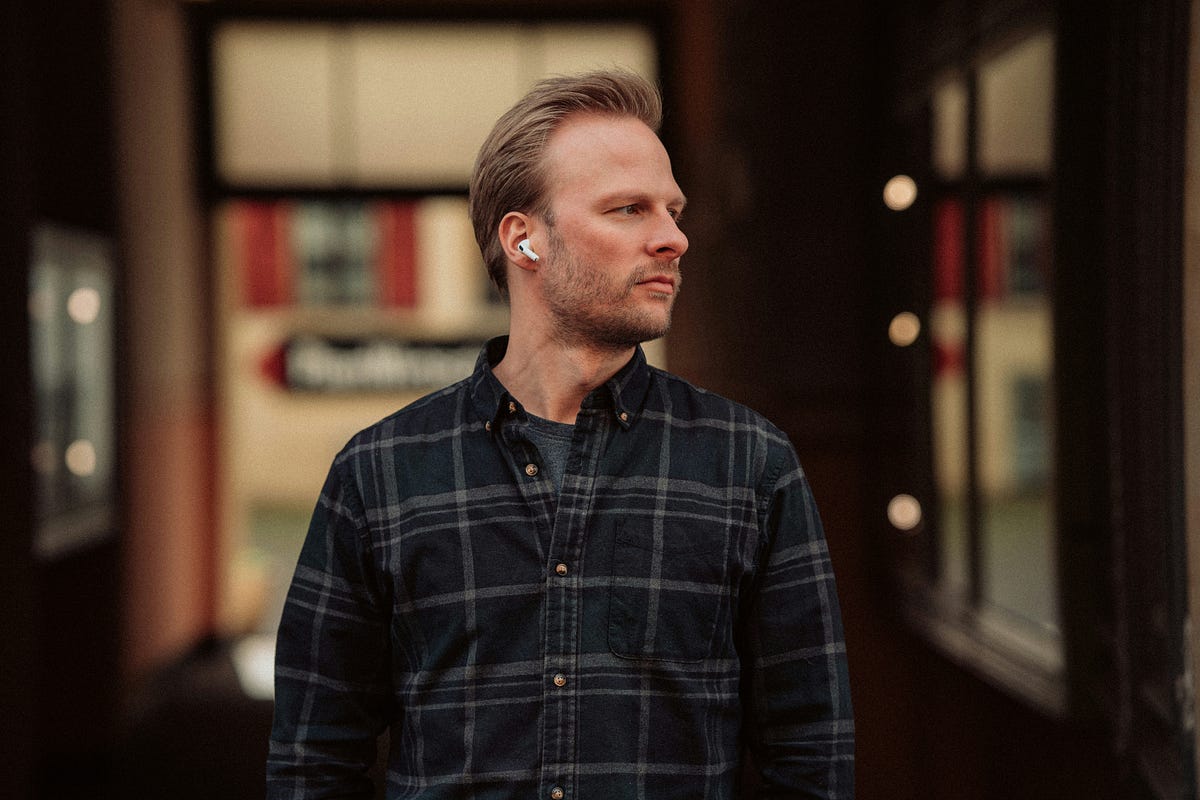
Will it happen again?

When AirPods were unveiled in September 2016, many of the initial reactions were skeptical or openly mocking. They looked like wired EarPods with the cord snipped off. The Guardian compared them to “a tampon without a string” and predicted they’d vanish soon. People on social media said they looked like the tops of toothbrushes. Popular Mechanics warned readers not to mistake the AirPods for a step forward, arguing they were really a step back and “awful design.”
But look around now. AirPods are one of the most common gadgets people own, even in 2026.
So when word got out that Apple reportedly wants to put cameras in the stems (source1, source2), the reaction was familiar: not excitement, but mockery and panic. Will Apple win people over again? Or is it more complicated this time?
Why people came around
Plenty of reviewers changed their minds after living with AirPods for a while, and for good reasons: easy pairing, a fit that worked well for many users, music that pauses automatically when you take them out, and the freedom of having no wires to untangle.
I bought a pair last year because I was impressed by the noise cancellation, and they ended up helping me in a way I did not expect. They calm my anxiety. I put them in whenever I feel anxious or cannot sleep, both to block out the world and to play white noise. Being wireless makes it easy to do this anytime, anywhere.
Then there was the celebrity effect. Diana Ross wore them. Kristen Stewart wore them. A viral tweet ranked the ten richest people in the world and put AirPod users at number one, ahead of Amazon’s CEO and Bill Gates. They became a signal of iPhone ownership and disposable income.
Somehow, the product went from a “tampon without a string” to a symbol of style and money. Nearly a decade later, AirPods remain one of the most prominent and widely used wireless earbuds on the market.

The Apple Watch went through something similar. At launch, it drew a wave of doubt, and the core question was always the same: what is this thing actually for? Reviewing it for The Verge, Nilay Patel found the watch so ambitious that it lost focus. Analyst Rob Enderle said it would look stupid to pick up calls on a watch, and that the small face would make several functions useless. The Swiss watch industry was not worried either. At Baselworld in 2015, Tag Heuer CEO Jean-Claude Biver told CNBC that children would not be able to inherit and wear an Apple Watch because it would eventually stop working and “the technology will be gone.”

Then Apple iterated. It dropped the fancy $17,000 gold model, added GPS, and made the watch water-resistant enough for swimming. The pitch shifted from “luxury fashion object” to “fitness and health wearable.” By 2019, the Apple Watch was outselling the entire Swiss watch industry combined, with an estimated 31 million units shipped compared with 21 million watches sold by all Swiss brands, according to figures reported by CNBC. It is still one of the best-selling smartwatch lines in the world.
Get Catherine Chu’s stories in your inbox
Join Medium for free to get updates from this writer.
I own one too, and I will admit that I questioned the point of it before I had it. Now I use it constantly. It’s great during workouts. At nap time, a gentle wrist buzz wakes me up instead of a phone alarm blaring and startling everyone nearby. When I am cleaning the house with a podcast playing, I can skip to another episode from my wrist even when my phone is in another room. I never would have guessed at any of these uses until I lived with it for a while.
For both AirPods and the Apple Watch, the designs were so unfamiliar that the jokes arrived long before the daily habits did. But not everything from Apple survives the mocking stage. The Magic Mouse, with its charging port on the bottom, is still a running joke, and the mockery never curdled into a status symbol. The Vision Pro VR headset never took over either, despite all its spatial-computing power and tight integration with Apple’s ecosystem. According to market estimates cited by PYMNTS, Apple shipped roughly 45,000 Vision Pro units in the final quarter of 2025, while production was reportedly paused and advertising spending was cut by more than 95 percent.
What separates the two groups is whether the product actually solves a real problem better than the alternatives do.

How will it go this time?
According to a Bloomberg article by Mark Gurman, Apple’s next major leap could arrive in late 2027: a version with small, low-resolution cameras tucked into the stems. (As I write, there are also posts suggesting development has been suspended, so the product’s status remains uncertain.) The design is expected to resemble today’s AirPods Pro, with slightly longer stems to make room for the sensors and a small LED indicating when visual information is being uploaded. Macworld notes that these would not be conventional photo or video cameras. They would act as “eyes” for Siri, providing visual context about the wearer’s surroundings so the assistant could better understand what the user is looking at.
The post also describes a few possible hands-free use cases. You could look at the ingredients on your counter and ask Siri what to make for dinner. Instead of “turn left in 200 feet,” Siri could point to the actual landmark ahead. You could look at a poster and add its details directly to your calendar.
There’s plenty of skepticism, and unsurprisingly, privacy worries people the most. Apple’s reported answer is an LED indicator that would light up whenever visual information is being collected or uploaded, but SoundGuys pointed out that an indicator tucked beside someone’s ear might not be very visible to the people around them. When SoundGuys polled its readers, 88% of more than 1,700 respondents said they did not want cameras in their AirPods.
Others question whether the idea would even work. One Reddit user put it this way: “Users are not crabs,” wondering how a camera pointing from the side of someone’s head could know what that person was actually looking at. And what happens if the wearer has medium-length or long hair? Do the AirPods just end up staring at a curtain of it?
The reporting does not fully resolve this, but there are a few possible answers. The stems might angle slightly forward when worn so the cameras are not aimed purely sideways. Or the system might not need to see exactly what the wearer’s eyes are focused on. A general sense of the surrounding environment, combined with information like the user’s location and walking direction, could be enough.
Why it might be harder this time
Apple has a long track record of releasing products that the tech press initially hates, but consumers eventually love. A lot of early backlash is really just unfamiliarity with how a new thing works. Camera-equipped AirPods could follow the same path. They would simply need to make getting an answer so much easier that users stop reaching for their phones. Get lost somewhere unfamiliar, ask a question out loud, and receive an answer before you would have finished unlocking your screen and spinning in a circle to make the little navigation arrow point the right way.
But this time is a bit different. The 2016 backlash against AirPods focused on appearance and practicality: they looked dumb, they’d fall out, and the jokes were aimed at the people wearing them. The pushback against camera-equipped AirPods is ethical and social. It’s not just about the wearer, it’s about everyone else in the room, including the stranger standing next to them on the subway. This time, Apple will have to solve more than a design problem to convince people to wear them.