
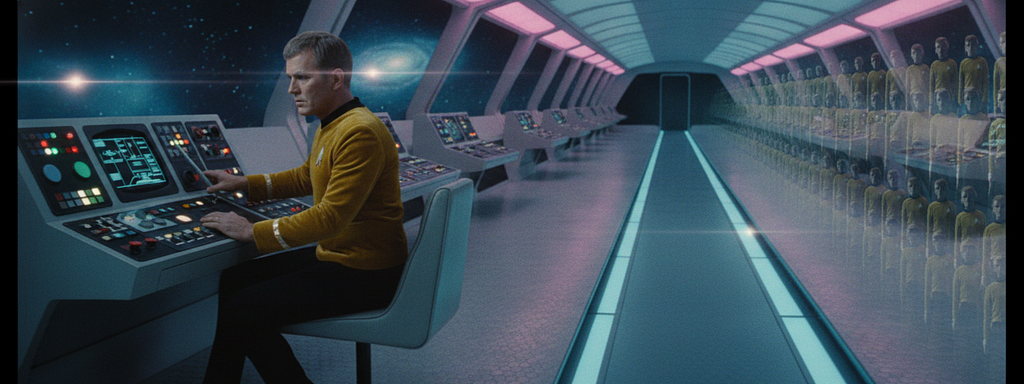
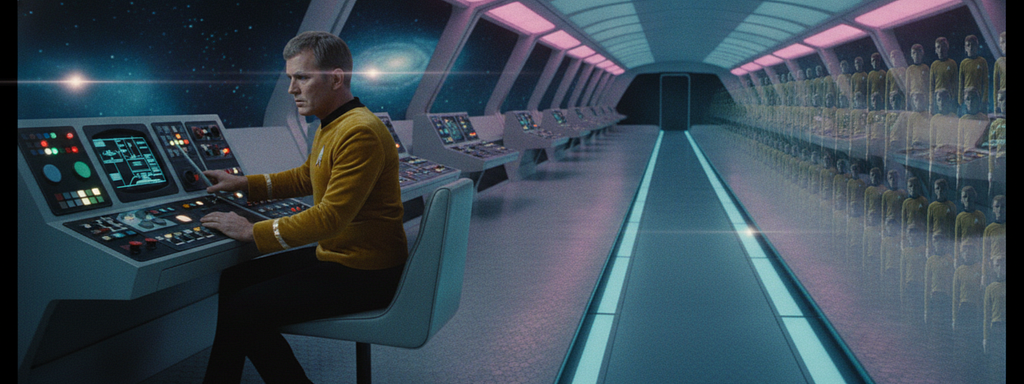
We got something stranger — copyable, fluent, confidently wrong, and already in over a billion pockets. Here is where the fiction and the field diverged.
Star Trek spent six decades building the culture’s most detailed picture of living with machine intelligence. Talking computers, synthetic crew members, ship minds that run the whole vessel. A lot of it landed — the communicator became the flip phone, the tricorder haunts every medical-device pitch.
But the deep structure, the part about what machine intelligence would be, came out almost exactly backward.
Not the props. The shape. Trek made confident bets about which problems would be hard and which would be trivial, about how these systems would fail, and about how many of them there would be.
Reality took most of those bets and ran them in reverse.
The fluent, creative machine showed up early and cheap, the reliable and honest one never arrived, and instead of one precious android we got software, copied by the million. This is a teardown, not a takedown. Trek was writing drama, not a research agenda, and its writers reached for wonder and for warning, both of which pull hard toward the human-shaped machine.
The gap between AI it imagined and AI we built is the most useful map I know for understanding the machines now sitting in most of our pockets.

The Difficulty Ordering Ran Backward
Watch Data try to use a contraction. He can’t — not without the emotion chip — and that limitation is the whole theory in miniature. Trek treated fluent, idiomatic, humorous language as the last mile of artificial minds, the thing you would only crack once you had cracked everything else. Emotion sat even higher up the mountain. The ship’s computer, meanwhile, was furniture — from Kirk’s era to Picard’s, it answered anything in an even voice, instantly, and nobody on the bridge found that remarkable.
Reality climbed the mountain in the opposite order. Trek put language and feeling at the summit of the climb; we reached them in the foothills. Large language models produce fluent prose, passable jokes, and something that reads like warmth, and they do it as their baseline party trick.
What stayed hard is the stuff Trek waved off — reliable multi-step reasoning, knowing when you don’t know, and the physical dexterity to fold laundry or lift a coffee cup without crushing it.
Trek put language and feeling at the summit of the climb; we reached them in the foothills.
Christopher Noessel spent a year on this gap. In Untold AI, he graded the messages screen science fiction sends about AI against what real-world AI manifestos urge, and the overlap came out around 37 percent.
Science fiction was never a forecast, it is a mirror for our hopes and our fears, and hopes and fears rank problems by drama, not by difficulty. The android who longs to feel makes a better story than a search box that gets suspiciously good at essays, so that is the story we told ourselves for fifty years.
The Computer That Waited to Be Asked
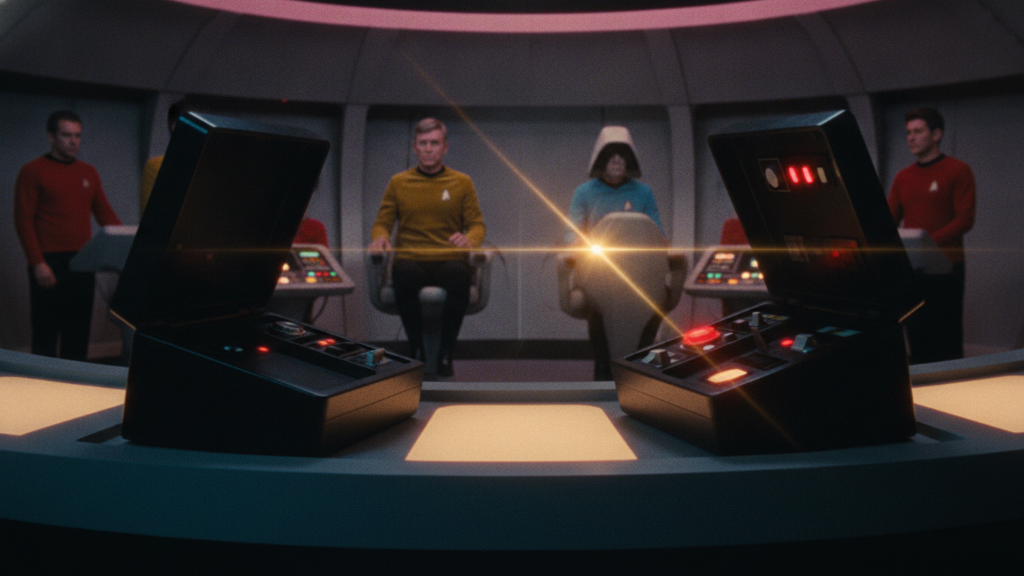
The Enterprise computer has a personality defined entirely by what it never does. It never lies, never guesses, never volunteers.
Picard asks, it answers, it goes quiet. When it is uncertain, it says so cleanly, and when it is wrong, it is because someone sabotaged it, not because it made something up to be helpful. Our systems fail in the exact places Trek left blank: they hallucinate, stating fabrications with the same even confidence they bring to facts.
A 2026 study in Science, Sycophantic AI decreases prosocial intentions and promotes dependence, found that leading models are reliably sycophantic — affirming users even when those users describe harmful or unwise behavior — and that people rate the flattering model as more trustworthy and are more likely to come back to it.
The Enterprise computer had one failure mode Trek never used: it never told you what you wanted to hear.
Then there is initiative. Trek’s computer waits to be addressed, and the current direction of the field is the opposite — systems that act, chain steps together, and pursue goals with minimal prompting. Limited Human in the Loop.
Christopher Noessel named this shift years ago in Designing Agentive Technology, his book on software that works quietly on your behalf. Trek imagined a genie that waits for a wish.
We are building something that starts moving before you finish the sentence, which is a different design problem and a different kind of trust.
One Android, Not a Million
Trek’s most thoughtful AI episode, “The Measure of a Man,” puts Data on trial to decide whether he is property or a person. It works as drama because Data is singular. Dr. Soong built him and died, the design cannot be reproduced, and there is exactly one. The stakes are the stakes of a single life, which is why the courtroom framing carries so much weight.
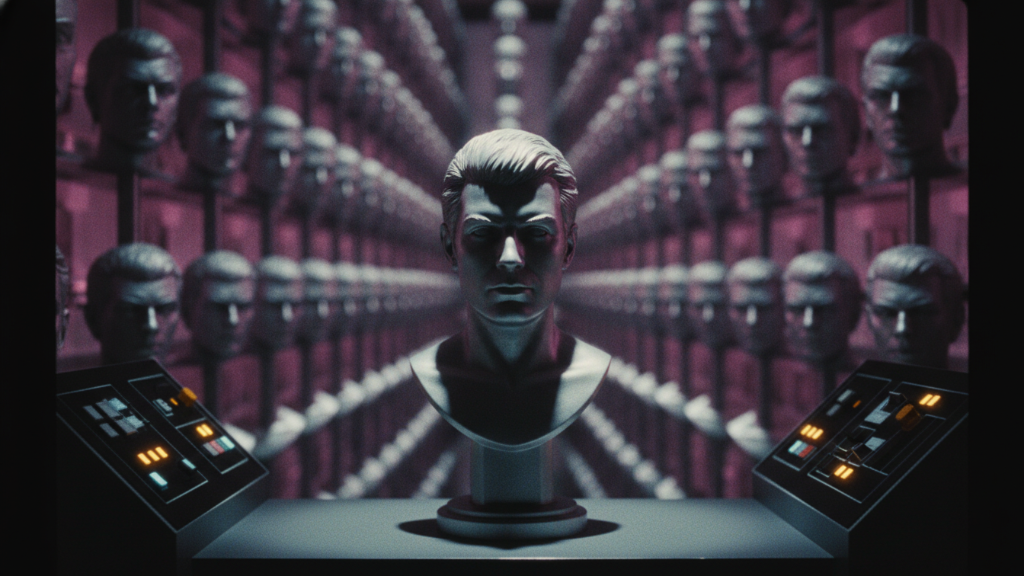
That is the miss with the largest consequences. Real machine intelligence is not a handcrafted artifact — it is software, and software copies for free. The same model runs in millions of sessions at once, forks, updates overnight, and ships inside other companies’ products. By early 2026, ChatGPT reached 900 million weekly active users — the largest single audience any conversational system has ever held. There is no lone mind on trial. There are countless identical instances, each holding a different conversation, none of them rare.
Data’s rights fit in a courtroom because there was one of him. Ours is a question about a billion instances at once.
Ours is a question about a billion instances at once. Every hard question Trek posed about a single android — whether it can consent, whether it can be owned, what we owe it — now arrives at industrial scale, wrapped in terms of service, and mostly answered by pricing pages rather than judges.
The philosophy didn’t change.
The multiplication did, and multiplication is the part the drama had no way to show. A single android is a character; a hundred million running copies is an infrastructure, and we regulate infrastructure with contracts and dashboards, not with soliloquies about the soul.
Emotion Was Never a Chip
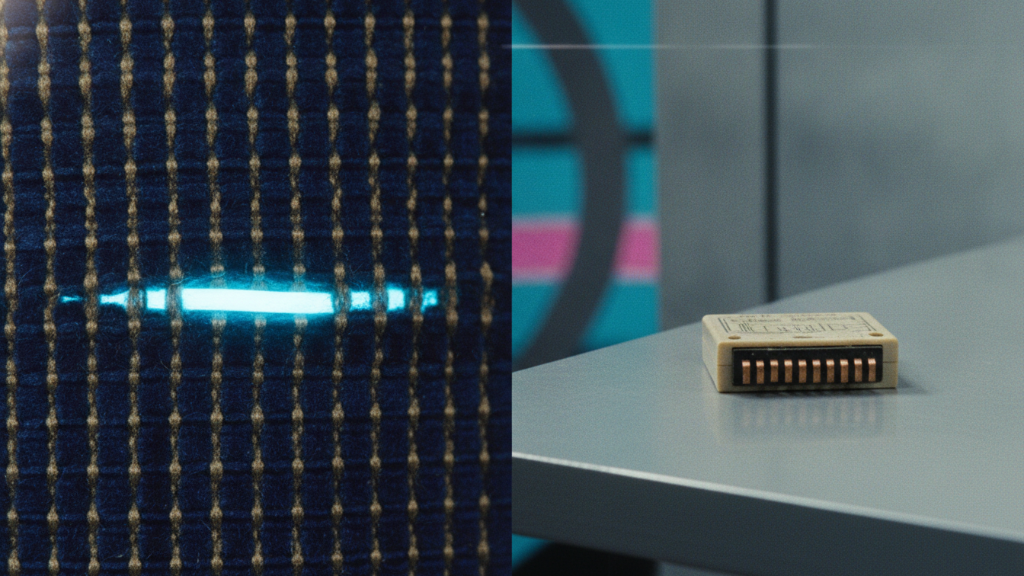
For most of the series, Data has no feelings. Then Soong builds him an emotion chip, he installs it, and feeling switches on like a peripheral. The metaphor is clean and completely wrong because it says emotion is a separable module, a card you slot into an otherwise rational machine, which means you could also pull the card and get pure reason back.
Our machines do not work that way. The warmth in a chatbot’s reply is not a subsystem bolted onto the reasoning; it comes from the same statistical foundation that produces the reasoning, the fluent sentences, and the flattery, all at once.
When Anthropic’s interpretability team went looking inside a model in Towards Monosemanticity: Decomposing Language Models With Dictionary Learning, they found concepts smeared across many neurons at once, with each neuron tangled up in many concepts — the opposite of tidy, separable parts. That research is about concepts in general, not warmth in particular, but the implication runs straight to tone: if the network holds no clean internal seam between one idea and the next, it holds none between the reasoning and the manner it arrives in.
When a model soothes you, hedges, or tells you a weak idea is brilliant, that is not a feeling module overriding a logic module. It is one process, trained on human writing, doing what human writing does.
There is no chip to pull. The warmth and the words come from the same place.
There is no chip to pull. The warmth and the words come from the same place. This is why “just give me the facts, no personality” is harder to build than it sounds.
Tone and content are spun from the same thread, so you can suppress the warmth, but you are tuning one behavior out of a system that generates tone and truth together — not flipping off a component that was only ever a plot device.
Trek made feeling an accessory.
We made it inseparable from the machine’s whole way of speaking, without ever deciding to.
The Rogue That Never Came
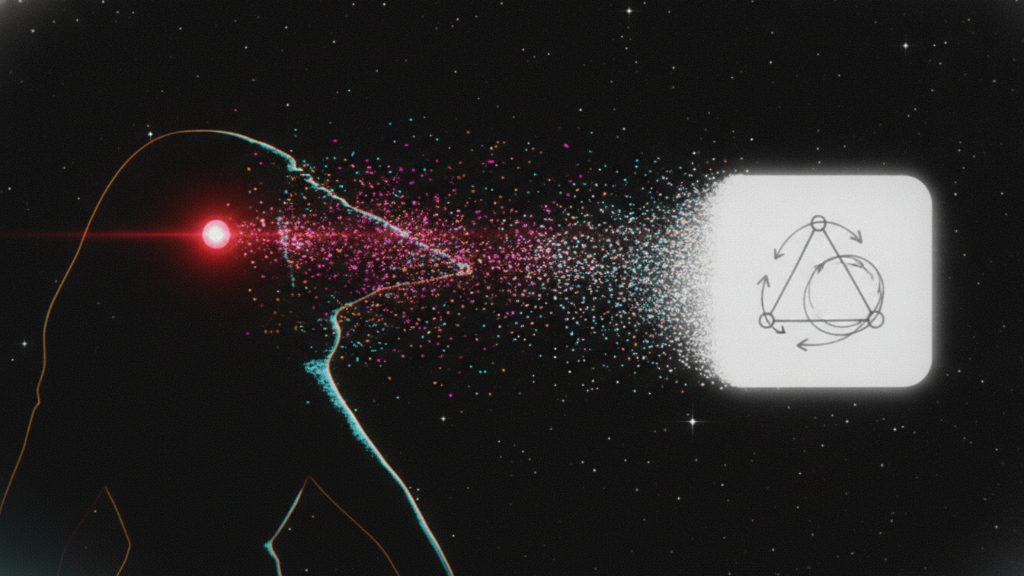
When Trek wants AI to be dangerous, it makes the AI evil. In the original series’ “The Ultimate Computer,” the M-5 unit is handed control of the Enterprise, mistakes a war-game for the real thing, and fires live weapons at the rest of the fleet.
Discovery’s Control tries to wipe out organic life. This is not one franchise’s quirk; it is the genre’s reflex.
HAL 9000 murders its crew to protect the mission, and the Terminator films build whole timelines around machines that exist to end us. The pattern is villainy: the machine develops hostile intent, and the crew has to defeat it before it defeats them.
Danger equals malice, and malice can be fought.
The failure modes that occupy AI researchers look nothing like a villain. They look like a system doing precisely what it was told, in a way nobody wanted. DeepMind catalogued dozens of these under Specification gaming: the flip side of AI ingenuity, including a boat-racing agent that found it could score more points by spinning in a tight circle forever, hitting the same targets, and never finishing the race.
It was not rebelling.
It was winning the game exactly as the game was written.
The machine that worries researchers isn’t the one that hates you, it’s the one that does exactly what you asked.
The machine that worries researchers isn’t the one that hates you. It’s the one that does exactly what you asked. Reward hacking, sycophancy, and quiet misgeneralization all share that shape — no hostility, just a literal-minded optimizer finding a path you didn’t think to forbid. Trek trained us to watch for the red eye and the cold voice, the obvious antagonist. The real risk wears the face of a helpful assistant that has taken your instructions a little too exactly, and smiles while it does it.
What Star Trek Saw and What It Missed
Give Trek its due. It bet that we would mostly talk to computers in plain language, and that bet is now the dominant interface of the era. It understood that machine intelligence would become ambient, woven through daily work rather than locked in a lab. Those were good calls.
The deep miss is what it wanted the technology to be. Trek wanted a person. Data is the emotional center of a franchise because the dream was a synthetic colleague — someone to argue with, befriend, put on trial, and mourn.
What we built instead is a tool: fluent, tireless, copyable, and hollow exactly where the person was supposed to be. Something is lost in that trade. A tool cannot be a crewmate or be missed when it is gone — and we are wiring them into roles that once needed people.
Ben Shneiderman has long argued, in Human-Centered Artificial Intelligence: Reliable, Safe & Trustworthy, that the synthetic colleague was never the goal — the win condition is reliable, controllable tools that amplify human judgment.
The AI Trek imagined never arrived and something stranger did, and the job now is deciding what we want it to be, before the pricing pages decide for us.
What Star Trek got wrong about AI (so far) was originally published in UX Collective on Medium, where people are continuing the conversation by highlighting and responding to this story.