

You put out a genuinely useful blog post. People read it and nod along, then click away. You never learn who any of them were. That is the quiet ache of most freelance marketing, and it is the exact thing gated content solves. You stop giving everything away for nothing, and you start turning readers into people you can reach again .
This one is written for freelancers and small studios, not big marketing teams with a budget. We will get into what gated content really is and when a gate helps rather than hurts. Then 8 specific ways to turn it into leads. And the mistakes that undo all your effort.
What Gated Content Is And Why It Pulls In Leads
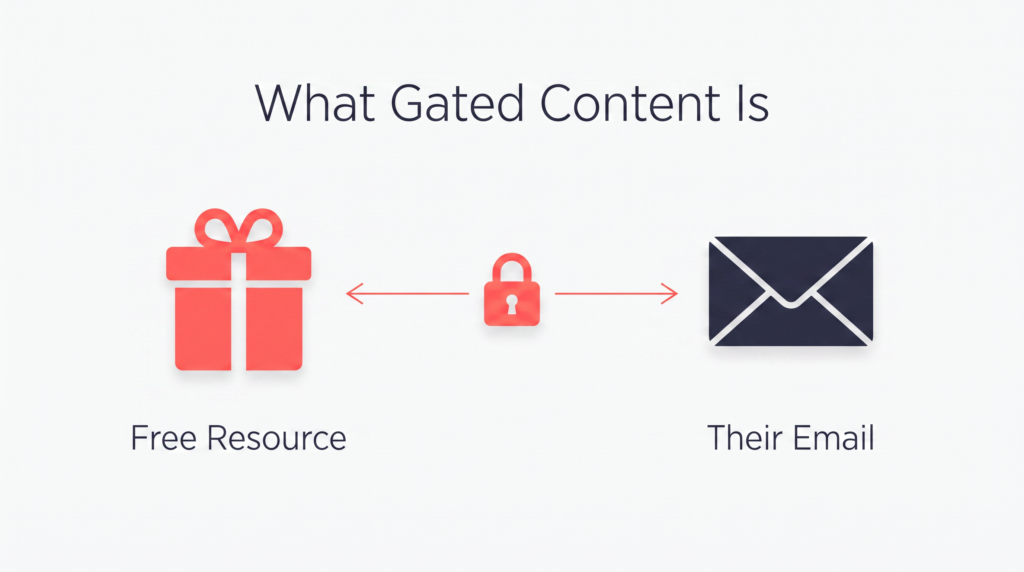
Quick definition first. Gated content refers to any resource someone can only get by handing over an email. And it works because content is already where the leads are. Around 74% of B2B marketers say generating qualified leads and demand is a top thing the content marketing strategy does for them. A gate is simply how you hold onto those readers instead of waving them goodbye.
👋 Hey… Are you coming to our FREE Event: The 10X Your Freelancing Summit? Thousands are gathering virtually on August 25-27, 2026. Claim your FREE spot now.
The Simple Trade Behind Every Gate
Every gate is a swap, plain and simple. You give something genuinely useful, and the reader gives you a way to reach them. The whole thing hangs on whether your half of the trade is worth it. The lead capture form is just a tollbooth if the resource is weak. And if it is genuinely good, the email is a bargain.
Why Creating Gated Content Beats Leaving Everything Free
Free content is brilliant for search engine optimization efforts, but on its own it leaks. People turn up and read, then disappear with no way for you to reach them. A gate fixes that leak on your best material. You keep publishing plenty in the open, but your deeper resources start earning you a contact you can walk toward your paid offers.
Gated vs. Ungated Content: What To Lock And What To Leave Open
Not everything belongs behind a gate. Lock the wrong stuff, and you smother your reach; leave it all open, and you never capture a soul. The whole skill is telling gated and ungated content apart.
| Best Left Open (Ungated) | Worth Gating |
| Blog posts that build trust and rank | In-depth guides worth a real trade |
| Short, shareable quick-win tips | Free templates and reusable toolkits |
| Anything meant for a wide audience | Webinars and original research |
When A Gate Is Worth It
A gate makes sense when the thing behind it is genuinely worth stopping for. Picture something with high perceived value, the kind of resource someone would happily pay for. If it saves real hours or fixes a real headache, the trade is fair, and people opt in without overthinking it. For software, that could mean gating a setup checklist alongside free trials.
When Implementing Gated Content Just Costs You Reach
Gate the wrong thing, and you choke the very premium content meant to pull people in. Ungated content boosts engagement at the awareness stage of the sales funnel. So top-of-funnel posts built to rank and get shared should stay wide open. Hide those behind a form, and they can’t do their job, and you swap a lot of reach for a trickle of half-interested signups.
8 Gated Content Strategies That Actually Generate Leads
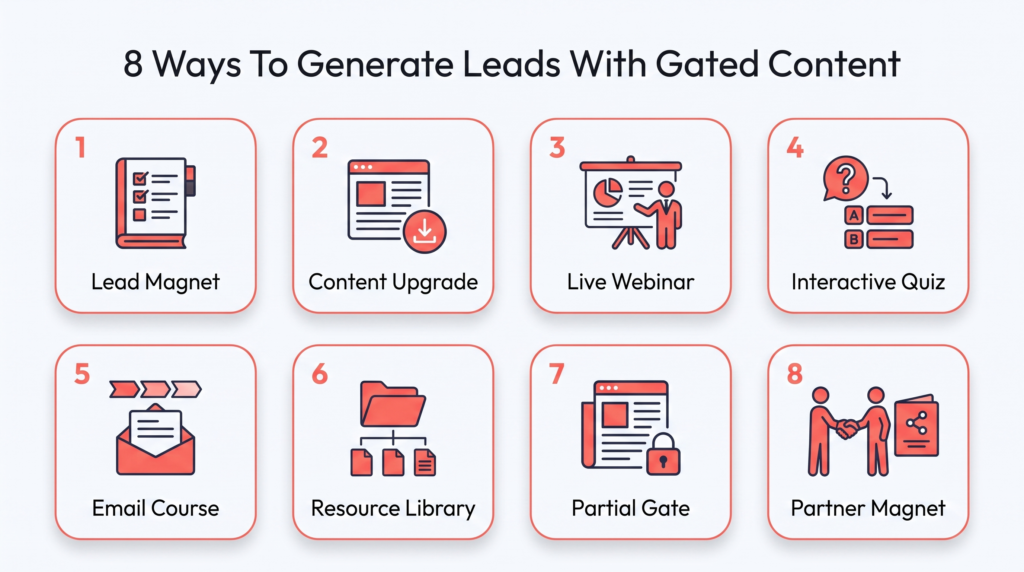
Right, the actual ways to pull this off. Each gated content best practice packages it a bit differently, and each fits a different kind of freelance work. The upside is real, too. Early users of high-intent gated offers are already converting at 18.3% in early 2026, way past an effective landing page. None of this matters unless the right people are finding your content to begin with.
1. Offer A Genuinely Useful Lead Magnet
The classic gate is a lead magnet, one downloadable resource swapped for an email. It is the workhorse most freelancers reach for first. Whether it fills your list or flops has nothing to do with the format. It comes down to whether the thing behind the gate is genuinely worth wanting… plus a solid landing page to explain why it is worth the exchange.

- Solve one specific problem fully, instead of skimming across ten of them
- Make it good enoughthat people would honestly have paid for it
- Send it instantly by email so your first promise is kept fast
- Lead with the clear benefit in your title, never the file format
This really matters in categories where buying is genuinely confusing. When a product line has a dozen versions with overlapping specs, people feel stuck. What they would gladly trade an email for isn’t another sales page. It is a straight answer to the question they can’t resolve alone – which option is actually right for them.
Water filtration is a perfect example. An online water filter store like Brondell sells everything from countertop jugs to full reverse-osmosis systems, and the right pick depends on your water and your plumbing. For a shopper, that is genuinely hard to sort out, and a spec sheet alone doesn’t work.
The problem in a category like that is choice overload, so people leave to research and never come back. That makes a water filtration assessment checklist a much stronger lead magnet.
It could walk shoppers through the key questions to answer before choosing a system, such as what they want to remove from their water, how much filtered water they need, where the system will go, and what installation requirements they need to check. The final section could help them narrow those answers down to the type of filtration setup they should be considering.
That is a lead magnet people will happily unlock, because it solves the exact thing that stopped them. It works anywhere the purchase is complex and considered, like insurance or expensive gear.
2. Gate A Content Upgrade Inside A Popular Post
A valuable content upgrade is a bonus tied to one specific post. Someone reading your article on pricing gets offered a matching calculator or checklist. Because gated content aligns closely with what the reader just came to learn, it becomes more relevant. And relevant offers convert far better than a generic sidebar magnet.
- Start with your most-read posts, since the traffic already shows up there
- Build a bonus that directly extends that post, not a generic freebie
- Put the offer inside the post itself, right where the interest peaks
- Name the upgrade after the exact worry that post raises for readers
This gets really powerful in niches where the reader shows up in a frightening high-stakes moment. Someone dealing with something painful and complicated doesn’t want a breezy overview. They need to know what actually happens next, and they are highly motivated to find out.
That is the exact moment a deep matching resource is worth almost any exchange. A shallow blog post has already let them down. Law is the clearest case there is. Take this wrongful death lawyer , which publishes plain-English articles on what a grieving family can actually do and how the process works.
Right where the reader is asking “what now”, it offers the deeper step-by-step guidance as the natural next move. The freely accessible piece earns enough trust that handing over contact details for real help is an easy yes.
The problem in high-stakes niches is that nobody acts on a stranger’s blog by itself. But they will trade their details for genuine guidance the moment they truly need it. So the upgrade has to match the post precisely and start where the free version stops. It fits anywhere the stakes are high, and the choice is hard, like law or a big financial decision.
3. Host A Gated Workshop Or Webinar
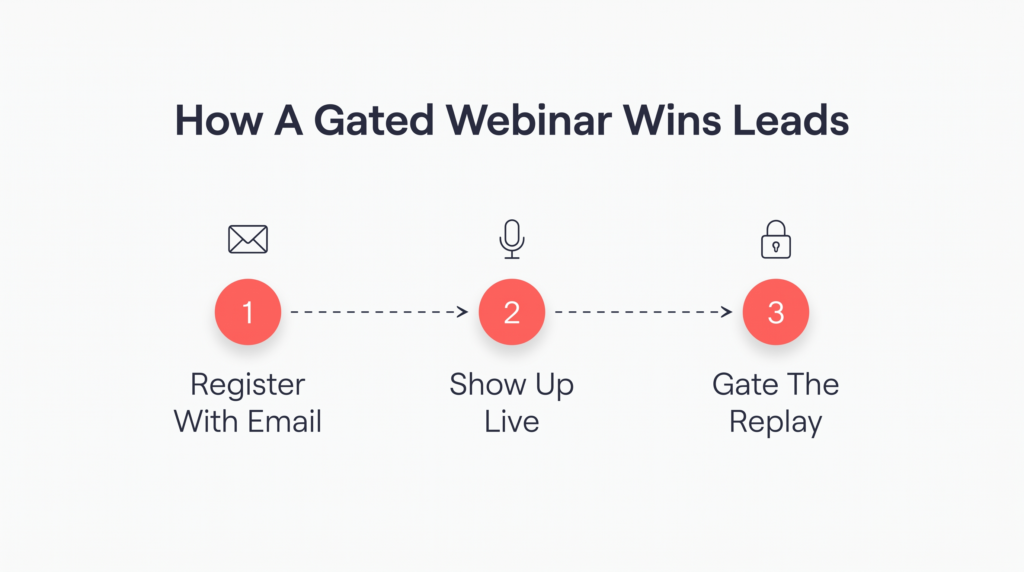
A live workshop or webinar gates the access itself; people sign up to attend. It is a heavier ask than a download, but the leads run much warmer.
Someone who gives you an hour is far more interested than someone who downloads a PDF and vanishes. You also get to prove you know your stuff in real time, and that builds trust faster than any file. It rewards showing up for your audience regularly .
- Pick one narrow topicyour ideal client is actively wrestling with now
- Require an email to register, then send a couple of timely reminders
- Record it, and gate the replay to catch everyone who missed it
- Provide actionable insights and close with a soft relevant push at the end, not a hard pitch
Webinars pay off hardest in niches where the whole barrier is trust, not information. When what you sell sounds too good or too risky to believe, no download will settle the doubt. People need to watch it work and ask their nervous questions out loud before they will commit.
Crypto payments are a textbook case. Take a crypto payment service that lets people pay with solana anywhere Visa is accepted, converting it at the moment they pay. On paper, that sounds almost too smooth, which is exactly why a static page struggles to convince a first-timer.
The problem in a niche like that is disbelief. The audience has been burned by hype before, so they assume a catch and click away. A landing page can claim safety all it likes, but claims are exactly what these people have learned to ignore.
A live session changes that. Run a short workshop where you make a real purchase on screen with the tool and take blunt safety questions as they come. Seeing a stranger do the scary thing live does what no PDF ever could, and the signup to attend hands you a warm lead in the process.
It works best anywhere belief is the real hurdle, like crypto or any product people suspect is a scam until it is proven otherwise.
4. Use An Interactive Quiz Or Calculator
A quiz or calculator hands people a tool that reacts to them, instead of a flat download. They answer a few questions and provide an email to see their personalized result. It converts really well, because people can’t resist an answer about their own situation. The result is earned rather than generic.
- Ask only the questions you truly needto give a useful result
- Gate the result rather than the quiz, so they invest before opting in
- Make each outcome specific enoughthat it feels written just for them
- Follow up with tailored advice matchedto the answers they actually gave
This shines when your target audience genuinely doesn’t know what they need. In categories with loads of options and no obvious starting point, a wall of products just freezes people. What they actually want is someone to ask about their goal and point them to the right thing. A quiz does precisely that, and it captures a lead while it helps.
The supplements world is a great example, since choosing one is genuinely bewildering. Nootropics Depot runs a take-the-quiz tool that asks about your goal and points you to the specific products that fit.
You tell it whether you are chasing focus or better sleep, and it narrows a huge catalog down to a short personal shortlist. That turns “I have no idea where to start” into an easy next step.
The problem these brands run into is choice paralysis; people bounce because deciding is just too hard. A quiz solves the buyer’s problem and yours at once, guiding them to the right pick while handing you a warm lead. It is most valuable anywhere the right answer depends on the person, like software or skincare.
5. Run A Free Mini Email Course
A mini email course drips a short lesson over a few days, unlocked with one signup. It is clever because the gate and the nurture become the same thing. Every lesson arrives in the inbox you want to warm up.
By the end, a total stranger has heard from you 5 times and started to trust you. A one-off download never pulls that off. Plenty of designers and coaches run a 5-day course that fills their pipeline on autopilot.
- Break one meaningful outcomeinto 5 short daily lessons, one each day
- Keep each email skimmable, and end every one with a small step
- Automate the whole sequenceso it runs without you ever touching it
- Save your actual paid pitch for the very last lesson, nowhere before
6. Build A Gated Resource Library
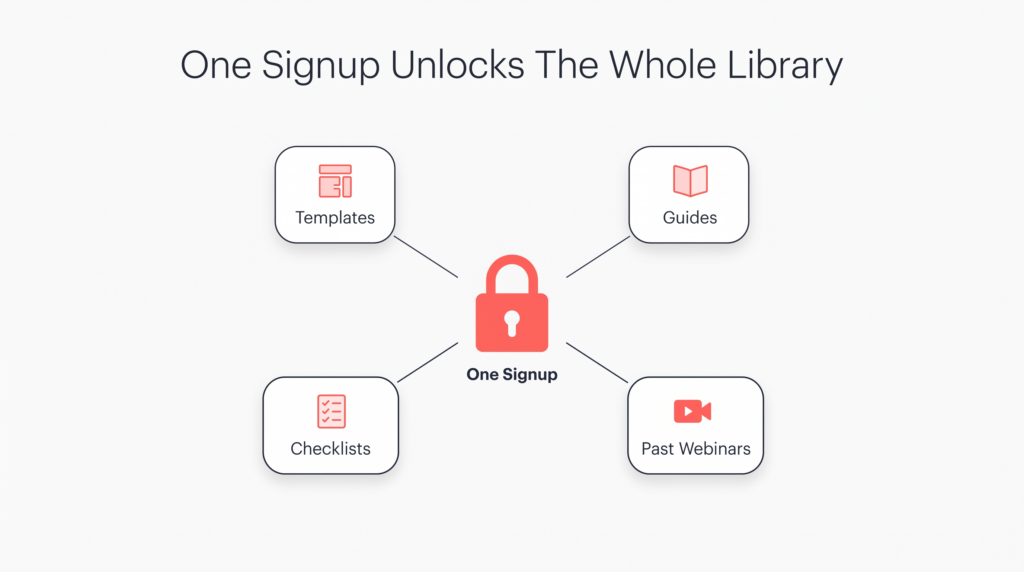
Instead of gating one asset, you tuck several behind a single signup. The reader unlocks a whole library in one go. It is a stronger value proposition because the value adds up, and it makes you look like a real resource rather than a one-hit freebie. A single email gets them templates and past webinars all in one place.
- Group your best free assetsinto one focused, high-value bundle for them
- Gate the whole librarybehind one simple form that asks for email
- Keep adding fresh gated assets to it, and tell subscribers each time you do
- Organize it clearlyso any website visitor finds what they need in seconds
Once your library grows past a few files, hosting it becomes its own project. A disorganized folder of links makes the whole thing cheap and hard to move around, which undercuts the value you are trying to signal. The library only works if finding something in it is genuinely quick and pleasant.
For a small team, SharePoint can be a sensible place to build that library. The downside is that a useful resource hub still needs structure and design work, and SharePoint’s default layouts can be fairly generic.
That is where a SharePoint AI builder like ShortPoint’s can be useful. Instead of starting with a blank page and manually arranging every section, you can describe the type of resource hub you need and use AI to generate a starting layout.
You still need to review the structure and make sure permissions and navigation work properly, but it can remove much of the repetitive setup.
The real benefit isn’t the tech. It is that people actually use a hub that is easy to move through, so the signup keeps paying off. And they keep coming back, which turns one opt-in into an ongoing relationship. It helps most for teams with scattered assets that never had a proper home.
7. Give A Taste, Then Gate The Deep Part
Partial gating gives away the opening part for free, then asks for an email to unlock the rest. The reader gets far enough to see the value is real, so the ask reads as fair rather than pushy. By the time you make the request, you have already earned it. That is why partial gates convert so nicely.
You see this with long research reports: the first few findings are out in the open, and the full data set needs a signup. Freelancers do the same by sharing a few tips in a post and gating the full set of 20.
- Give away enough to prove the valuebefore the gate shows up
- Place the gate at a natural cliffhanger moment, never mid-thought or mid-idea
- Make the locked part clearly bigger and better than the free preview
- Spell out exactly what they unlockso the trade feels obvious upfront
8. Team Up On A Partner Lead Magnet
A partner lead magnet is one you build with someone who serves your audience but isn’t a rival. You create it together, and both promote it, so each of you reaches the other’s list. It is the quickest way to reach a warm crowd you didn’t have to build, and the shared credibility lifts both sides.
A web designer and a copywriter might team up on a “launch-ready website” checklist and share it with both audiences. Each gated content campaign brings in leads the other would never have reached alone.
- Find a partner who serves the same audiencewithout competing for the work
- Co-create one genuinely strong assetthat neither of you could make alone
- Agree upfront on exactly how the two of you will split leads
- Promote your gated content to both your listson the same day for momentum
5 Gated Content Mistakes That Kill Your Lead Flow

Gated content mistakes waste the leads you worked so hard to earn. They are the same sort of mistakes that cost freelancers clients, so it pays to avoid them early.
1. Gating Something Nobody Wants
The most common mistake by far is gating something no one actually wanted. A thin checklist or a recycled blog post won’t earn an email, however slick the gated content landing page. The gate isn’t the problem; the offer is. If nobody would pay for it, nobody will trade their email for it either.
2. Trying To Run It All From A Spreadsheet
This one only turns up once the gated content is working, which is a strange problem to be glad about. Leads start arriving from a few different magnets at once, and you drop them all into a spreadsheet. For a while that is fine. Then it really isn’t.
You lose track of who came from which magnet and who you already followed up with. You miss the one person who was genuinely close to hiring you, simply because a spreadsheet was never built to run a pipeline. It gets harder the moment more than one of you is touching it.
The fix is to move that pipeline onto a tool built for it, where every lead has a status and a clear next action you can actually see. A work platform like monday.com does exactly that, turning a scattered list of emails into a pipeline you run on purpose rather than one you keep rediscovering.
The catch is that a blank monday.com board can overwhelm you as fast as the spreadsheet did. The real value is in setting it up around how you actually work. A monday.com consultant can stand up a board shaped around your funnel.
They build the board structure and the automations so a fresh lead arrives already tagged with a status and a next action, rather than waiting in a list until you get to it. They will also connect it to the other tools you already run, so your email platform and your lead list stop living in separate worlds.
The day your studio is managing several magnets and more than one person on follow-up, a properly built system is what stops a working funnel from leaking the leads it fought to earn.
3. Asking For Too Much, Too Soon
The second killer is a greedy form. Every extra field you add is one more reason to give up. The numbers are brutal here: a one-field form converts at 4.41%, but a second field drops it to 2.90%. Add a third, and it slides to 1.93%. Early on, just ask for an email. You can learn about their job title and company later.
4. Capturing Leads Then Ghosting Them
The saddest mistake is winning the email and then doing nothing with it. Someone raised their hand, and you let them go cold. Without a follow-up sequence, even a brilliant lead magnet just builds a dead list. The gate is where the relationship starts, not where it ends.
5. Forgetting You Are Now Holding People’s Data
There is a quieter mistake that only surfaces later: forgetting that a lead list is a list of real people’s personal data. The second you start collecting emails, you become the keeper of that information. Most solo freelancers never give this a thought until something goes badly wrong.
The problem is that a growing email list slowly turns into something worth stealing. A single breach can destroy the trust you spent months building, and freelancers rarely have anyone watching for it. You don’t need to hire a security team to take that seriously, though.
This is where an outside security operations team (a SOC) genuinely helps. An MXDR service can continuously monitor for suspicious activity, so a freelancer doesn’t have to spot every security warning themselves. It can also help investigate alerts when something unusual appears, giving a small team a clearer path from detection to response.
For a small team, it means the one breach that could sink your reputation gets caught early. No hiring or training required.
Conclusion
A gate is only ever as good as what is behind it. Build something genuinely worth an email and put it in front of the right people. Then the high-value gated content becomes the most dependable lead generation source you have. Skimp on the value, and no clever form will rescue it.
One last thing from us at Millo . Building a lead list is really just one slice of running a freelance business that actually pays, and that is the whole reason this place exists. We put out straight-to-the-point advice on winning clients and growing your income, plus free tools like our rate calculator. Come get the rest.
Keep the conversation going…
Over 10,000 of us are having daily conversations over in our free Facebook group and we’d love to see you there. Join us!